Denmark has taken a decisive step to harden its military readiness by securing a seven-year framework agreement with Rheinmetall for the continuous supply of ammunition across its armored, air-defense, and artillery forces. Far from a routine procurement, the deal reflects a deeper shift in how European militaries now think about ammunition: not as a background logistics detail, but as a frontline capability that determines whether modern forces can actually fight, endure, and prevail in high-intensity conflict.
Signed and formally marked at the end of January 2026, the agreement covers medium-caliber rounds, 120 mm tank ammunition, and 155 mm artillery munitions, with initial call-offs already reaching hundreds of millions of euros. This long-term structure gives Denmark something increasingly rare in Europe’s crowded defense market: predictability. In an era where ammunition production lines are strained and demand consistently outpaces supply, locking in capacity years ahead has become as strategically important as buying new platforms themselves.
The timing is no accident. Denmark’s defense posture has evolved rapidly in response to the hard lessons of recent conflicts, where ammunition consumption has shattered pre-war assumptions. In sustained land warfare, stockpiles evaporate not over years, but over weeks. The Danish Armed Forces are now planning for that reality, building a force designed not just to deploy quickly, but to keep firing when pressure peaks.
Ammunition as a Strategic Capability, Not a Logistic Afterthought
For decades, many European armies treated ammunition primarily as a training and sustainment issue, calibrated to peacetime routines. That mindset has collapsed under the weight of modern warfare. Denmark’s new framework agreement reflects a clear understanding that logistics depth equals combat power, and that without assured access to ammunition, even the most advanced platforms risk becoming inert steel.
The seven-year duration is particularly telling. Rather than issuing fragmented, short-term orders that leave manufacturers guessing, Copenhagen has opted for a stable, long-horizon relationship. This not only improves delivery reliability but also helps Rheinmetall plan production surges, workforce expansion, and raw material sourcing. For Denmark, it reduces the risk of being pushed to the back of the queue during a crisis, when allied demand converges on the same calibers.
This approach aligns Denmark squarely with a broader NATO recalibration. Ammunition stockpiles are now treated as part of deterrence itself, signaling to potential adversaries that allied forces can sustain operations beyond the opening phase of a conflict.
Medium-Caliber Firepower for Air Defense and Mechanized Infantry
A substantial portion of the initial orders focuses on 30 mm x 173 and 35 mm x 228 medium-caliber ammunition, with Rheinmetall confirming high five-digit quantities already contracted. These calibers map directly onto two of Denmark’s most critical modernization priorities: mobile air defense and mechanized infantry lethality.
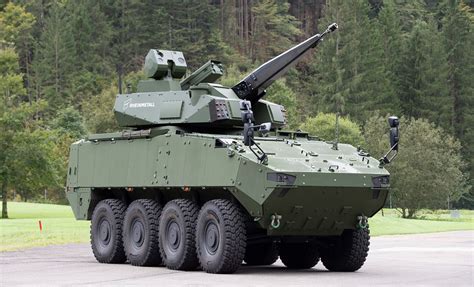
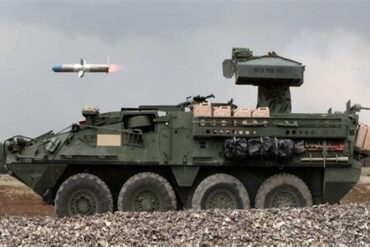
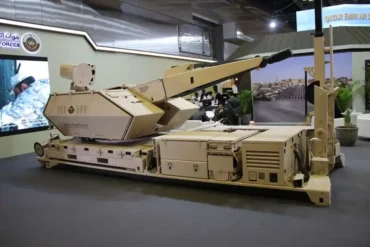
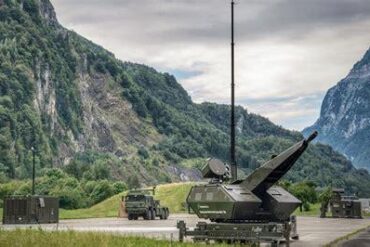
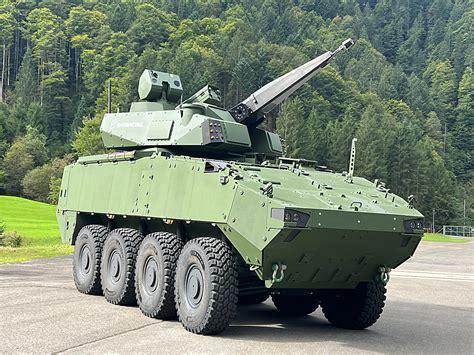
The 30 mm ammunition supports Denmark’s emerging Skyranger-based mobile air defense capability, integrated onto the Piranha 5 8×8 platform. In a battlespace increasingly saturated with drones, loitering munitions, and low-flying threats, systems like Skyranger are only as credible as their ammunition supply. Programmable airburst rounds, in particular, demand extensive live-fire training and sufficient war reserves. This contract ensures Danish air-defense units can train realistically and remain ready without rationing rounds to symbolic levels.
The 35 mm line directly underpins Denmark’s CV9035 infantry fighting vehicles, armed with the Bushmaster III cannon. As Denmark expands and refreshes its CV90 fleet, ammunition demand will rise sharply. Sustained availability enables not just routine gunnery, but complex combined-arms training where mechanized infantry can exploit the full spectrum of effects—from precision fire against light armor to high-volume suppression in urban or forested terrain. The scale of the order strongly suggests Denmark is rebuilding deep reserves rather than merely sustaining peacetime activity.
Reinforcing Armored Deterrence With 120 mm Tank Ammunition
Rheinmetall has also confirmed deliveries of more than 1,000 rounds of 120 mm kinetic-energy tank ammunition, valued in the high single-digit million euro range. While modest in volume compared to artillery stocks, the symbolism is significant. Kinetic-energy rounds are the core currency of tank-on-tank combat, and their availability directly affects deterrence credibility.
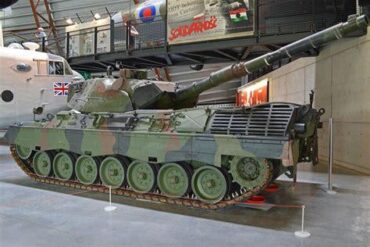
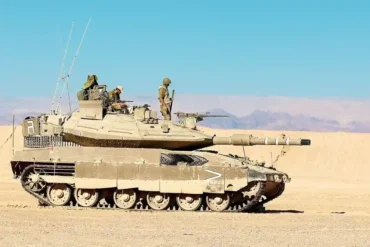
Denmark’s Leopard 2A7 fleet represents the apex of its heavy armor capability. Modernized from earlier A5 standards, these tanks are central to Denmark’s contribution to NATO’s northern land forces. Fresh stocks of advanced 120 mm ammunition ensure that Danish armored units can operate at full combat potential, whether conducting delaying actions, counterattacks, or reinforcing allied formations under pressure.
In practical terms, this means Danish crews can train with the same ammunition types they would expect to use in combat, sharpening tactical proficiency and confidence. Strategically, it signals that Denmark intends its armored battalions to remain relevant in a battlespace where peer adversaries field increasingly sophisticated armored threats.
Artillery Endurance and the Return of Long-Range Fires
The inclusion of 155 mm artillery ammunition ties directly to Denmark’s reconstitution of long-range indirect fire through the ATMOS truck-mounted howitzer. After years without a modern artillery capability, Denmark has moved quickly to restore this pillar of land warfare. Ammunition availability is what transforms that capability from symbolic to operational.
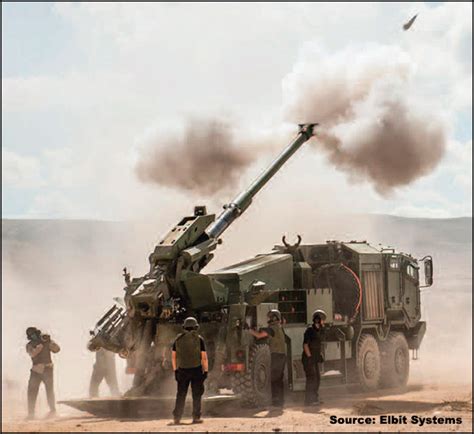
Artillery in modern conflict is a voracious consumer of ammunition. Counter-battery engagements, suppression missions, and deep fires demand volume and consistency. A seven-year framework ensures Denmark can plan brigade-level operations without the constant fear of depleting stocks during sustained engagements. It also supports realistic training cycles, where crews can practice complex fire missions rather than limiting themselves to minimal live-fire events.
For a relatively small army, this endurance matters. It allows Denmark to punch above its weight, integrating seamlessly into NATO fire networks and contributing meaningful combat power over time, not just during the opening days of a deployment.
Industrial Reality and Rheinmetall’s Expanding Role
Denmark’s selection of Rheinmetall is rooted as much in industrial capacity as in technical performance. The German defense group has been aggressively expanding its ammunition production footprint across Europe, explicitly aiming to scale output to levels relevant for prolonged, high-intensity conflict. New facilities, expanded shifts, and vertically integrated supply chains are all part of that push.
For Denmark, partnering with a manufacturer investing heavily in capacity reduces long-term risk. In a crisis scenario where every European army seeks the same calibers, access to a supplier capable of surge production becomes a strategic asset. Rheinmetall has framed the agreement as a vote of confidence in its role as a cornerstone of European ammunition supply. From Copenhagen’s perspective, it is a pragmatic hedge against uncertainty.
A Signal of Strategic Maturity
Ultimately, Denmark’s seven-year ammunition deal is less about individual calibers and more about strategic maturity. It reflects an acceptance that modern warfare is defined by endurance as much as by technology. Tanks, air-defense systems, and artillery pieces only matter if they can keep firing under pressure.
By locking in long-term supply across its core land warfare capabilities, Denmark is sending a clear message: its armed forces are not being modernized for display, but for sustained, credible combat operations alongside allies. In today’s security environment, that message carries weight well beyond Denmark’s borders.