The U.S. Department of Defense has taken a decisive step to harden its strike and missile defense posture by signing seven-year framework agreements designed to speed delivery and expand production of the Navy’s most in-demand precision weapons. The deals reflect a clear strategic calculation: in an era of sustained operations, allied resupply, and rapid stockpile depletion, industrial throughput is as critical as platform performance. By committing to long-term ordering structures, the Pentagon is prioritizing predictability, scale, and speed across the missile supply chain.
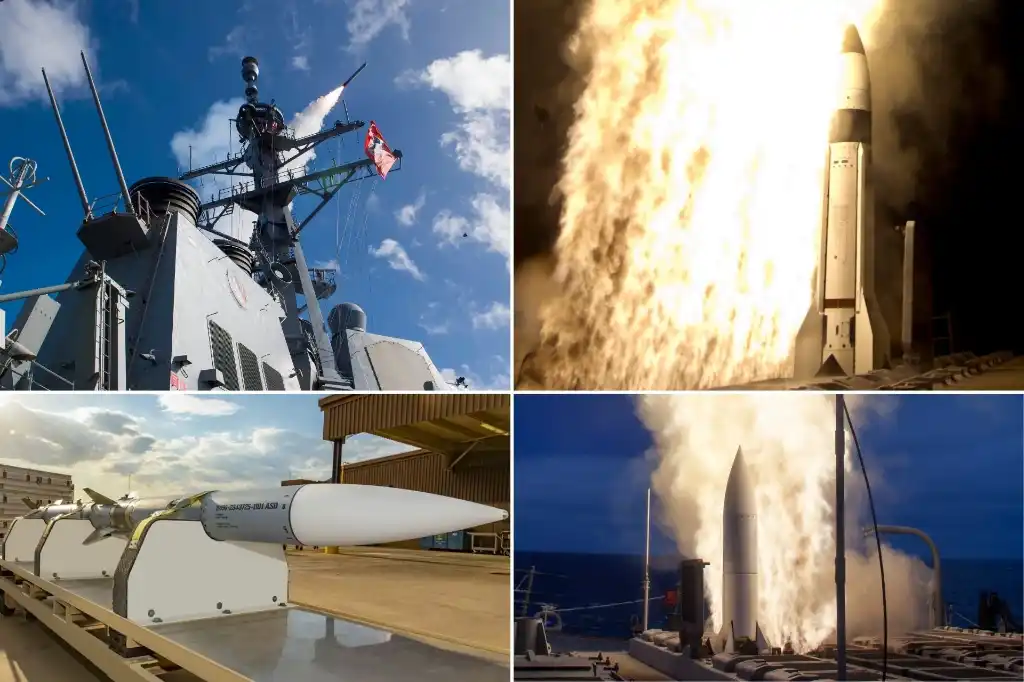
Announced in early February 2026, the agreements center on five core missile families produced by Raytheon, an RTX business: the Tomahawk cruise missile, AIM-120 AMRAAM, Standard Missile-3 Block IB, Standard Missile-3 Block IIA, and Standard Missile-6. Rather than single-year procurement spikes, the framework approach allows the government to place orders over multiple years, smoothing demand signals and enabling manufacturers to invest confidently in tooling, labor, and supplier capacity. The result is a faster ramp to higher output and a more resilient production base.
This shift comes as global demand for U.S. precision munitions remains elevated. Ongoing conflicts, deterrence missions, and the need to replenish both U.S. and allied inventories have compressed timelines that once stretched across decades. The Pentagon’s framework strategy recognizes that missile availability shapes operational choices, influencing everything from campaign pacing to escalation control. By reducing uncertainty in production planning, the agreements aim to close the gap between operational need and industrial reality.
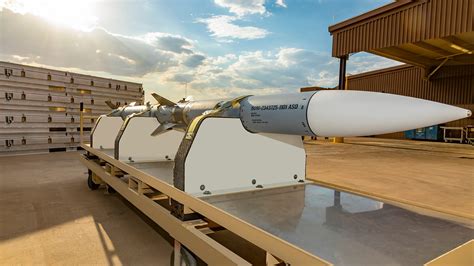
Under the new frameworks, Raytheon plans to substantially increase annual output across multiple lines. Tomahawk production is set to exceed 1,000 missiles per year, AMRAAM output will rise to at least 1,900 units annually, and SM-6 production is expected to surpass 500 missiles per year. SM-3 IIA manufacturing will expand, while deliveries of SM-3 IB will accelerate to rebuild interceptor depth. Several lines are projected to grow two to four times compared with recent production rates, a surge made possible by sustained demand signals rather than short-term contracts.
Manufacturing will be distributed across established Raytheon sites in Tucson, Arizona; Huntsville, Alabama; and Andover, Massachusetts, a deliberate choice that balances capacity growth with supply-chain resilience. Geographic dispersion reduces single-point failure risks, supports regional workforces, and strengthens continuity during periods of disruption. In practical terms, this means higher output without sacrificing quality control or schedule reliability—an essential requirement for weapons that must perform flawlessly under combat conditions.
Tomahawk: Long-Range Strike at Industrial Scale
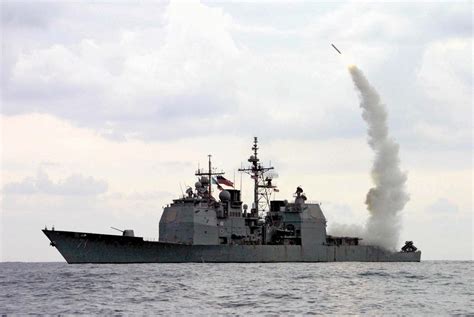
Tomahawk remains the U.S. Navy’s principal long-range strike weapon, fielded in both land-attack and maritime strike variants. With a reach of roughly 1,000 miles, the missile provides commanders with a standoff option that can shape battlespace well before other forces arrive. Its operational pedigree is unusually deep, backed by hundreds of flight tests and thousands of combat uses, making it a mature system whose effectiveness is measured in outcomes rather than projections.
Scaling Tomahawk production matters because long-range strike inventories can be consumed rapidly in high-intensity scenarios. Higher annual output supports sustained pressure over time, enabling follow-on strikes that complicate adversary recovery and planning. It also reinforces deterrence by signaling that replenishment is not a bottleneck, reducing incentives for opponents to bet on stockpile exhaustion as a pathway to advantage.
AMRAAM: Air Superiority and Integrated Defense Backbone
The AIM-120 AMRAAM continues to anchor allied air-to-air lethality while increasingly serving as a bridge between airborne and ground-based defense. Raytheon has been producing a fifth-generation AMRAAM since 2024, incorporating advanced guidance, software-defined features, and enhanced electronic protection tailored for contested electromagnetic environments. These upgrades ensure relevance against modern threats without requiring entirely new missile families.
AMRAAM’s integration across fourth- and fifth-generation fighters makes it a common currency of air combat, simplifying coalition operations and logistics. Beyond the air domain, the missile is also the primary interceptor for the National Advanced Surface-to-Air Missile System (NASAMS), linking expeditionary and homeland defense missions. A production rate approaching 2,000 missiles per year strengthens air policing endurance, improves attrition tolerance, and supports partners that lack the industrial base to regenerate stocks independently.
SM-3 Interceptors: Rebuilding Ballistic Missile Defense Depth
On the missile defense front, the framework agreements target both pace and depth for the SM-3 family. The SM-3 Block IB is optimized for hit-to-kill engagements outside the atmosphere against short- to intermediate-range ballistic missiles and can be deployed from ships or land sites. Its real-world credibility was underscored when the interceptor was used operationally in 2024 to defeat ballistic missile threats, reinforcing confidence in its combat utility.
The SM-3 Block IIA, developed through close cooperation between the United States and Japan, expands defended battlespace with larger rocket motors and an enhanced kinetic warhead. Faster engagement timelines and greater reach make it particularly valuable for regional defense architectures where warning time is limited. Increasing production of both variants ensures that Aegis-equipped ships and land-based sites maintain magazine depth, a factor that directly affects deterrence and crisis stability.
SM-6: Multi-Mission Flexibility in a Crowded Magazine
The Standard Missile-6 rounds out the portfolio as one of the Navy’s most versatile weapons. Designed to perform anti-air warfare, anti-surface strike, and terminal ballistic missile defense, SM-6 compresses multiple mission sets into a single missile family. It has been successfully launched from both sea-based and land-based platforms, giving commanders flexibility in how and where it is employed.
In a world of finite vertical launch system capacity, that flexibility is decisive. Higher SM-6 production allows fleets to tailor magazine mixes to evolving threats without sacrificing coverage in other domains. Whether countering advanced aircraft, surface combatants, or terminal ballistic trajectories, SM-6 provides a high-leverage option that maximizes combat power per cell.
Industrial Capacity as a Deterrence Signal
Beyond the numbers, the seven-year framework agreements mark a broader shift in how the United States views defense industrial capacity. Manufacturing throughput has become a strategic variable, shaping deterrence calculations alongside platforms and doctrines. Predictable, multi-year output reassures allies, strengthens interoperability, and reduces uncertainty in coalition planning. For competitors, the message is structural: the United States is investing not only in advanced weapons, but in the ability to produce them at scale for as long as necessary.
As precision munitions continue to define escalation ladders and campaign tempo, these agreements place industry squarely within the deterrence equation. The Pentagon’s move signals that future conflicts will be influenced as much by factory floor readiness as by battlefield innovation, and that sustained production is now recognized as a core element of national security power.