Boeing is projecting a decisive financial turnaround in 2026, driven by higher production rates, renewed regulatory confidence, and a stabilizing commercial and defense portfolio. After years of turbulence triggered by the 737 MAX crisis and long-running delays to the 777X program, the manufacturer is positioning itself for its first truly profitable year since 2018. Investors are watching closely, especially as the company targets $10 billion in free cash flow next year, a milestone that signals meaningful recovery across its operations.
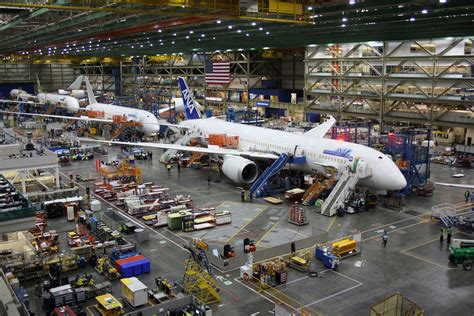
The renewed optimism stems from several converging developments. The Federal Aviation Administration (FAA) raised Boeing’s monthly delivery cap for the 737 MAX, a crucial shift after years of strict oversight at the Renton assembly lines. The move follows extensive inspections and deep operational reforms designed to eliminate quality gaps that contributed to the aircraft’s grounding. At the same time, the 777X is approaching the end of its certification campaigns, signaling that Boeing’s next-generation flagship widebody is finally nearing the delivery stage after nearly a decade of delays.
These shifts are already being reflected in the company’s market performance. Boeing’s shares rose approximately 10% on the S&P 500 at the beginning of December, supported by strong investor confidence in its delivery outlook and its reinstated ability to clear historical inventory. Particularly notable was the cleanup of stored 737 MAX airframes in Moses Lake, which had represented both a symbolic and financial drag on the program for years.
Free Cash Flow Strengthened by Renewed MAX Output and 787 Momentum
Boeing is building momentum with steady progress in its single-aisle production lines despite renewed scrutiny in early 2024 following the Alaska Airlines cabin panel incident. The company has now stabilized 737 MAX throughput and moved closer to its long-term goal of increasing deliveries each quarter.
The widebody market has also proven to be an unexpected bright spot. The 787 Dreamliner continues to generate robust demand as airlines pursue long-range, fuel-efficient fleets, and Boeing recently broke ground on an expansion of its South Carolina Dreamliner facility. During the ceremony, Boeing Commercial Airplanes CEO Stephanie Pope emphasized the project’s role in deepening the company’s manufacturing footprint and supporting U.S. aerospace jobs.
Rising Above Years of Crisis and Industry Shifts
Boeing is still navigating the legacy of the worst commercial aircraft grounding in aviation history, triggered by the tragic losses of Lion Air Flight 610 and Ethiopian Airlines Flight 302. The fallout reshaped global expectations for aircraft certification and operational transparency. Added to that were the drawn-out certification processes for the 737 MAX 7 and 737 MAX 10, plus years of stagnation for the 777X as design and testing hurdles accumulated.
The turning point came in October 2025, when the FAA increased the MAX delivery limit from 38 to 42 aircraft per month. This adjustment signals confidence in Boeing’s revamped production systems and gives the manufacturer vital breathing room to restore output closer to pre-crisis levels. Even as Airbus captured the global production crown with the A320 family, Boeing’s order book for the 777X and 787 remains exceptionally strong among widebody customers.
Defense Contracts Reinforce Boeing’s Financial Stability
Boeing’s defense business is providing additional strength heading into 2026. In March 2025, the company secured one of its most consequential defense awards in decades: the contract for the Next Generation Air Dominance (NGAD) fighter, tentatively designated the F-47. The aircraft will be produced in St. Louis, where labor tensions have been ongoing, yet operations continue to support major U.S. defense programs.
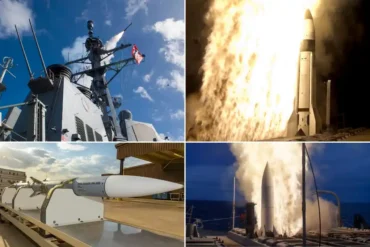
The company is still delivering the F-15EX Eagle II, the final lots of the F/A-18E/F Super Hornet, and steady quantities of the KC-46 Pegasus tanker and P-8A Poseidon maritime patrol aircraft. Orders for the AH-64 Apache and CH-47 Chinook helicopters remain consistent, while missile components such as Patriot PAC-3 interceptors continue to strengthen Boeing’s defense revenues.
A Stronger 2026 Outlook Backed by Rising Deliveries
By combining stabilizing commercial programs with robust defense demand, Boeing is entering 2026 with the clearest path to profitability it has seen in nearly a decade. Increased MAX deliveries, imminent 777X certification, Dreamliner expansion, and strategic military contracts are reinforcing the company’s balance sheet at a critical moment.
If Boeing hits its projected delivery targets and sustains its defense production tempo, positive free cash flow in 2026 becomes not just a forecast but a likely outcome, marking a long-awaited resurgence for the world’s most scrutinized aerospace manufacturer.