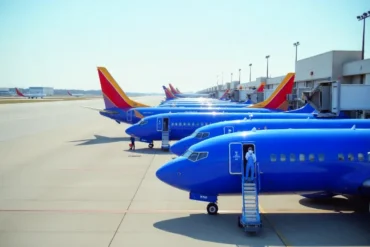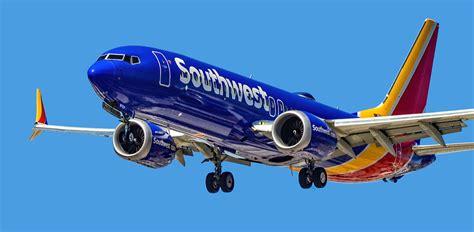
Southwest Airlines has built one of the most recognizable business models in commercial aviation. From its low-cost strategy and point-to-point route network to its decades-long commitment to flying only Boeing 737 aircraft, consistency has always been one of the airline’s greatest strengths. Yet one of the biggest changes taking place behind the scenes has little to do with baggage policies or seating assignments. Instead, it centers on the gradual retirement of the Boeing 737 Next Generation (737NG) family that once formed the backbone of Southwest’s operations.
Although the Boeing 737NG remains a dependable and highly capable aircraft, changing economics, increasing maintenance costs, rising fuel prices, and the arrival of more efficient technology have fundamentally changed the equation. Southwest is now investing heavily in the Boeing 737 MAX family, signaling that the era of the airline’s aging 737NG fleet is slowly coming to an end.
For an airline that measures profitability through operational efficiency and aircraft utilization, replacing hundreds of older airplanes is not simply about acquiring newer jets. It represents a long-term strategy designed to lower operating costs, simplify maintenance, improve passenger experience, and prepare the carrier for the next several decades of growth.
Southwest’s transition illustrates how modern airlines continually balance reliability with efficiency, making difficult decisions about aircraft that have faithfully served for decades but no longer provide the strongest economic returns.
Southwest Airlines Built Its Identity Around the Boeing 737
Few airlines have demonstrated the same level of commitment to a single aircraft family as Southwest Airlines. Since launching revenue operations in June 1971, the carrier has almost exclusively relied on Boeing 737 aircraft to operate its expanding domestic network.
Interestingly, the airline did not initially intend to become a Boeing-exclusive operator. During its planning stages, Southwest’s founders explored purchasing used Lockheed L-188 Electra turboprops because they offered a lower purchase price. However, industry conditions unexpectedly changed the airline’s future.
During the economic slowdown of the early 1970s, several airlines canceled Boeing 737 orders. Those cancellations gave Southwest the opportunity to acquire brand-new Boeing 737-200 aircraft at discounted prices, allowing the young airline to begin operations with modern jet aircraft rather than aging turboprops.
That fortunate opportunity created a relationship between Southwest and Boeing that has lasted more than five decades. Since then, Southwest has introduced multiple Boeing 737 variants, including the 737-200, 737-300, 737-500, 737-700, 737-800, and now the Boeing 737 MAX 8.
Operating only one aircraft family has delivered enormous advantages. Pilot training became simpler, spare parts inventories remained smaller, maintenance procedures became standardized, and aircraft scheduling grew significantly more flexible because virtually every airplane could serve nearly every route.
The Boeing 737NG Became the Foundation of Southwest’s Expansion
When Boeing introduced the Next Generation 737 family during the late 1990s, Southwest became its launch customer by accepting the first Boeing 737-700 in December 1997.
The aircraft represented a substantial improvement over previous Boeing 737 generations. Engineers redesigned the wing, increased fuel capacity, raised maximum takeoff weight, and extended operational range while improving overall aerodynamic efficiency.
These upgrades allowed Southwest to expand its network beyond traditional short-haul routes without abandoning its single-fleet philosophy.
By 2018, the airline operated well over 500 Boeing 737NG aircraft, making it one of the world’s largest operators of the type. The 737-700 became especially important because it perfectly matched Southwest’s high-frequency domestic network.
The aircraft offered an ideal combination of seating capacity, operating economics, and flexibility. Whether serving major metropolitan airports or smaller regional destinations, the 737-700 consistently met the airline’s operational requirements.
Meanwhile, the larger Boeing 737-800 entered the fleet to support higher-demand routes while maintaining commonality with the existing fleet.
Age Is Becoming the Boeing 737NG’s Biggest Challenge
The Boeing 737NG remains an extremely capable aircraft. Thousands continue flying safely around the world every day. Nevertheless, aircraft economics change dramatically as fleets mature.
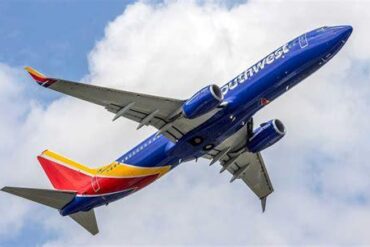
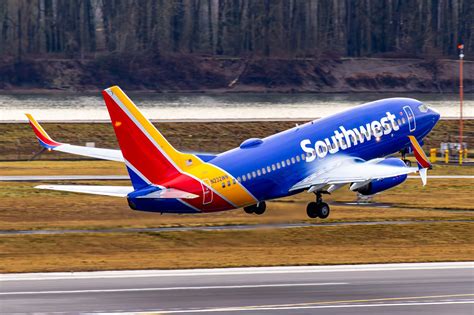
Southwest’s Boeing 737-700 fleet now averages nearly twenty years of age, while several aircraft have already exceeded two decades in continuous commercial service.
Although aircraft are designed for long operational lives, aging introduces increasing financial pressures that eventually outweigh the benefits of keeping older airplanes in service.
Maintenance becomes substantially more expensive as aircraft accumulate flight cycles. Components require replacement more frequently, inspections become increasingly detailed, and structural examinations consume more maintenance time.
Heavy maintenance visits, often called C-checks or D-checks depending on their scope, may require aircraft to remain out of service for weeks while technicians inspect thousands of structural components.
For a carrier that depends upon maximizing aircraft utilization every day, extended maintenance downtime directly impacts profitability.
Additionally, replacement parts become more expensive as older aircraft age, while labor costs associated with inspections continue increasing.
Although every airline carefully manages maintenance programs, there comes a point where investing millions into aging aircraft no longer produces the strongest financial return compared with purchasing newer airplanes.
Fuel Efficiency Is Driving Southwest’s Fleet Decisions
Fuel remains one of the largest operating expenses for every airline. Even relatively small improvements in fuel consumption can generate enormous savings across hundreds of aircraft operating thousands of flights every week.
This is where the Boeing 737 MAX begins separating itself from the earlier Next Generation family.
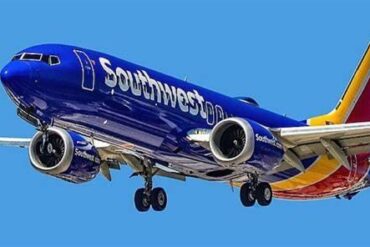
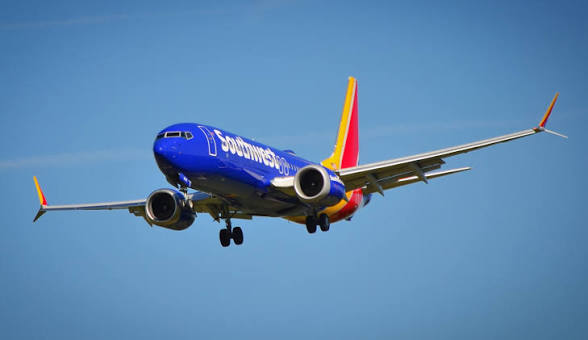
The most obvious improvement comes from the aircraft’s CFM International LEAP-1B engines, which deliver substantially greater efficiency than the CFM56 engines powering the 737NG fleet.
Combined with aerodynamic enhancements, these engines reduce fuel consumption by double-digit percentages compared with earlier models.
The aircraft also features distinctive split-tip winglets that reduce induced drag, allowing the airplane to operate more efficiently during cruise.
Additional aerodynamic refinements include redesigned tail sections, optimized auxiliary power unit exhaust systems, and smaller drag-reduction improvements throughout the airframe.
While each enhancement may appear relatively modest individually, together they significantly lower operating costs throughout the aircraft’s service life.
For an airline operating hundreds of departures daily, improved fuel efficiency translates directly into millions of dollars in annual savings.
Lower Operating Costs Extend Beyond Fuel Savings
Fuel economy represents only one part of the financial equation.
The Boeing 737 MAX also reduces costs through greater operational standardization. As Southwest gradually transitions toward a predominantly MAX fleet, maintenance procedures become increasingly streamlined.
Technicians require fewer specialized parts inventories because more aircraft share common components.
Pilot scheduling also becomes easier. Although transition training remains necessary, maintaining a newer, more standardized fleet reduces long-term complexity across flight operations.
Fleet simplification produces efficiencies throughout virtually every department, including engineering, logistics, inventory management, technical documentation, maintenance planning, and crew scheduling.
These operational improvements may not attract passenger attention, but they significantly strengthen an airline’s financial performance.
The Boeing 737 MAX 7 Will Replace the Popular 737-700
Among Southwest’s future fleet plans, the Boeing 737 MAX 7 occupies perhaps the most important role.
The airline’s extensive domestic network has long depended upon the Boeing 737-700 because its seating capacity perfectly matched many routes.
The MAX 7 has been designed as its direct successor.
Although similar in overall mission profile, the MAX 7 provides improved fuel efficiency, increased seating capacity, longer range, and lower operating costs per passenger.
This allows Southwest to preserve its existing route structure while improving revenue potential on nearly every flight.
Because the aircraft shares strong commonality with other Boeing 737 MAX variants, integrating it into the broader fleet also supports Southwest’s long-standing strategy of operational simplicity.
Certification delays have postponed the aircraft’s introduction, but Southwest continues planning around the MAX 7 becoming the future replacement for its aging 737-700 fleet.
Passenger Experience Is Also Improving
While fleet replacement decisions primarily focus on economics, passengers also benefit from newer aircraft.
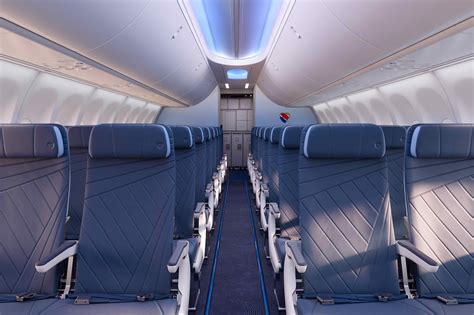
The Boeing 737 MAX features a quieter cabin thanks to its advanced engines and improved aerodynamic design.
Modern LED lighting creates a brighter cabin environment, while updated overhead bins provide additional luggage space for travelers.
Newer aircraft also incorporate refreshed interiors, improved environmental systems, and layouts designed around current passenger expectations.
Although Southwest maintains a relatively simple onboard product compared with many legacy airlines, introducing newer aircraft helps ensure that customer experience continues evolving alongside operational improvements.
Passengers may not always notice the engineering advances beneath the wings, but they certainly appreciate quieter flights, more comfortable cabins, and greater reliability.
Southwest’s Current Fleet Reflects the Ongoing Transition
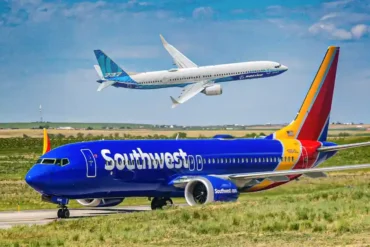
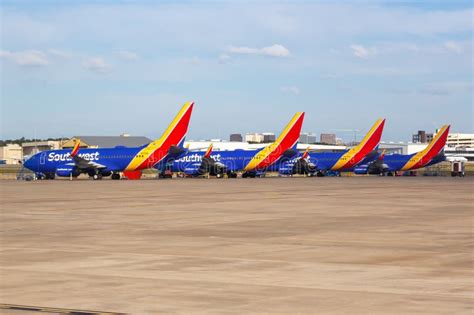
Southwest currently operates a mixed fleet consisting primarily of Boeing 737-700s, Boeing 737-800s, and Boeing 737 MAX 8 aircraft.
The airline has already accepted hundreds of MAX 8 aircraft while maintaining substantial outstanding orders for additional deliveries. Hundreds more Boeing 737 MAX 7 aircraft remain planned once certification is completed.
Meanwhile, the oldest Boeing 737-700 aircraft continue approaching twenty-five years of service.
Although many remain fully operational, retirement gradually becomes the most economically sensible decision as newer aircraft enter the fleet.
This measured approach allows Southwest to maintain network stability while avoiding sudden capacity reductions.
Rather than replacing hundreds of aircraft simultaneously, the airline can phase out older examples over several years, balancing capital investment with operational continuity.
Why Southwest No Longer Wants Its Boeing 737NGs
Southwest’s decision is not a reflection of poor aircraft performance or declining reliability. The Boeing 737NG remains one of the most successful commercial aircraft families ever produced and continues serving airlines worldwide.
Instead, the airline’s strategy reflects the realities of modern airline economics.
Every generation of aircraft eventually reaches a point where technological improvements make replacement financially attractive. The Boeing 737 MAX delivers lower fuel consumption, reduced maintenance requirements, greater operational efficiency, improved passenger comfort, and stronger long-term profitability.
Because Southwest has always prioritized low operating costs and fleet simplicity, transitioning toward a newer generation of Boeing 737 aircraft is a logical continuation of the philosophy that has guided the airline since its founding.
The Boeing 737NG transformed Southwest into one of the world’s largest low-cost carriers and supported decades of remarkable growth. Yet aviation constantly evolves, and today’s competitive environment rewards airlines that embrace greater efficiency.
As more Boeing 737 MAX aircraft enter service and older Next Generation models gradually retire, Southwest is preparing for another chapter in its history—one that preserves its single-fleet strategy while leveraging the latest advances in commercial aircraft technology. The Boeing 737NG’s legacy within Southwest Airlines is secure, but its successor is already defining the airline’s future.