Thailand has become one of the world’s most attractive international destinations, drawing millions of travelers every year with its beaches, food, culture, nightlife, and luxury resorts. In 2024, the country welcomed more than 35 million international visitors, with growing interest from travelers in the United States seeking affordable yet exotic experiences.
Despite Thailand’s popularity among American tourists, there is one surprising gap in the global aviation network: no US airline currently operates a nonstop flight between the United States and Thailand. For a country as internationally connected as Thailand, this absence raises an obvious question: why has no American carrier launched a direct service to Bangkok or another Thai destination?
The answer is not simply a lack of demand. Instead, it involves a complex combination of route economics, ultra-long-haul challenges, aircraft utilization, passenger demand patterns, and competition from established Asian hubs.
Thailand’s Aviation Safety History Delayed Direct US Connections
One factor that historically limited direct air links between Thailand and the United States was the country’s aviation safety rating.
Following an audit by the International Civil Aviation Organization (ICAO) that identified regulatory concerns in 2015, Thailand was downgraded by the US Federal Aviation Administration (FAA) to a Category 2 safety rating. This classification meant Thai airlines could not expand or launch new direct services to the United States because they did not meet FAA safety oversight standards.
The downgrade created significant limitations for Thai carriers, especially Thai Airways International, which had previously operated nonstop flights to the US. While the airline itself maintained a strong international reputation, the regulatory restrictions prevented expansion into the American market.
However, Thailand successfully regained its Category 1 safety rating in April 2025, removing one of the biggest regulatory obstacles. This improvement reopened possibilities for future growth, but it did not immediately solve the deeper financial challenges behind nonstop US-Thailand services.
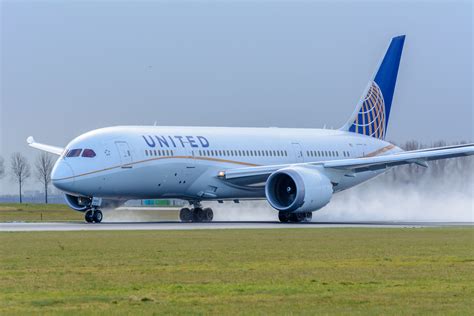
Shortly after the safety upgrade, United Airlines announced a new one-stop service connecting Los Angeles International Airport and Bangkok Suvarnabhumi Airport via Hong Kong International Airport using the Boeing 787-9 Dreamliner. The route demonstrated that airlines still see potential in the Thailand market, but the decision to use a connecting model instead of a nonstop flight reveals the difficult economics involved.
Ultra-Long-Haul Flights Between the US and Thailand Are Extremely Expensive
The biggest challenge facing nonstop US-Thailand flights is distance.
Using Los Angeles as an example, the flight between Los Angeles International Airport (LAX) and Bangkok Suvarnabhumi Airport (BKK) covers approximately 8,269 miles. This places the route firmly within the ultra-long-haul category.
Ultra-long-haul flights require enormous investment. Aircraft spend more time away from their home bases, crews require additional planning, fuel consumption increases, and airlines must carefully balance passenger demand against operating costs.
A nonstop flight between the United States and Thailand would likely require an aircraft such as a Boeing 787-9 Dreamliner or Airbus A350-900, both of which are capable of long-range operations with improved fuel efficiency compared with older aircraft.
However, even with modern aircraft, airlines still need enough high-paying passengers to make the route profitable.
The challenge is that Thailand’s US-bound traffic is heavily influenced by leisure travelers and people visiting friends and relatives. These passengers are often more price-sensitive and may prefer saving money with a one-stop itinerary rather than paying a premium for nonstop convenience.
This differs from destinations such as Singapore, where large amounts of financial, technology, and corporate traffic create stronger demand for premium cabins.
For example, Singapore Airlines successfully operates ultra-long-haul flights between Singapore and destinations such as New York because business travelers and premium passengers help support the economics of those routes.
Thailand has a growing luxury travel market, but it has not yet reached the same level of premium business demand.
Previous Nonstop Flights Between the US and Thailand Failed Financially
The lack of current nonstop services is not because airlines have never tried.
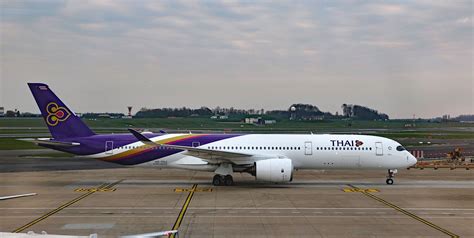
Thai Airways previously operated direct flights from Bangkok to both New York John F. Kennedy International Airport and Los Angeles International Airport. These routes used the Airbus A340-500, an aircraft specifically designed for very long-range missions.
The A340-500 provided passengers with a comfortable experience, but the aircraft had one major weakness: poor fuel efficiency compared with newer-generation jets.
The New York-Bangkok route was one of the world’s longest flights at the time, and the operating costs became difficult to justify. Reports indicated that Thai Airways struggled financially on the service, eventually ending the New York route in 2008.
The Los Angeles service continued longer but was later changed into a one-stop operation through Seoul Incheon Airport before being completely canceled in 2015.
Today, the situation is different. Modern aircraft such as the Boeing 787 Dreamliner and Airbus A350 consume significantly less fuel and are much better suited for long-distance operations. Technically, Thai Airways or a US carrier could operate these routes more efficiently than before.
However, aircraft technology alone cannot guarantee profitability. Airlines still need sufficient demand and strong yields.
Why Other Southeast Asian Destinations Receive More US Nonstop Flights
Another reason Thailand has struggled to attract nonstop US services is competition from other Southeast Asian markets.
Cities such as Singapore, Manila, Tokyo, Seoul, and Hong Kong act as major aviation hubs connecting North America with Asia. These airports offer airlines strong connecting opportunities and large premium passenger markets.
Singapore, in particular, has positioned itself as a global business center. Its combination of financial services, technology companies, and international headquarters creates demand from corporate travelers willing to pay higher fares.
Thailand, while extremely popular for tourism, has a different travel profile. Bangkok is primarily driven by leisure passengers, tourism, and regional connections.
For airlines, a route filled mostly with economy-class vacation travelers is much harder to justify than a route carrying business executives paying premium fares.
This explains why airlines often choose to connect American travelers through existing Asian hubs rather than operate expensive nonstop flights.
A traveler from Los Angeles heading to Bangkok can already choose from numerous one-stop options through Tokyo, Seoul, Taipei, Hong Kong, Singapore, Manila, Dubai, Doha, and European cities.
One-Stop Flights Provide Strong Competition for Nonstop Services
American travelers currently have many alternatives when flying to Thailand.
Passengers can connect through major Asian hubs operated by carriers including All Nippon Airways, Japan Airlines, Korean Air, and EVA Air.
Premium airlines also offer strong connections through their hubs. Cathay Pacific connects passengers through Hong Kong, while Singapore Airlines provides access through Singapore Changi Airport.
Middle Eastern carriers have also become major competitors. Emirates, Qatar Airways, and Etihad Airways all provide high-quality one-stop services between the US and Thailand.
Because these airlines already have established networks, they can spread operational costs across many destinations instead of relying only on Bangkok traffic.
For US airlines considering a nonstop route, the question becomes whether saving passengers several hours of travel time is enough to justify significantly higher operating expenses.
Air Canada Shows That North American Nonstop Thailand Flights Can Work
Although no US airline currently flies nonstop to Thailand, there is one important example from North America.
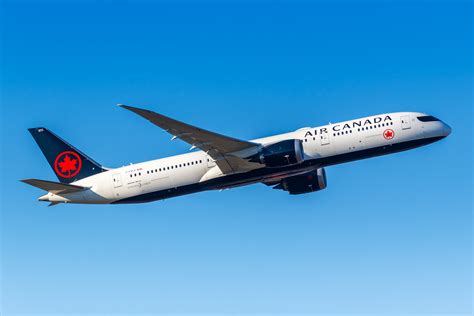
Air Canada operates nonstop flights between Vancouver International Airport and Bangkok Suvarnabhumi Airport using the Boeing 787-9 Dreamliner.
The route began in December 2022 and continues operating, showing that nonstop Thailand services can succeed under the right conditions.
One advantage is geography. Vancouver is closer to Bangkok than Los Angeles, with a distance of around 7,344 miles, nearly 1,000 miles shorter than LAX-BKK.
The shorter distance reduces fuel costs and improves aircraft utilization. Air Canada also benefits from limited nonstop competition and strong demand from Canadian travelers.
The success of this route suggests that nonstop Thailand flights are not impossible. Instead, they require the right combination of market size, aircraft efficiency, and operating economics.
Could United Airlines Launch a Nonstop US-Thailand Flight in the Future?
Among US carriers, United Airlines appears to be the most likely candidate to eventually launch a nonstop Thailand service.
The airline already has one of the strongest transpacific networks among American carriers, with major hubs at Los Angeles and San Francisco. Both airports could theoretically support a Bangkok route.
Los Angeles would be attractive because it has the largest Thai-American community in the United States. San Francisco could also be considered because of United’s extensive Asian network and strong West Coast connectivity.
United’s partnership with Thai Airways through the Star Alliance network would also provide additional value. Passengers could connect beyond Bangkok to destinations throughout Thailand and Southeast Asia.
However, launching such a route would require confidence that premium demand has grown enough to support the economics of an ultra-long-haul operation.
Thailand’s tourism industry continues to expand, and global interest in luxury travel experiences has increased. Popular media exposure, including shows such as The White Lotus, has also increased international attention toward Thailand’s high-end resorts and destinations.
Over time, these trends could improve the business case for nonstop services.
The Future of Nonstop US Flights to Thailand Remains Uncertain
The absence of nonstop US-Thailand flights is not caused by a lack of popularity. Thailand remains one of the world’s most desirable destinations, especially among American travelers seeking unique cultural experiences and tropical vacations.
The real challenge is that airlines must balance passenger demand with the enormous costs of operating an ultra-long-haul route.
Modern aircraft have made nonstop flights technically possible, and Thailand’s improved aviation safety rating removes a previous barrier. Yet airlines still need stronger premium demand and higher-paying passengers before committing expensive aircraft to the route.
For now, travelers from the United States will continue relying on connections through Asia, the Middle East, or Europe. But as Thailand’s international appeal grows and aircraft technology continues improving, a true nonstop US-Thailand route may eventually become a realistic possibility.