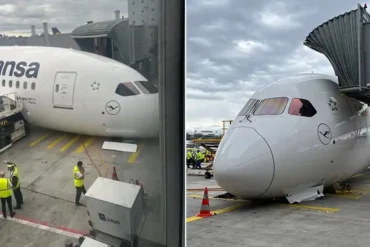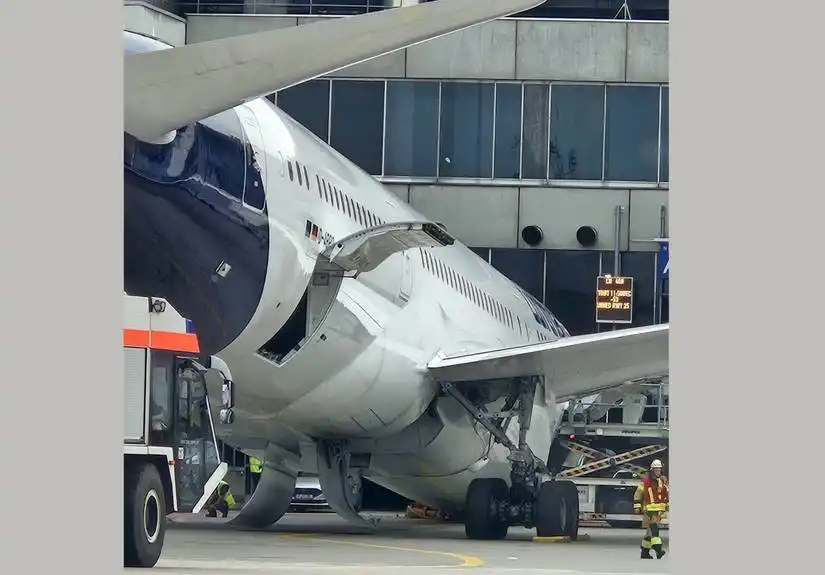
The investigation into the Lufthansa Boeing 787-9 Dreamliner nose gear collapse at Frankfurt Airport has uncovered a critical maintenance finding: the aircraft’s nose landing gear downlock pin was missing before the accident. The preliminary report from Germany’s Federal Bureau of Aircraft Accident Investigation (BFU) indicates that the absent safety device allowed the landing gear to retract unexpectedly while the aircraft was undergoing ground testing, causing the aircraft’s nose to strike the pavement.
The incident occurred on June 4 at Frankfurt Airport (FRA) while the nearly new aircraft was being prepared for its scheduled long-haul service to Los Angeles International Airport. The aircraft, registered D-ABPQ, had arrived from an overnight flight from Austin, Texas, and was positioned at gate A15 before operating flight LH450. At the time of the accident, the aircraft was not carrying passengers for departure, but maintenance personnel were inside conducting operational checks.
Investigation Reveals Missing Boeing 787 Nose Landing Gear Safety Pin
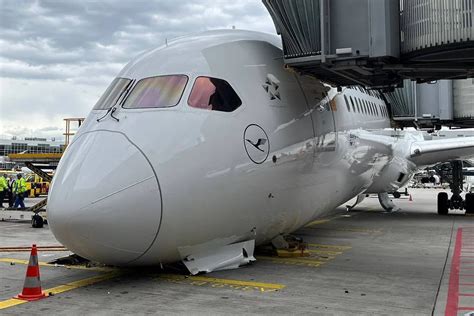
According to the BFU’s interim findings, two technicians were seated in the cockpit during the testing procedure when the landing gear system was activated. During the process, the landing gear selector should have been placed in the correct testing position. However, at approximately 10:45 UTC, activation of the landing gear lever caused the nose landing gear to retract, sending the front section of the aircraft downward onto the concrete surface.
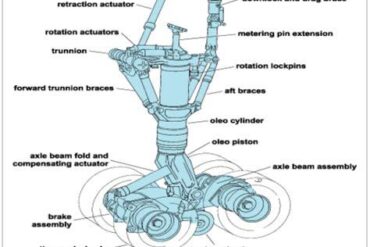
The missing downlock pin became the central focus of investigators because this component is designed to mechanically secure the landing gear in the extended position. Without the pin installed, the landing gear lacked the additional physical protection required during certain ground operations. The failure highlights how even a small overlooked component can have significant consequences when aircraft maintenance procedures are not correctly followed.
The collapse caused the cockpit door to slam shut, while aircraft power and lighting systems were interrupted. The nose section and engine cowlings made contact with the ground, creating substantial damage that required emergency response teams to stabilize the aircraft.
Emergency Response and Damage Assessment After Frankfurt Incident
Following the collapse, Frankfurt Airport’s emergency services responded immediately. The airport fire brigade restored power to the aircraft and removed approximately 66 tons of fuel to reduce weight and allow safer recovery operations. Investigators and ground crews later lifted the aircraft’s nose using an air cushion system, raising it roughly 6.5 feet (2 meters) above the ground.
Once the aircraft was elevated, the nose landing gear extended naturally and locked into place. This allowed investigators to examine the landing gear assembly and confirm that the required downlock pin had not been installed. The BFU reported that the pin was not located in its designated position and was also not found near the landing gear assembly.
The investigation involved 34 identified individuals connected to the event, including people inside the aircraft and ground personnel working around the aircraft on the apron. Two people suffered serious injuries and were transported to hospital, while 21 others received treatment for minor injuries at the scene.
Maintenance Procedures Under Review After Boeing 787 Incident
The discovery has raised important questions about aircraft maintenance discipline, procedural compliance, and checklist verification. Modern commercial aircraft rely on highly detailed maintenance processes designed to prevent exactly this type of occurrence. Safety pins, locking devices, and ground equipment indicators are essential controls that protect aircraft during inspections and servicing.
Investigators will examine whether the missing pin resulted from a procedural mistake, communication failure, incomplete documentation, or another issue within the maintenance workflow. The final report will likely focus on the sequence of actions performed before the gear retraction test and whether required verification steps were completed.
The incident also draws attention because the aircraft involved was among Lufthansa’s newer fleet additions. The Boeing 787-9, nicknamed “Herne,” was delivered to Lufthansa on January 17 and had only recently entered airline service. The aircraft can accommodate 287 passengers across three cabin classes, including business class, premium economy, and economy seating.
Lufthansa Boeing 787-9 Faces Extended Repair Period
A nose gear collapse is considered a serious aviation event because it can damage critical structures, including the forward fuselage, avionics areas, and cockpit systems. Although the aircraft was on the ground and no passengers were onboard at the time, the impact created significant repair requirements.
The aircraft was removed from service following the incident and will undergo extensive inspection and repair work. Because structural assessments and component checks must be completed before returning an aircraft to commercial operations, the Dreamliner is expected to remain unavailable for an extended period.
The canceled Los Angeles flight forced Lufthansa to rebook affected passengers onto alternative services. While operational disruption was limited compared with an in-flight emergency, the event serves as a reminder that aviation safety depends not only on advanced technology but also on precise execution of maintenance procedures.
The BFU’s interim report provides the first major explanation for the Frankfurt accident, identifying the missing nose landing gear downlock pin as a key factor. Further investigation will determine why the critical safety device was absent and what improvements may be needed to prevent similar maintenance-related incidents in the future.