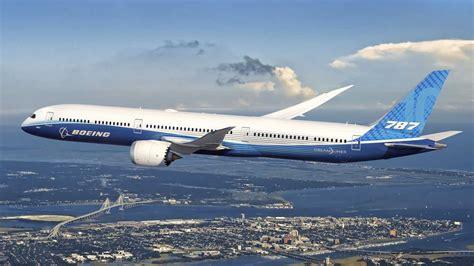
The Boeing 787 Dreamliner has become one of the most influential widebody aircraft programs in modern commercial aviation. When the aircraft entered airline service in 2011, it represented a major technological leap, combining lightweight composite structures, advanced aerodynamics, and highly efficient engines to redefine long-haul travel. More than a decade later, the Dreamliner remains a cornerstone of many global airline fleets, but one figure has changed dramatically: its published price.
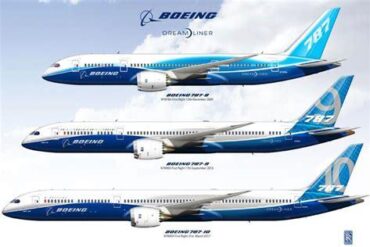
When Boeing first introduced the 787 program, early estimates placed the aircraft’s price at roughly $120 million for the original 787-8 variant. By the time Boeing published its final public aircraft price catalog in 2018, the listed prices had risen significantly, with the 787-8 priced at approximately $239 million, the 787-9 at $281.6 million, and the 787-10 at $325.8 million.
At first glance, this appears to show that the Dreamliner became more than twice as expensive compared with its early launch-era pricing. However, the story behind this increase is far more complex. The rise reflects years of inflation adjustments, aircraft improvements, production challenges, stronger market acceptance, and the increasing value of a proven long-range aircraft platform.
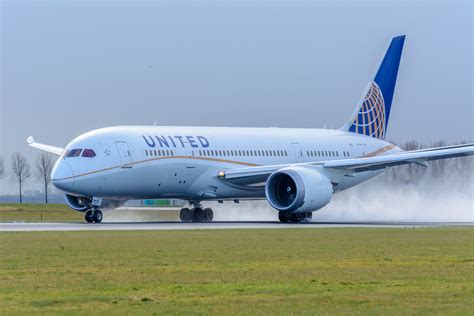
Annual Price Adjustments Created A Long-Term Increase
Commercial aircraft prices rarely change because of a single dramatic event. Instead, manufacturers typically adjust prices gradually to reflect changing economic conditions. Factors such as inflation, labor costs, raw material prices, supply chain expenses, currency fluctuations, and continued engineering investment all influence aircraft pricing.
For an aircraft program that remains in production for many years, even modest annual increases can create a substantial difference. Boeing has historically adjusted its commercial aircraft prices periodically rather than maintaining a fixed value throughout a program’s lifespan.
For example, Boeing increased its commercial aircraft prices by approximately 4.1% in 2018, while previous years included smaller adjustments. Although a few percentage points may appear insignificant, compound growth over more than a decade creates a major financial impact.
The Dreamliner’s pricing history spans exactly this type of period. The aircraft was launched in 2004, entered service in 2011, and continued evolving throughout the following decade. Comparing the original launch-era estimate with later published prices combines more than ten years of economic changes into one calculation.
The increase was therefore not simply Boeing charging more for the same aircraft. The aircraft itself became a more advanced and capable product while the cost of producing sophisticated commercial aircraft increased worldwide.
The Boeing 787 Family Expanded Beyond The Original Aircraft Concept
The original 787-8 Dreamliner was designed to replace older mid-sized long-range aircraft while offering airlines greater flexibility on international routes. However, Boeing later expanded the family with larger variants that provided additional capacity and improved economics.
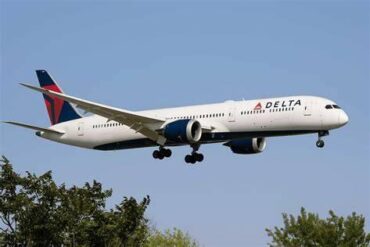
The 787-9 became the most successful version of the family, offering increased passenger capacity and greater range compared with the original model. It typically accommodates around 290 passengers in a two-class configuration, making it suitable for both major international routes and thinner long-distance markets.
The larger 787-10 pushed the design further by increasing passenger capacity to approximately 330 seats, depending on airline configuration. Although it sacrificed some range compared with the 787-9, it offered excellent efficiency on high-demand routes.
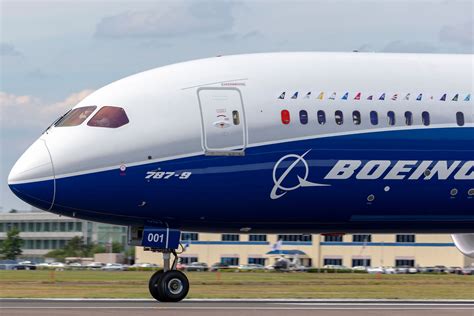
One of the biggest reasons behind the Dreamliner’s value was its extensive use of composite materials. Approximately 50% of the aircraft’s primary structure by weight consists of composite materials, reducing airframe weight while improving fuel efficiency and corrosion resistance.
Boeing promoted the aircraft as delivering approximately 20–25% lower fuel consumption compared with many previous-generation aircraft it was designed to replace. These improvements helped airlines reduce operating costs while opening new possibilities for long-distance routes.
The Dreamliner also continued receiving upgrades after entering service. Boeing developed higher Maximum Takeoff Weight (MTOW) versions that increased payload and range capabilities. These improvements meant that airlines purchasing later aircraft were not receiving exactly the same product that entered service in 2011. They were buying a more mature and capable platform.
Market Confidence Increased The Dreamliner’s Commercial Value
When the Boeing 787 first entered service, airlines were purchasing an aircraft based partly on projected performance. Like every new commercial aircraft program, the Dreamliner carried uncertainty.
Airlines had to evaluate whether the aircraft would deliver the promised fuel savings, reliability, and operational flexibility. Early customers were effectively investing in a new technology platform that had not yet accumulated years of real-world operational data.
Over time, that uncertainty declined. The aircraft accumulated millions of flight hours across different climates, routes, and operating environments. Airlines gained practical experience with maintenance requirements, fuel savings, passenger demand, and operational performance.
The Dreamliner eventually demonstrated that it could successfully connect cities that previously lacked enough demand for larger widebody aircraft. This capability became one of its strongest selling points.
Instead of requiring airlines to fill large aircraft such as older Boeing 777 or Airbus A340 models, the 787 allowed carriers to operate more efficiently with smaller long-range aircraft. This supported the growth of point-to-point international services.
As confidence increased, the aircraft’s commercial reputation strengthened. A proven aircraft with strong operational data naturally becomes more valuable than an untested design.
Growing Global Adoption Strengthened Boeing 787 Demand
The Dreamliner’s success was not limited to a small number of airlines. Carriers around the world adopted the aircraft for fleet renewal and network expansion strategies.
By 2026, the Boeing 787 family had surpassed 2,400 firm orders and achieved more than 1,270 deliveries worldwide. The popularity of the 787-9 demonstrated that airlines valued its balance between passenger capacity, range, and operating efficiency.
The aircraft also helped airlines create more than 540 new nonstop routes globally, allowing carriers to serve city pairs that may not have been economically practical with previous aircraft generations.
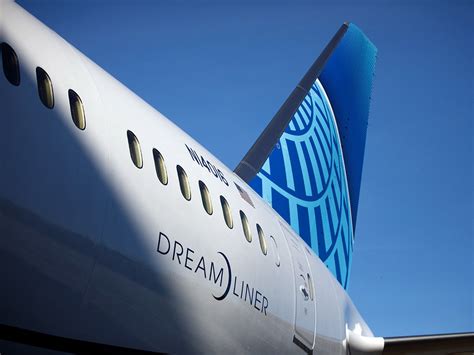
This market acceptance contributed to the aircraft’s increased perceived value. A manufacturer can charge more confidently for a platform that has proven itself commercially and operationally.
The Dreamliner also benefited from wider industry trends. Many airlines began replacing older widebody fleets, including aircraft such as the Boeing 767, Boeing 777-200ER, and Airbus A330-200. At the same time, demand for fuel-efficient long-range aircraft increased as airlines focused on reducing operating expenses.
The combination of fleet replacement demand and limited widebody production capacity created favorable conditions for established aircraft programs like the 787.
List Prices Are Not The Same As Airline Purchase Prices
One of the most misunderstood aspects of commercial aviation is the difference between catalog prices and actual transaction prices.
Aircraft manufacturers publish list prices as reference points, but airlines rarely pay the full advertised amount. Large aircraft purchases involve extensive negotiations covering aircraft quantity, delivery schedules, financing arrangements, maintenance agreements, pilot training, spare parts, and long-term support contracts.
A major airline ordering dozens or hundreds of aircraft typically receives significant discounts compared with a smaller customer purchasing only a few units.
For example, if an airline purchased 220 Boeing 787-9 aircraft at the published list price of $281.6 million each, the theoretical value would exceed $61 billion. However, actual commercial agreements would include negotiated pricing and additional contractual arrangements.
Therefore, the doubling of the Dreamliner’s list price does not mean airlines suddenly began paying twice as much. Instead, it represents the official benchmark value of a sophisticated aircraft program.
Production Complexity Increased The Aircraft’s Economic Value
The Boeing 787 introduced one of the most ambitious manufacturing approaches ever attempted in commercial aviation. The aircraft uses a highly distributed global supply chain, with major components produced across multiple countries before final assembly.
The Dreamliner contains extensive amounts of carbon-fiber-reinforced plastic, including approximately 70,500 pounds (32,000 kilograms) of composite material. Its production requires coordination between thousands of suppliers providing structures, avionics, engines, landing gear, cabin systems, and other critical components.
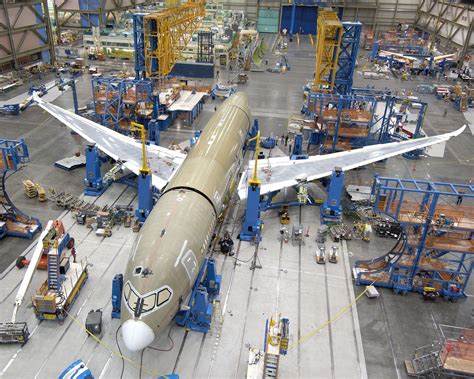
Building a modern widebody aircraft is not simply a matter of assembling parts. Manufacturers must recover enormous investments in engineering, certification, tooling, production facilities, and supplier development.
The Dreamliner program experienced significant development challenges during its early years, including delays and production difficulties. These factors also influenced the long-term economics of the aircraft program.
As production matured, Boeing gained experience improving manufacturing processes while continuing to support a global fleet. The aircraft’s price reflects not only the physical materials inside each airplane but also the massive industrial system required to design, build, certify, and maintain it.
The Dreamliner’s Higher Price Reflects A More Valuable Aircraft
The Boeing 787 Dreamliner’s price increase since entering service is the result of multiple factors working together. Inflation and annual pricing adjustments created a gradual increase, while aircraft improvements expanded the capabilities of the platform.
At the same time, airlines gained confidence in the Dreamliner’s efficiency, reliability, and route flexibility. What began as an ambitious new aircraft program became one of Boeing’s most important commercial products.
The published list price rising from approximately $120 million to more than $300 million does not simply represent a more expensive airplane. It represents a decade of technological improvements, market validation, production investment, and the evolution of a successful global aircraft family.
The Boeing 787 Dreamliner entered service as a revolutionary aircraft. More than ten years later, its higher price reflects its transformation into a mature, proven, and highly valuable cornerstone of modern international aviation.