The Sun, our life-giving star, has shocked scientists with a resurgence in activity that defied previous forecasts. After a prolonged period of declining solar behavior through the 1990s and early 2000s, researchers expected another dormant era. Instead, what unfolded after 2008 was a surprising solar revival — one that carries implications not just for astronomy, but also for technology, space exploration, and life on Earth.
A Solar Minimum That Never Was
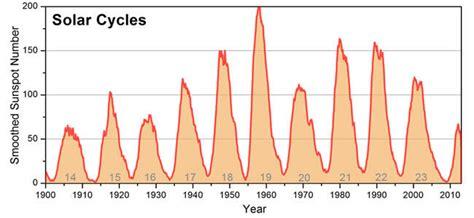
By 2008, the scientific community had every reason to believe that the Sun was entering a deep, multi-decade slumber. Solar activity had been steadily declining since 1990, mirroring patterns seen in the Maunder Minimum of the 17th century and the Dalton Minimum of the 19th. These were eras marked by reduced solar spots, diminished magnetic activity, and a cooler Earth climate in some regions.
At the heart of these forecasts lies the well-established 11-year solar cycle, characterized by peaks and troughs in sunspot and flare activity. But broader, longer cycles — spanning decades or centuries — are less predictable. The evidence between 1990 and 2008 suggested we might be heading into one of these extended low phases. What came next, however, overturned those assumptions.
The 2008 Awakening: Solar Metrics Reversed Course
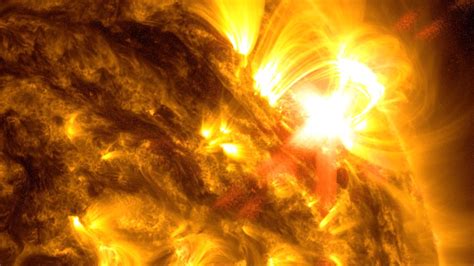
Instead of continuing downward, solar data from 2008 onward began to paint a different picture. A recent study published in The Astrophysical Journal Letters confirmed that multiple solar indicators have gradually intensified:
- Magnetic field strength: a steady increase since 2008, reversing nearly two decades of decline.
- Solar wind intensity: likewise showing a notable upward trend, suggesting a more active and volatile heliosphere.
This rise in solar activity does not signify an immediate threat. Rather, it signals a shift that affects space weather forecasting, satellite resilience, astronaut safety, and deep-space mission planning.
Consequences for Earth and Orbiting Technology
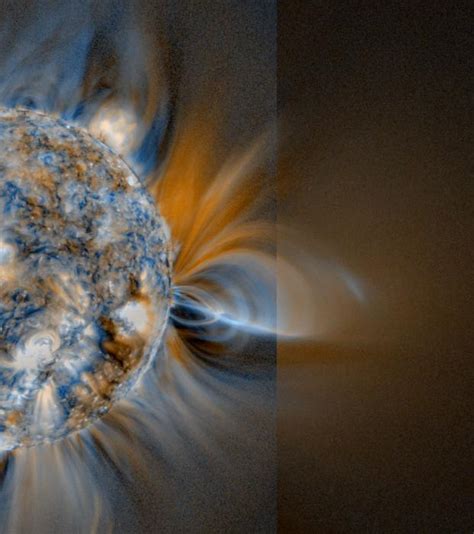
Solar activity manifests in several disruptive forms — the most concerning being coronal mass ejections (CMEs). These are colossal expulsions of solar plasma and magnetic fields, capable of reaching Earth in days and generating geomagnetic storms. While Earth’s magnetic shield repels most solar emissions, a sufficiently large CME could induce widespread technological havoc:
- Electrical grid failures: transformers and substations could be overloaded or fried.
- Satellite damage: both hardware systems and GPS signal integrity are at risk.
- Radio blackouts: high-frequency communication systems, particularly in aviation, can be disrupted.
- Astronaut safety: bursts of solar radiation may pose acute hazards to spacefarers, especially those beyond low Earth orbit.
Why the Solar Reawakening Matters
The question that now looms over heliophysics is: what caused the Sun to deviate from the predicted low-activity phase? Despite decades of observation, the mechanisms behind long-term solar variability remain elusive. Current hypotheses focus on the complex dynamics of the Sun’s internal dynamo — a tangled ballet of magnetic fields, plasma flows, and rotational forces. But the precise triggers of these larger cycles defy exact modeling.
This unpredictability elevates the urgency of investing in solar observation infrastructure, such as the Parker Solar Probe and Solar Orbiter, both of which are now delivering unprecedented close-range data from the solar atmosphere. Only through sustained observation can we begin to decode the Sun’s deeper rhythms and prepare for future disruptions.
Navigating a More Volatile Solar Future
As solar activity builds, so too does the responsibility to understand and mitigate its effects. Agencies like NASA and NOAA are already adapting their models and preparing contingency strategies for extreme solar events. Private satellite operators and power grid managers are being urged to harden systems against geomagnetic threats, however rare they may be.
In a cosmic sense, the Sun has merely stirred from a nap. But in human terms, this reawakening demands our attention. It reminds us that even our most familiar celestial companion holds secrets still waiting to be uncovered — and that our increasingly digital civilization rests beneath its gaze.