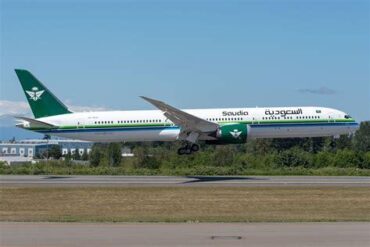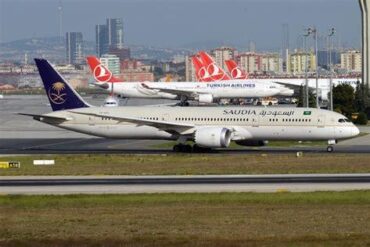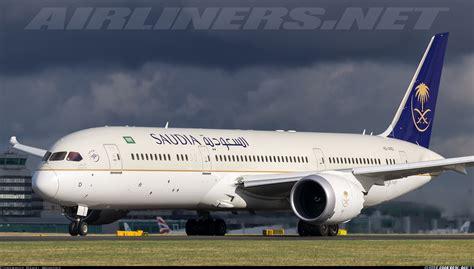
Saudia is preparing to make a pivotal move in its long-haul strategy by introducing the Boeing 787 Dreamliner on a United States route for the first time in its history, a milestone that underscores both fleet modernization and a recalibration of premium demand across its North American network. Beginning in July 2026, the Saudi Arabian flag carrier will deploy its 298-seat Boeing 787-9 on the nonstop service between Jeddah’s King Abdulaziz International Airport (JED) and Washington Dulles International Airport (IAD), replacing the long-serving Boeing 777-300ER on the route.
This transition is not merely a fleet swap. It reflects deeper shifts in passenger demographics, route economics, and Saudia’s broader ambition to position the Dreamliner as the backbone of its intercontinental growth. The 14-hour westbound journey between Jeddah and Washington spans approximately 6,580 miles (10,590 kilometers) and has historically been a cornerstone of the airline’s engagement with the United States, carrying diplomatic, commercial, and religious traffic for decades.
Saudia’s relationship with Washington, D.C. dates back to the late 1980s, and the airline recently marked the 35th anniversary of the route, highlighting its role in supporting bilateral ties between Saudi Arabia and the United States. According to Saudia’s North America leadership, air connectivity has consistently strengthened cooperation across business, tourism, finance, and government travel, with Washington remaining one of the most strategically significant destinations in the carrier’s global network.
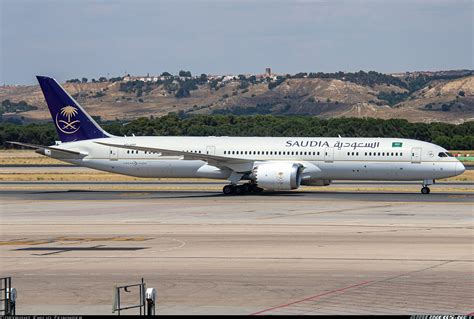
The upcoming switch from the three-class Boeing 777-300ER to a two-class Boeing 787-9 represents a deliberate shift toward higher overall capacity with a reduced premium footprint. While the 777 variant currently operating the JED–IAD route features 290 seats, including a rare First Class cabin with 12 private suites, the incoming Dreamliner increases total capacity to 298 seats but eliminates First Class entirely. This change reflects the reality that Jeddah-originating traffic tends to be less premium-heavy than services departing from Riyadh, Saudi Arabia’s political and administrative capital.
Fare data reinforces this strategic logic. Average one-way fares on the Riyadh–Washington route have hovered around $2,285, driven by government, diplomatic, and corporate demand between the two capitals. In contrast, Jeddah–Washington fares average approximately $833, highlighting the dominance of leisure, visiting-friends-and-relatives, and religious travel. Jeddah serves as the primary international gateway for pilgrims traveling onward to Mecca and Medina, particularly during peak Hajj and Umrah seasons, making seat density and operational efficiency more critical than ultra-premium offerings.
A Dreamliner First for the U.S., Not for North America
While the Washington service will mark Saudia’s first-ever Dreamliner operation to the United States, the aircraft is already a familiar presence elsewhere in North America. The airline currently operates a five-times-weekly Boeing 787-9 service to Toronto Pearson International Airport, demonstrating confidence in the type’s performance on ultra-long-haul missions. The expansion into the U.S. market with the 787 is therefore an evolution rather than an experiment.
Beyond Washington, Saudia maintains a focused but significant North American footprint. The airline operates nonstop flights from both Jeddah and Riyadh to New York JFK, along with a demanding Jeddah–Los Angeles route that ranks among the top 20 longest nonstop commercial flights in the world, with westbound flight times averaging 16 hours and 45 minutes. These routes continue to rely on the Boeing 777-300ER, underscoring the aircraft’s role in serving high-demand, long-range sectors where cargo capacity and range remain decisive.
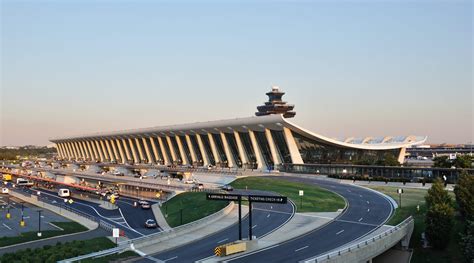
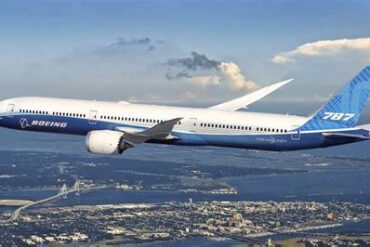
The decision to introduce the 787 specifically on the Jeddah–Washington sector suggests a careful alignment of aircraft capabilities with market characteristics. The Dreamliner’s lower fuel burn, advanced aerodynamics, and composite fuselage allow Saudia to reduce operating costs while maintaining range and improving cabin comfort, particularly on routes where yields are thinner but volumes remain strong.
Cabin Strategy and Passenger Experience on the 787-9
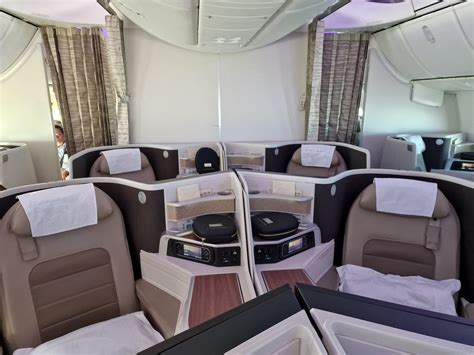
Saudia’s Boeing 787-9 features a two-class configuration designed to balance comfort with efficiency. The Business Class cabin comprises 24 Collins Aerospace Super Diamond seats arranged in a 1-2-1 reverse-herringbone layout, ensuring direct aisle access for every passenger. Each seat offers a 21-inch width, 47-inch pitch, and converts into a fully flat bed, aligning with international expectations for long-haul premium travel.
The Economy Class cabin, accounting for the majority of the aircraft’s capacity, includes 274 Collins Aerospace Pinnacle seats in a 3-3-3 configuration across two cabins. With a 32-inch pitch, 17-inch seat width, and modern inflight entertainment, the layout is optimized for long-duration comfort while maximizing seat count. Compared to the 777, passengers benefit from the Dreamliner’s lower cabin altitude, higher humidity, and larger windows, features that have become central to Boeing’s long-haul value proposition.
Intensifying Competition in the U.S.–Saudi Market
For years, Saudia has been the sole airline offering nonstop service between Saudi Arabia and the United States, a position that is set to change. Delta Air Lines is scheduled to launch a new Atlanta–Riyadh route in October, operated by the Airbus A350-900. This service will not only connect Delta’s largest hub with the Saudi capital but also strengthen cooperation within the SkyTeam alliance, linking Delta with both Saudia and the newly established Riyadh Air.
Riyadh Air, Saudi Arabia’s newest carrier, is expected to commence U.S. operations in late 2026 or early 2027, pending delivery of its own Boeing 787-9 fleet. Industry observers anticipate that Atlanta and New York will be among its first American gateways, intensifying competition while expanding overall connectivity between the two countries. There is also growing speculation that Saudia itself may introduce a nonstop Jeddah–Atlanta service once additional Dreamliners enter its fleet.
The Boeing 787 as the Foundation of Saudia’s Next Decade
Saudia currently operates 21 Boeing 787 Dreamliners, including 13 787-9s and eight higher-capacity 787-10s, and the fleet is set for dramatic expansion. In 2023, the airline placed an order for 39 additional 787 aircraft, split between 18 787-9s and 21 787-10s, as part of a broader aviation strategy aligned with Saudi Arabia’s national development goals.
With a projected Dreamliner fleet approaching 60 aircraft, the 787 is poised to overtake the Boeing 777 as Saudia’s most-used widebody, reshaping the airline’s network economics and route planning philosophy. The introduction of the 787 on the Washington route in 2026 is therefore more than a single deployment—it is a clear signal that Saudia’s future long-haul identity will be defined by efficiency, scale, and modernized passenger experience, even on its most politically and historically significant routes.