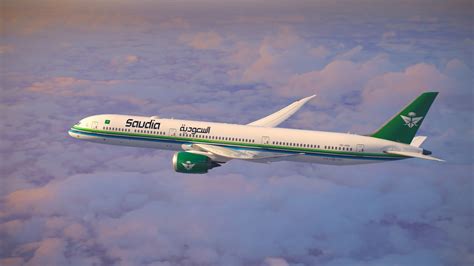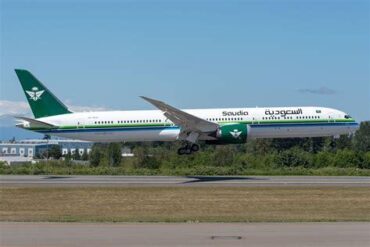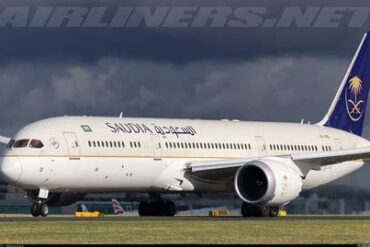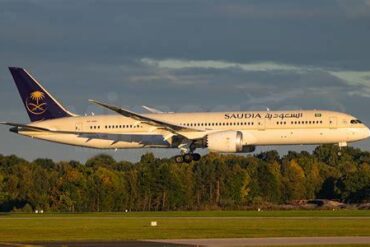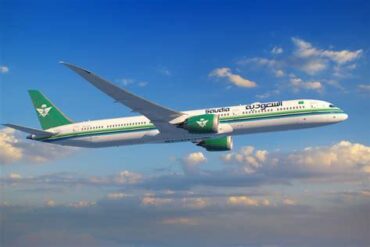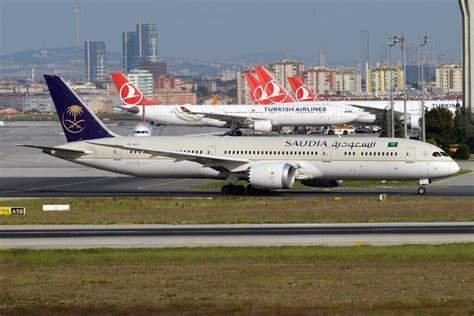
Saudi Arabia’s national carrier, Saudia, has filed for potential launch of a new transatlantic route to the United States, setting its sights on Detroit Metropolitan Wayne County Airport (DTW) from its hub in Jeddah (JED). If this proposed route materializes, it would mark the airline’s first foray into the American Midwest, expanding its North American footprint and signaling the strategic ambitions behind the Kingdom’s broader Vision 2030 aviation roadmap.
Detroit: A Calculated Target in the Midwest
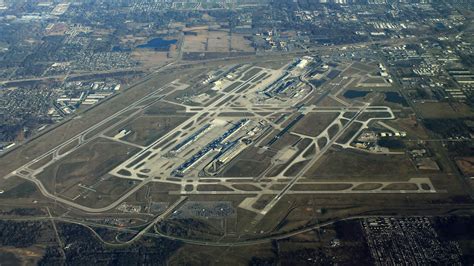
The Winter 2025 ACL slot coordination report revealed Saudia’s formal request for landing slots at DTW, using the Boeing 787-9 Dreamliner, a move that could herald a new chapter in the carrier’s U.S. connectivity. Detroit isn’t an arbitrary choice; it is home to Dearborn, which boasts one of the largest Arab-American populations in the country. This demographic depth gives Saudia a ready-made market of culturally and commercially connected passengers eager for direct access to Saudi Arabia.
Moreover, DTW’s status as a Delta Air Lines hub adds layers of alliance potential. Both Delta and Saudia are members of the SkyTeam alliance, which would allow passengers to leverage extensive code-share connections across the U.S. domestic market upon arrival, further enhancing the appeal of this route.
Not the First Filing — But Perhaps the Most Strategic
Caution is warranted. Saudia has previously filed for other U.S. destinations like Atlanta (ATL) and Miami (MIA) that never materialized. Filing for slots is a non-binding move — airlines often reserve future options without making firm commitments. However, unlike its earlier filings, Detroit makes a compelling case due to:
- Cultural affinity and diaspora strength in Michigan
- Alliance-backed connectivity with Delta
- Midwest market underserved by direct Gulf connections
If Saudia follows through this time, the Detroit route could become a cornerstone in its North American expansion strategy.
The Power of the 787-9 Dreamliner in Long-Haul Strategy
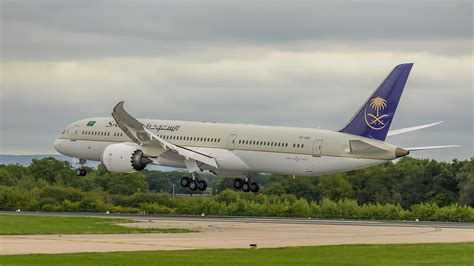
Saudia’s deployment of the Boeing 787-9 Dreamliner underscores its intent to optimize fuel efficiency and passenger comfort for this proposed route. With over 50 Dreamliners currently in its fleet — a mix of 787-9 and 787-10 variants — the airline is well-positioned to open new long-haul routes. The 787-9 features a two-class configuration with 298 seats and a range of over 7,500 nautical miles, easily covering the 6,400-mile JED–DTW sector.
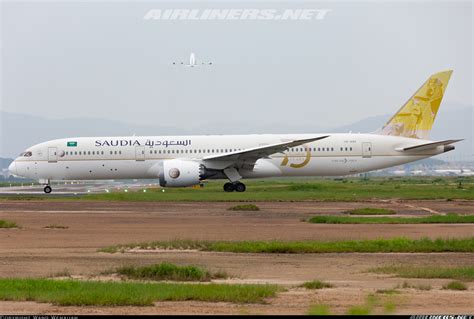
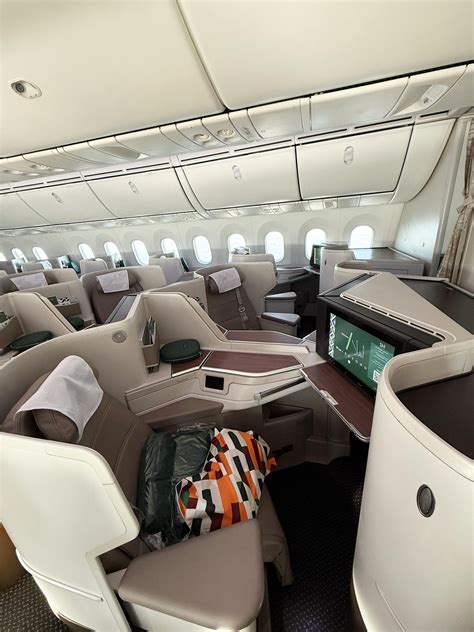
Unlike older generation aircraft, the Dreamliner allows Saudia to maintain better operating economics, especially critical in volatile fuel markets and when testing new, unproven routes. Enhanced cabin pressurization, mood lighting, and humidity control also elevate the in-flight experience, aligning with Saudia’s drive to improve premium service offerings.
A Broader Vision: Saudia’s Role in Vision 2030
The proposed Detroit service is more than just route expansion — it’s a manifestation of Saudi Arabia’s Vision 2030 agenda to diversify its economy and establish itself as a global aviation hub. Under this framework, Saudia is undergoing significant transformation:
- Modernizing its fleet with new aircraft acquisitions
- Overhauling cabin interiors and entertainment systems
- Expanding international route networks beyond traditional markets
Recent months have seen aggressive efforts to bolster service to North America, Europe, and Asia, with new long-haul destinations coming into focus.
Currently, Saudia’s U.S. destinations include New York (JFK), Washington D.C. (IAD), and Los Angeles (LAX) — all located on the coasts. A Detroit route would carve a new geographic niche in the airline’s American strategy, bringing the brand closer to the heart of the U.S.
Strategic Network Expansion or Speculative Filing?
Though no official announcement or ticket sales have been made, the timing of this slot filing aligns with Saudia’s current growth arc. The airline has shown increasing operational boldness, eyeing competitive markets previously dominated by Gulf peers like Qatar Airways and Emirates.
Detroit offers an entry point with potentially less Gulf competition, giving Saudia a head start. Still, the challenge remains: Saudia must balance operational feasibility, diplomatic logistics, and airspace permissions, especially with the geopolitical complexities currently affecting Middle East carriers.
Geopolitics and Route Viability: A Fragile Equation
Airspace volatility — particularly from Iran-Israel tensions, ongoing Red Sea naval instability, and airspace restrictions over Syria or parts of the Caucasus — complicates any transatlantic routing from the Arabian Peninsula. To reliably serve North America, Saudia would need to ensure that European or polar airspace remains accessible, and that alternate routes do not increase operational costs unsustainably.
The JED–DTW route’s length and fuel requirements place it near the operational margin of the 787-9, especially if detours become necessary. However, if stable flight paths are secured and seasonal demand aligns, this route has every chance of long-term viability.
SkyTeam Synergy: Unlocking Delta’s U.S. Reach
Delta Air Lines operates a massive hub at Detroit, making the SkyTeam alliance particularly beneficial. Should the route materialize, Saudia passengers could seamlessly connect to dozens of domestic destinations like Chicago, Boston, Dallas, or Seattle through shared lounges and baggage agreements.
Delta, in return, could feed passengers onto Saudia flights for onward connections to the Middle East, Africa, and the Indian subcontinent, deepening commercial synergy across the Atlantic. For Saudia, such a network overlay eliminates the need to operate point-to-point U.S. services beyond a few strategic cities, instead allowing alliance infrastructure to amplify its reach.
Passenger Potential: Business, Cultural, and Religious Travelers
The JED–DTW route appeals not only to ethnic and family travelers, but also to three distinct segments:
- Religious tourists heading to Jeddah for Umrah or Hajj
- Business travelers exploring investment and oil partnerships
- Cargo clients leveraging the growing Saudi–Midwest trade corridor
Detroit’s robust automotive, engineering, and logistics industries increasingly interface with Gulf-based entities. As the Kingdom diversifies away from oil, Detroit’s manufacturing legacy and tech transformation offer an ideal bilateral opportunity.
Awaiting Official Confirmation
For now, the Winter 2025 schedule filing remains speculative. Saudia has made no formal route announcement, and airline observers note that until GDS ticket availability or official PR is released, this remains a “filed but not finalized” scenario. However, every indication — from strategic geography to fleet readiness and alliance synergy — suggests that Detroit is not just a placeholder, but a realistic new launchpad for Saudia’s transatlantic future.
Final Thoughts: A Gateway to the Future?
As Saudia pursues aggressive international growth, Detroit represents a well-calculated move into America’s heartland. With a modern Dreamliner fleet, strategic alliance benefits via SkyTeam, and a ready-made Arab-American audience, the JED–DTW route is more than plausible — it’s inevitable, should conditions remain favorable.
What remains now is formal confirmation and execution. If Saudia does indeed launch this service, it won’t just be opening a new route — it will be opening a corridor between two worlds, powered by culture, commerce, and a shared future vision in aviation.