American Airlines has expanded its transatlantic network with six new or returning nonstop routes in 2026, connecting three of its major U.S. hubs with destinations across Europe. The expansion adds links to Scotland, Italy, Greece, Hungary, Switzerland, and the Czech Republic, giving travelers more direct options during the carrier’s largest summer schedule to date.
The six services launched between March and May, although they represent a mixture of genuinely new routes and previously operated markets. Four are returning services, while Dallas-Fort Worth–Athens is a completely new American Airlines city pair. Meanwhile, New York JFK–Edinburgh marks the restoration of a route that American last operated in 2018. Together, the launches demonstrate a strategy built around restoring proven markets while selectively opening new ones.
American’s 2026 transatlantic expansion is spread across New York-JFK, Miami, Philadelphia, and Dallas-Fort Worth, with each hub serving a different strategic purpose. Philadelphia remains the airline’s principal transatlantic gateway, while Dallas-Fort Worth adds long-haul reach from its enormous domestic network. Miami strengthens European connectivity alongside its broader international operation, and New York provides an important platform for American’s next-generation long-haul narrowbody aircraft.
Six American Airlines Transatlantic Routes in 2026
The first launch arrived on March 8, when American restarted its New York-JFK–Edinburgh service with an Airbus A321XLR. The aircraft is particularly significant because its long-range narrowbody capabilities allow American to serve European destinations with lower capacity than a widebody while retaining a premium cabin. The 155-seat configuration includes 20 Flagship Suite seats, 12 Premium Economy seats, and 123 Main Cabin seats.
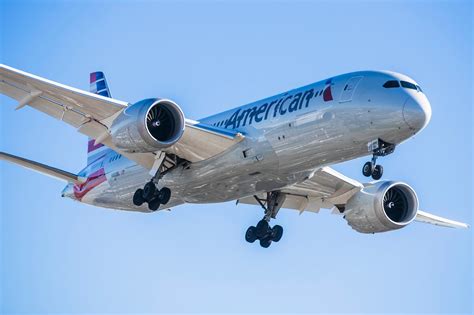
On March 29, American launched Miami–Milan Malpensa, operated by a Boeing 787-8 Dreamliner. Unlike most of the new routes, this service was introduced as a year-round operation, giving American a permanent nonstop link between South Florida and one of Europe’s most important business and tourism markets.
Four additional routes began on May 21. From Philadelphia, American restored nonstop service to Budapest and Prague, both operated with Boeing 787-8 aircraft. From Dallas-Fort Worth, the airline launched services to Athens and Zurich, significantly broadening the Texas hub’s European network.
| Route | Aircraft | Schedule |
|---|---|---|
| New York-JFK–Edinburgh | Airbus A321XLR | Seasonal |
| Miami–Milan Malpensa | Boeing 787-8 | Year-round |
| Philadelphia–Budapest | Boeing 787-8 | Seasonal |
| Philadelphia–Prague | Boeing 787-8 | Seasonal |
| Dallas-Fort Worth–Athens | Boeing 777-300ER/777-200ER | Seasonal |
| Dallas-Fort Worth–Zurich | Boeing 777-200ER | Seasonal |
Philadelphia Strengthens Its European Gateway
Philadelphia plays a central role in American’s transatlantic strategy. The airline describes Philadelphia International Airport as its transatlantic gateway, and its summer 2026 schedule includes nonstop flights to 19 destinations across the Atlantic.
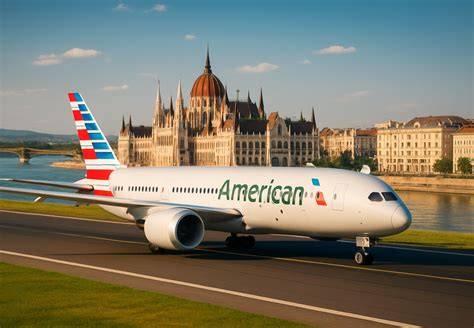
The return of Budapest and Prague therefore does more than restore two individual routes. It strengthens Philadelphia’s role as a European connecting hub, allowing passengers from American’s extensive U.S. domestic network to reach Central Europe with a single connection. Both services operate daily with Boeing 787-8 Dreamliners, giving the markets substantial long-haul capacity.
Budapest is especially notable from a competitive standpoint. American Airlines is the only U.S. airline offering nonstop service to Budapest, giving it a distinctive position in the market. The route’s return also suggests that American sees renewed demand for direct access to Hungary rather than relying solely on connections through larger Western European gateways.
Dallas-Fort Worth Adds Athens and Zurich
Dallas-Fort Worth gains two particularly interesting European connections. DFW–Athens is a genuinely new nonstop city pair for American Airlines, giving passengers in the airline’s largest hub a direct link to Greece. American considers Athens its fifth U.S. destination served nonstop, further expanding its presence in the Greek market.
The Zurich service represents a different story. American previously operated Dallas-Fort Worth–Zurich until 2007, making its 2026 return a restoration of a long-standing market. The route was also connected to strong summer travel demand surrounding the 2026 FIFA World Cup, although its scheduled operating period ended in early August.
Aircraft assignments have demonstrated the flexibility required in long-haul operations. American initially announced DFW–Athens with the 787-8 and DFW–Zurich with a 777-200, but Athens has subsequently been operated with 777-300ER and 777-200ER aircraft. Such changes illustrate how airlines can adjust capacity according to demand, fleet availability, and seasonal scheduling.
Miami–Milan Becomes a Year-Round Link
The Miami–Milan route stands apart because American launched it as a year-round service. Milan is a major European center for finance, fashion, manufacturing, and tourism, while Miami provides access to a broad South Florida market and American’s extensive Latin American network.
The Boeing 787-8 is well suited to this mission. Its combination of long-range capability, relatively moderate capacity, and premium seating allows American to serve Milan without requiring one of its largest aircraft. For travelers, the year-round schedule also provides considerably more flexibility than a purely seasonal European route.
The A321XLR Gives JFK–Edinburgh a Different Role
The return of JFK–Edinburgh is also important because it showcases American’s growing use of the Airbus A321XLR for transatlantic flying. Traditionally, long-distance flights between the United States and Europe have relied heavily on widebody aircraft. The A321XLR changes that equation by allowing airlines to open thinner long-haul markets with a smaller aircraft.
For Edinburgh, that capability is especially useful. Demand can be strong enough to justify nonstop service, but not necessarily strong enough throughout the year to require a large widebody. American can therefore match capacity more closely to the market while offering a premium experience through its Flagship Suite-equipped configuration.
What the Six Routes Mean for American Airlines
These six services form part of a much broader international expansion. During its centennial summer, American expected to operate approximately 75 million customers across 750,000 flights between May 21 and September 8, while offering as many as 70 daily flights from the United States to Europe.
The new routes consequently should not be viewed as isolated additions. They fit into a network strategy that combines restored markets, new city pairs, seasonal demand, and evolving aircraft technology. Philadelphia is deepening its Central European reach, Dallas-Fort Worth is expanding toward Southern and Central Europe, Miami is building a stronger permanent European presence, and New York is helping demonstrate what the A321XLR can accomplish on thinner transatlantic routes.
For passengers, the practical result is straightforward: more nonstop choices across the Atlantic. Budapest and Prague return, Milan becomes a year-round option, Zurich returns after nearly two decades, Edinburgh comes back to JFK with a next-generation aircraft, and Athens opens a completely new DFW connection.
American Airlines’ six-route expansion therefore represents more than a collection of new lines on a map. It shows how the airline is using its major hubs, aircraft fleet, and established European relationships to reshape its 2026 transatlantic network—one route at a time.