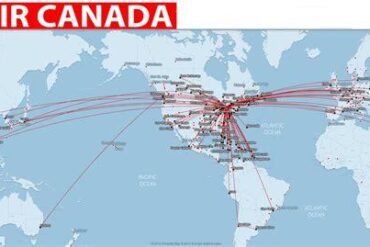
Air Canada is widening its transatlantic footprint with a focused push powered by next-generation narrowbodies, turning Summer 2026 into a decisive chapter in its long-range single-aisle strategy. The carrier’s newest announcement adds four fresh routes linking Canada and Europe, building on earlier widebody-centric expansions and underscoring an increasingly clear message: the A321XLR era is arriving fast, and Air Canada intends to make it count.
A Strategic Leap Toward Long-Range Narrowbody Dominance
Air Canada’s latest additions fit into a broader shift that’s been gathering momentum across the industry. The ability of narrowbody jets to cross the Atlantic reliably opens up city pairs once considered too thin for widebody economics. Air Canada is leaning fully into that advantage, expanding point-to-point connectivity across key hubs such as Toronto, Montreal, and Halifax. The result is a route network that feels more agile, more targeted, and more competitive, especially in markets traditionally controlled by European leisure specialists.
The airline’s chief commercial officer, Mark Galardo, framed the expansion in terms of simple utility: provide more direct links, give travelers more options, and build a network that stretches across both primary and niche transatlantic markets. The math is straightforward—more destinations translate into stronger market presence—but the execution hinges on aircraft capable of delivering long-range performance with single-aisle efficiency. The A321XLR fits that bill almost perfectly.
Montreal, Toronto, Halifax: New Routes Anchor a Wider Strategy
The newly announced routes add a layer of geographic nuance to Air Canada’s network. Montreal emerges as a dual-launch city, gaining Berlin Brandenburg and Nantes. Toronto secures a fresh Atlantic leisure connection with Ponta Delgada in the Azores. Halifax gains a second transatlantic link through an all-new service to Brussels, strengthening its role as a rising Atlantic gateway.
All four services will operate three times weekly, threading a careful balance between sustainable frequency and market testing. Montreal–Berlin is the sole route confirmed as an A321XLR launch from day one, while the remaining three are temporarily labeled as generic narrowbody operations. The likelihood points strongly toward a Boeing 737 MAX 8 interim solution, especially given Halifax’s existing MAX-operated Heathrow route. But in the long run, these markets align far more naturally with the XLR’s range and capacity profile. Once deliveries ramp up in 2026 and beyond, expect Airbus to take the baton.
Why These Routes Matter: Competitive Insight and Market Positioning
The addition of Berlin, Nantes, Brussels, and Ponta Delgada is not just incremental growth—it’s competitive posturing. Montreal–Nantes directly overlaps with Air Transat’s established seasonal service, opening a duel for eastbound leisure traffic. Halifax–Brussels creates a transatlantic bridge that no other Canadian carrier currently offers, tapping into Belgium’s dense diplomatic and business ties. Berlin gives Air Canada a foothold in a capital city underserved by North American carriers. And Ponta Delgada feeds into a blossoming tourism corridor between Canada and the Azores, leveraging a destination that blends adventure, affordability, and rising visibility.
The underlying story is network diversification. Air Canada is moving beyond traditional hubs like London, Paris, and Frankfurt and establishing a presence in Europe’s mid-tier cities—markets with enough demand to thrive seasonally but not enough to justify year-round widebody service. Narrowbodies unlock these opportunities with surgical precision.
Air Canada’s A321XLR Network Emerges With Clarity
The arrival of the Airbus A321XLR is reshaping Air Canada’s future fleet plan in subtle but significant ways. Six A321XLR routes are already charted for 2026, including Palma de Mallorca, Porto, Edinburgh, Toulouse, and a brief May window to Dublin. Berlin becomes the next official addition. As each new route enters the system, the XLR’s strategic purpose becomes clearer: it is designed to replace certain widebody missions, seed new thinner markets, and strengthen seasonal tourism flows.
Air Canada holds 30 A321XLRs on order, a mix of direct purchases and leases, with the first ten arriving from Air Lease Corporation beginning in early 2026. Their introduction coincides almost perfectly with the new European launches—an indicator that next summer’s narrowbody expansion is only the opening act.
Halifax Steps Forward as a Mini-Hub for Transatlantic Traffic
Halifax Stanfield International Airport, while smaller than Toronto and Montreal, is quietly gaining importance in Air Canada’s long-range playbook. The Brussels service builds on the airport’s role as a unique eastern outpost with shorter Atlantic crossings and growing regional traffic. It also gives Atlantic Canada an additional nonstop link to mainland Europe, broadening connectivity beyond London and Ireland.
This move aligns with a larger trend: regional gateways are becoming more relevant as airlines use long-range narrowbodies to reduce dependence on mega-hubs. Halifax’s geography becomes an asset, not a limitation.
Toronto Expands with Ponta Delgada: A Leisure Link with Strategic Potential
Toronto’s new service to Ponta Delgada underscores a rising fascination with the Azores among North American travelers. The archipelago offers a mix of volcanic landscapes, geothermal lakes, and dramatic coastlines—the sort of destination where word-of-mouth spreads quickly and demand scales steadily. Air Canada’s entry makes strategic sense, especially as competitors test similar leisure-forward patterns.
The MAX 8 could fill the gap temporarily, but once the A321XLR fleet begins arriving in meaningful numbers, this route aligns perfectly with the aircraft’s range and economics. It also diversifies Toronto’s European offerings in a summer schedule filled with competitive pressure from both European carriers and domestic rivals.
Montreal to Berlin and Nantes: Strengthening the Quebec–Europe Corridor
Montreal already sits at the heart of Air Canada’s transatlantic ambitions, and the addition of Berlin and Nantes cements that position. Berlin gives the carrier a link to Germany’s political and cultural nucleus, adding destination diversity beyond Frankfurt and Munich. Nantes adds depth to the France portfolio, targeting a region known for tourism, agriculture, and an appealing hybrid of business and leisure demand.
These routes reflect a clear trend: Montreal remains Air Canada’s premier launching point for French-speaking markets and increasingly for select European capitals with strong cultural ties.
The Broader Picture: A Network Poised for Transformation
Air Canada’s summer 2026 expansion reveals a strategy that values flexibility, market variety, and aircraft optimization. The widebody announcements earlier in the year—Bangkok, Budapest, Catania, and Toronto–Shanghai—carry the long-haul prestige, but the narrowbody suite builds the connective tissue of the network. This is where the airline gains the ability to test new destinations, balance seasonal demand, and fill market gaps before competitors step in.
The road ahead will be shaped by A321XLR deliveries, Boeing 737 MAX 8 transitions to Air Canada Rouge, and shifting travel patterns across Europe. But the direction is unmistakable: the future of transatlantic flying is not solely about the biggest jets—it’s about the right jets.
Air Canada is betting on range-capable narrowbodies to rewrite its summer map, and judging by the momentum of recent announcements, this bet is only getting started.