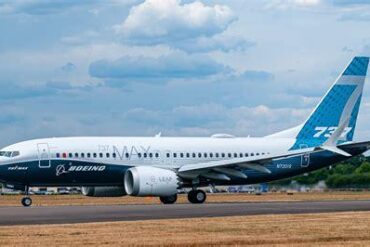
Air Canada is significantly strengthening its transatlantic presence for the summer 2026 travel season, increasing its Boeing 737 MAX 8 operations between Canada and Europe by nearly one-third. The move highlights the airline’s continued reliance on efficient narrowbody aircraft for thinner long-haul routes, allowing the carrier to connect smaller European cities with Canadian hubs while maintaining strong capacity growth across the North Atlantic.
According to data from aviation analytics firm Cirium, Air Canada has scheduled 326 one-way Boeing 737 MAX 8 departures to Europe in the third quarter of 2026, representing a 30.9% increase compared with 249 flights in Q3 2025. The growth is even more pronounced in terms of seating capacity, which will rise 34.2% year over year thanks to adjustments in aircraft configuration.
The expansion demonstrates how the airline continues to capitalize on Canada’s geographical advantage, particularly its eastern gateways such as Montréal, Toronto, and Halifax. These cities sit closer to Europe than most major North American hubs, making narrowbody transatlantic flying both operationally viable and economically attractive.
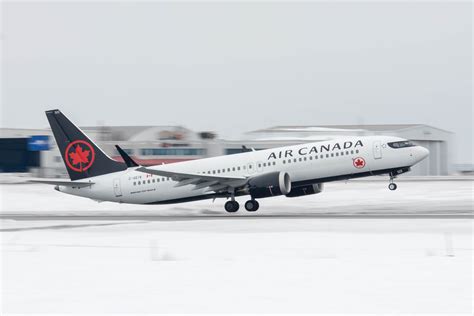
Strategic Use of Narrowbody Aircraft on Transatlantic Routes
For years, Air Canada has pioneered the use of single-aisle aircraft on transatlantic routes that cannot sustain widebody service. While widebody jets like the Boeing 777 or Airbus A330 remain essential for major markets, smaller European destinations often lack the passenger demand required to support larger aircraft.
The Boeing 737 MAX 8 offers a powerful solution. With improved fuel efficiency, extended range, and modern passenger cabins, the aircraft allows airlines to profitably operate long-distance routes with lower demand. In Air Canada’s network strategy, the MAX 8 serves as a bridge between regional connectivity and international reach.
This approach enables the airline to open routes that might otherwise be impossible with larger aircraft. Cities such as Nantes, Ponta Delgada, and Reykjavik benefit directly from this model, receiving transatlantic connectivity that stimulates tourism and business travel.
Iceland Remains a Central Piece of the Network
One of the most prominent beneficiaries of Air Canada’s narrowbody expansion is Reykjavík Keflavík International Airport (KEF) in Iceland. The Icelandic capital continues to serve as a key North Atlantic destination within the airline’s network.
Air Canada will operate MAX 8 flights to Reykjavik from both Toronto Pearson (YYZ) and Montréal–Trudeau (YUL) during the third quarter of 2026. Reykjavik stands out as the only European destination receiving service from multiple Canadian hubs using the aircraft.
In Q3 2025, Air Canada scheduled 70 flights from Toronto and 58 from Montréal on the route. The airline is now slightly increasing that footprint, with 72 flights from Toronto and 59 from Montréal planned for summer 2026.
An additional detail reflects an evolving cabin strategy. Of the Montréal–Reykjavík flights scheduled for 2026, 52 rotations between July and September will feature 169 seats, while seven late-September flights will offer 177 seats. The difference stems from ongoing aircraft reconfiguration as part of a broader fleet transition.
Expansion Beyond the United Kingdom
While Air Canada’s MAX 8 operations in 2025 were concentrated primarily on the United Kingdom, the 2026 schedule introduces a far more diverse European network.
Last year, the airline operated:
- 92 flights between Halifax (YHZ) and London Heathrow (LHR)
- 29 flights between Montréal (YUL) and Edinburgh (EDI)
For summer 2026, London Heathrow will retain its daily service with 92 rotations, maintaining a strong connection between Atlantic Canada and the UK’s busiest airport. However, Edinburgh is seeing noticeable growth, rising from 29 flights to 39 rotations.
More significantly, the airline is launching three entirely new transatlantic MAX routes, marking a strategic expansion into secondary European markets.
The new routes include:
- Halifax to Brussels (BRU) – 29 flights during Q3 2026
- Montréal to Nantes (NTE) – 6 flights
- Toronto to Ponta Delgada (PDL) in the Azores – 29 flights
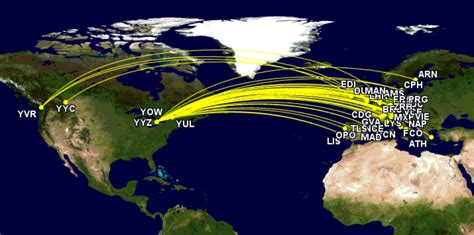
These destinations highlight Air Canada’s ambition to tap into underserved transatlantic markets. Halifax in particular is emerging as an increasingly important gateway due to its ideal geographic position for short North Atlantic crossings.
What Passengers Can Expect Onboard
Despite operating on long-haul international routes, the Boeing 737 MAX 8 cabin differs significantly from the widebody experience many travelers expect on transatlantic flights.
The aircraft’s business class cabin features 16 recliner seats arranged in a 2-2 configuration, similar to domestic first-class seating found on North American airlines. While comfortable and spacious, these seats do not convert into fully lie-flat beds, which remain standard on widebody aircraft serving longer intercontinental routes.
Nevertheless, the aircraft provides modern amenities including:
- Updated inflight entertainment options
- Comfortable premium recliner seating
- Efficient cabin layout optimized for medium-haul flights
For many travelers, the trade-off is worthwhile because it enables direct flights between smaller cities and Canada, eliminating the need for lengthy connections through major hubs.
Fleet Transition and the Future Airbus A321XLR
The increase in MAX operations comes during a period of significant fleet restructuring at Air Canada. The airline currently operates 50 Boeing 737 MAX 8 aircraft, according to fleet data from ch-aviation.
Under the airline’s long-term strategy, 45 of these jets are expected to transfer to Air Canada Rouge, the carrier’s leisure-focused subsidiary. The first Rouge-configured MAX 8 recently entered service, coinciding with the launch of a new crew base in Vancouver.
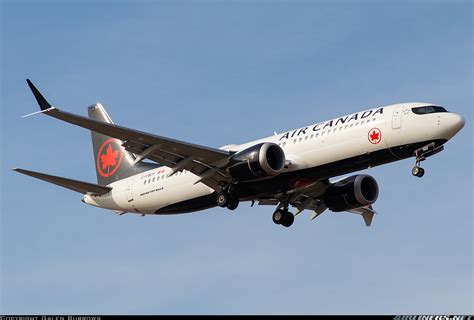
This shift will support expanded sun and leisure routes from Western Canada, while Air Canada’s mainline fleet gradually prepares for the arrival of a new generation of long-range narrowbody aircraft.
That next chapter will be defined by the Airbus A321XLR. Air Canada has 30 aircraft on order, and the type is expected to operate up to 12 transatlantic routes beginning in 2026. The A321XLR offers greater range and improved passenger comfort compared with current narrowbody jets, making it ideal for future long-haul operations.
In the meantime, the Boeing 737 MAX 8 remains a crucial pillar of Air Canada’s North Atlantic strategy, enabling the airline to expand its European footprint while maintaining operational efficiency. The 31% surge in flights scheduled for summer 2026 signals that narrowbody transatlantic travel is no longer experimental—it is becoming a core component of modern airline network design.