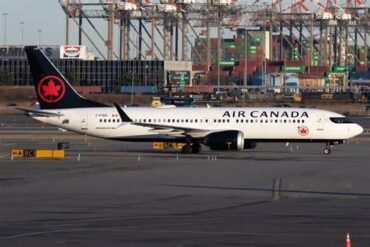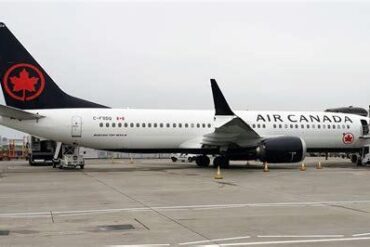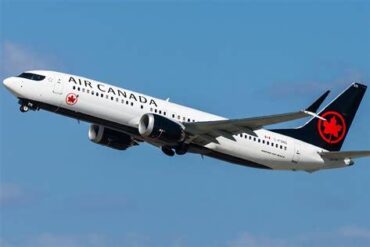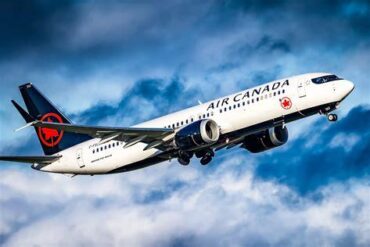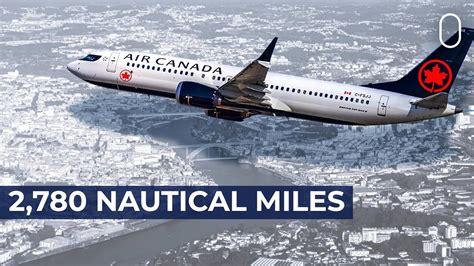
Air Canada’s summer 2025 operations spotlight a bold and efficient use of its Boeing 737 MAX 8 fleet, stretching the limits of narrowbody transcontinental and transatlantic flying. With block times reaching up to 7 hours and 20 minutes, these routes exemplify how far a single-aisle aircraft can go while maintaining economic viability and passenger comfort. The airline, leveraging a leaner footprint and a strategic Star Alliance network, has crafted an ambitious schedule centered around its MAX 8s, connecting Canada with high-demand destinations across Europe, the United States, and the Caribbean.
Among the most remarkable developments is Air Canada’s inaugural MAX 8 route from Montreal to Edinburgh, now officially the carrier’s longest 737 MAX 8 service to date. As international demand rebounds and long-haul narrowbody flying becomes increasingly popular, this route not only reflects a smart fleet utilization strategy but also contributes to Edinburgh surpassing one million North American seats in 2025.
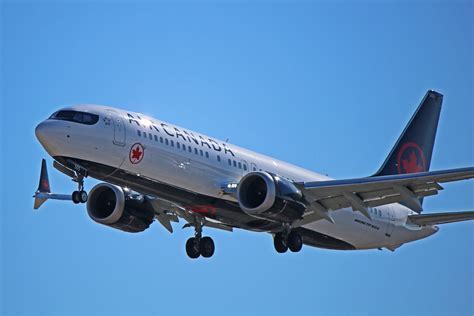
This impressive operation commenced on June 26, breaking new ground by connecting Montreal–Trudeau International Airport directly with Edinburgh Airport three times a week. The 7h 20m block time is a milestone, exceeding all prior deployments of the MAX 8 in Air Canada’s network. Previously, the type had reached 7h 16m on routes like Calgary to Honolulu and 7h 15m from Toronto to Shannon.
Edinburgh Flight Tops the List: MAX 8’s Longest Route
Until recently, the Montreal–Porto flight was expected to be the flagship MAX 8 route. But in a strategic pivot, Air Canada swapped the aircraft with a larger 285-seat Airbus A330-300, reducing frequency to three times weekly while compensating with capacity. This decision cleared the way for Montreal–Edinburgh to claim the top position.
The route is more than symbolic—it’s a testament to the capabilities of the 737 MAX 8, which in Air Canada’s configuration seats 169 passengers. Launched in 2017, the MAX 8s in Air Canada’s fleet now number 47. Interestingly, the airline plans to transition all MAX 8 aircraft from its mainline fleet to Rouge, its leisure-focused subsidiary. These aircraft average 5.6 years in age, and despite the MAX’s grounding between 2019 and 2020, they’ve seen a steady return to transatlantic use.
Air Canada’s Top 10 Longest 737 MAX 8 Flights (July–August 2025)
The list of long-haul routes operated by the MAX 8 this summer showcases how strategically the airline is stretching its narrowbody capabilities. The rankings below are based on maximum block time, factoring in taxi times, delays, and slot optimization.
- Montreal – Edinburgh: 7h 20m (3x weekly)
- Vancouver – Miami: 6h 45m (3x weekly)
- Halifax – London Heathrow: 6h 45m (daily)
- Vancouver – Cancun: 6h 30m (2x weekly)
- Montreal – San Francisco: 6h 12m (8x weekly)
- Vancouver – Honolulu: 6h 10m (daily)
- Vancouver – Newark: 6h 09m (2x daily)
- Vancouver – Tampa: 6h 03m (2x weekly)
- Toronto – Keflavik: 6h 00m (6x weekly)
- Montreal – Los Angeles: 5h 57m (up to 2x daily)
Halifax to London Heathrow: Canada’s Only Daytime Europe Service
One of the most operationally unique MAX 8 routes is the Halifax to London Heathrow flight. With a block time of 6h 45m, this daily route stands out as Air Canada’s sole daytime transatlantic service. Departing Halifax at 11:00 AM and arriving in London by 9:00 PM local time, the aircraft stays parked overnight at Heathrow—a move that hints at slot scarcity at Europe’s busiest hub.
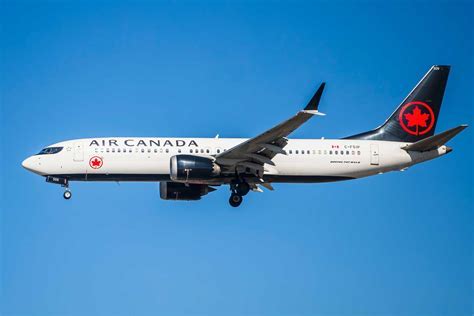
Such a prolonged layover, often stretching beyond 20 hours, implies significant parking fees and idle aircraft time. However, given Air Canada’s near-monopoly on the Halifax–Heathrow segment, the premium yields on this route are likely offsetting the operational inefficiencies. The return leg, AC869, operates daily except Wednesdays and Saturdays, departing London around midday. This rotating schedule resembles WestJet’s transatlantic MAX strategy, emphasizing flexibility and slot availability.
Vancouver–Tampa: New Addition, New Opportunities
On June 3, Air Canada introduced a brand-new MAX 8 service from Vancouver to Tampa, opening a 4,180 km corridor with a 6-hour block time. The route, while low in frequency (2x weekly), targets both origin-destination travelers and connecting passengers heading toward Asian destinations like Tokyo and Seoul.
With 37,000 annual travelers between the two cities and indirect demand from Pacific Rim routes, this service enhances Air Canada’s connectivity matrix and solidifies its competitive presence on the West Coast. WestJet entered the same market just 11 days later, underscoring the route’s growing strategic value.
Vancouver–Miami: Bridging Two Coasts with MAX 8
Also notable is the Vancouver to Miami connection, another 6h 45m route operating three times per week. This transcontinental route highlights the MAX 8’s flexibility in linking major tourism and cruise hubs on opposite coasts. For Air Canada, this flight represents both a revenue diversification tool and a crucial network enabler, connecting Canadian travelers with Florida’s booming hospitality market.
The 737 MAX 8: Workhorse for Niche and New Markets
The Boeing 737 MAX 8’s range and efficiency continue to make it indispensable for Air Canada’s network planning. Despite its narrowbody limitations, its endurance allows the airline to tap into underserved transatlantic corridors, introduce new leisure destinations, and maintain high-frequency North American routes with consistent performance.
These long-haul operations reflect a deeply data-driven strategy, balancing capacity, block time, slot possession, and aircraft productivity. Whether it’s crossing the Atlantic to Edinburgh, flying into Heathrow with tight runway availability, or optimizing routes to Cancun and Honolulu, Air Canada’s use of the MAX 8 exemplifies the aircraft’s versatility in a post-pandemic global network.
Future Fleet Strategy: Rouge to Take Over MAX 8 Operations
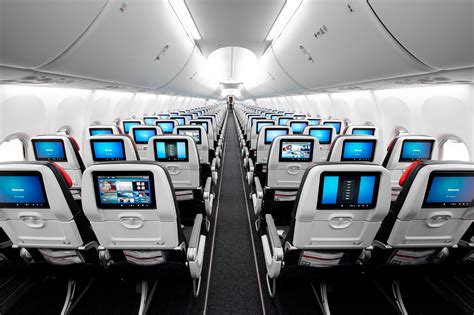
As Air Canada prepares to reassign its MAX 8s to Rouge, the move signals a shift in focus. Rouge’s leisure-centric brand identity aligns with many of the long-haul routes operated today, especially those to European holiday spots and sun destinations.
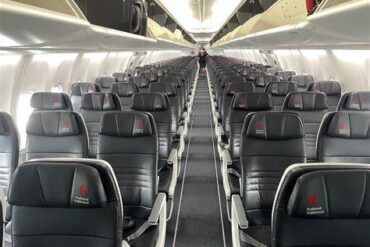
This transition may eventually free up widebody aircraft for higher-demand intercontinental routes, while also allowing the MAX 8 to serve seasonal and emerging markets with lower risk. With the right cabin enhancements—such as improved seat pitch and onboard amenities—Rouge could maintain or even enhance passenger satisfaction on these long-duration narrowbody flights.
Conclusion: Pushing Narrowbody Boundaries with Precision
Air Canada’s current deployment of the Boeing 737 MAX 8 reflects more than operational necessity; it’s a strategic recalibration. From Edinburgh to Heathrow, Cancun to Keflavik, the airline is harnessing the full potential of the MAX 8 to deliver cost-effective, long-distance connectivity. In doing so, it stands at the frontier of modern narrowbody utilization, challenging traditional notions of long-haul flying with smart scheduling, strong partnerships, and meticulous route planning.