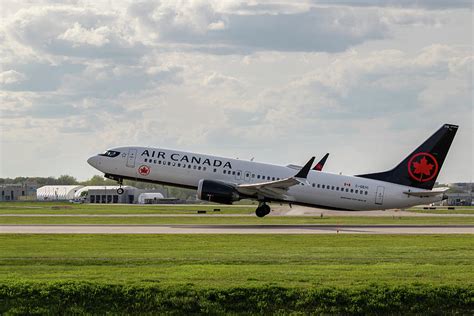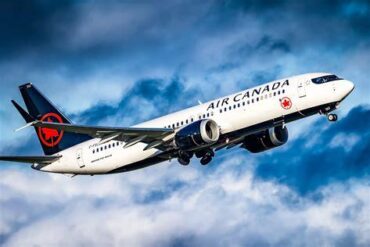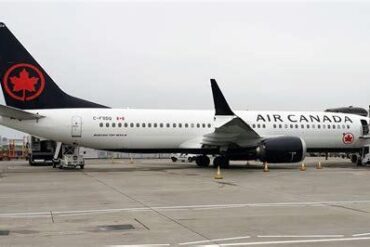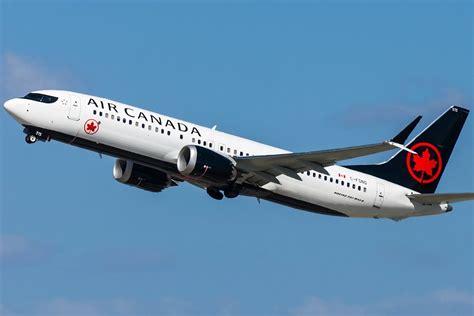
Air Canada is embarking on an ambitious expansion of its Boeing 737 MAX 8 operations, unveiling ten of its longest narrowbody routes set to redefine the airline’s international reach in the second half of 2026. With several sectors approaching the eight-hour mark, these routes showcase how a single-aisle aircraft is now capable of handling transatlantic and extended leisure missions, traditionally the realm of larger widebody jets. This strategic deployment underlines Air Canada’s commitment to leveraging the MAX 8’s efficiency to open markets, serve niche destinations, and satisfy growing demand for direct leisure connections.
At the forefront of this expansion is the Liberia, Costa Rica to Vancouver International Airport (YVR) sector, scheduled at seven hours and 55 minutes. This represents the longest nonstop MAX 8 service in Air Canada’s network and signals a significant push into long-haul leisure travel from Western Canada. The route’s frequency of up to four times per week demonstrates the carrier’s confidence in deploying narrowbody aircraft for sustained operations over near-eight-hour distances. Beyond the raw flight duration, the route reflects a larger strategy: connecting Vancouver directly to high-demand vacation destinations without requiring transits through Toronto or Montreal, streamlining the travel experience for Canadian leisure travelers.
New European Routes Redefine Transatlantic Access
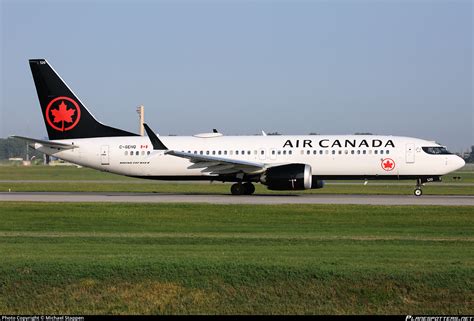
Air Canada’s MAX 8 deployment is not confined to vacation hotspots; it is equally transforming access to European cities. Nantes, France, emerges as a highlight, with flights to Montreal scheduled at seven hours and 50 minutes, operating three times weekly. This new service represents a deliberate expansion into Western France, a market previously underserved by nonstop Canadian flights. Similarly, Brussels to Halifax, clocked at just over seven hours westbound, illustrates the carrier’s capacity to deploy MAX 8 aircraft on secondary transatlantic markets where passenger volumes do not justify larger jets like the Boeing 787. These new European links provide strategic connectivity to both business and leisure travelers, reinforcing Air Canada’s ability to tailor fleet deployment to market demand with surgical precision.
Ponta Delgada in the Azores is another notable addition, with up to three weekly flights to Toronto. While smaller than major European hubs, the Azorean route taps into a growing market of visiting friends and relatives, as well as leisure travelers seeking unique destinations. Edinburgh and London Heathrow (LHR) also rank among Air Canada’s longest MAX 8 operations, cementing the aircraft’s growing role in transatlantic service. Collectively, these European connections illustrate a network strategy that balances the operational economy of narrowbody jets with the necessity of reaching underserved or secondary cities.
Long-Haul Leisure Routes: Maximizing Vacation Travel
While transatlantic expansion grabs headlines, leisure travel remains a cornerstone of Air Canada’s strategy with the 737 MAX 8. Routes from Western Canada to tropical destinations—including Liberia, Montego Bay, Cancun, Huatulco, and Miami—highlight the airline’s responsiveness to strong seasonal demand for sun-drenched escapes. These flights allow Canadians to reach popular vacation spots without layovers in Eastern hubs, enhancing convenience while optimizing aircraft utilization.
Montego Bay to Edmonton, scheduled at just over seven hours, exemplifies how Air Canada is willing to push narrowbody aircraft into roles previously reserved for widebody operations. Many of these leisure flights are operated using aircraft integrated from the former Air Canada Rouge fleet, providing additional flexibility and cost efficiency. By employing the MAX 8 on these routes, Air Canada can maintain lower operational costs while adjusting capacity to seasonal demand, a critical advantage in leisure-heavy markets where passenger volumes fluctuate significantly over the year.
The 737 MAX 8: Narrowbody Power for Long-Haul Efficiency
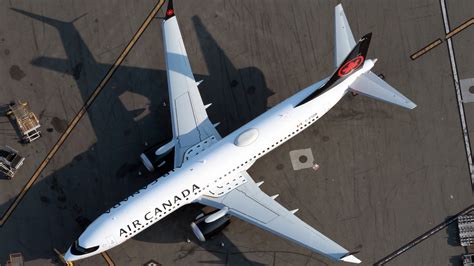
The deployment of the MAX 8 on routes approaching eight hours underscores a profound evolution in narrowbody capabilities. Historically limited to short-haul or domestic missions, the MAX 8 now offers airlines a competitive alternative for long-haul flights, blending operational efficiency with adequate range and passenger comfort. For Air Canada, this allows the carrier to target niche transatlantic cities, experiment with emerging markets, and maintain nonstop links to leisure destinations that would not justify widebody operations year-round.
The aircraft’s fuel efficiency and lower trip costs are particularly advantageous when serving markets with variable demand. Routes such as Edinburgh to Montreal, scheduled at 6 hours and 55 minutes, or Cancun to Vancouver at 6 hours and 45 minutes, demonstrate that Air Canada can operate long sectors without incurring the higher costs of widebody aircraft. This flexibility enables the airline to optimize revenue and respond dynamically to seasonal or economic changes, supporting both leisure and business travel markets effectively.
Detailed Flight Deployment: Strategic Scheduling
Air Canada’s upcoming MAX 8 schedule reveals a deliberate mix of transatlantic and leisure routes, with careful attention to frequency and operational feasibility:
- Liberia, Costa Rica to YVR – 7h 55m, up to 4x weekly
- Nantes, France to Montreal – 7h 50m, 3x weekly
- Brussels, Belgium to Halifax – 7h 15m, 3x weekly
- Montego Bay, Jamaica to Edmonton – 7h 10m, weekly
- LHR to Halifax – 7h, daily
- Miami, Florida to YVR – 6h 59m, up to 3x weekly
- Edinburgh, Scotland to Montreal – 6h 55m, 4x weekly
- Cancun, Mexico to YVR – 6h 45m, 2-14x weekly
- Ponta Delgada, Portugal to Toronto – 6h 45m, 3x weekly
- Huatulco, Mexico to YVR – 6h 40m, weekly
This distribution illustrates how Air Canada is balancing long-haul leisure demand with selective European expansion, leveraging the MAX 8’s performance to sustain nonstop service where previously limited by capacity constraints. The frequent scheduling of routes like LHR to Halifax and Edinburgh to Montreal highlights both the strategic importance of these markets and the airline’s commitment to maximizing aircraft utilization.
Air Canada’s Strategic Takeaways
Taken as a whole, the MAX 8’s expanded role signals a strategic pivot in Air Canada’s network planning. The aircraft is no longer simply a replacement for aging narrowbodies; it is a versatile tool to explore new markets, enhance leisure connectivity, and provide nonstop services that cater to modern traveler expectations. By using the MAX 8 in these ways, Air Canada mitigates operational risk, reduces per-flight costs, and maintains flexibility to adjust capacity across both seasonal and underperforming markets.
This approach also reflects a broader industry trend: narrowbody jets are increasingly being pushed to the limits of their range and operational capabilities, challenging the traditional reliance on widebody aircraft for international expansion. Air Canada’s deployment strategy demonstrates that with careful route planning, the MAX 8 can deliver long-haul reliability while opening opportunities that larger aircraft cannot economically serve.
The Future of Air Canada’s Nonstop Network
As the MAX 8 takes on longer missions, passengers can expect a more seamless and efficient flying experience. Direct flights to previously underserved European cities, combined with nonstop connections to prime vacation spots in the Americas, reduce layovers, save travel time, and provide enhanced convenience. Air Canada’s 2026 schedule positions the airline to capitalize on growing transatlantic leisure traffic while maintaining cost efficiency across its operations.
In essence, these ten routes embody a convergence of strategic foresight, fleet optimization, and market responsiveness. Air Canada’s ability to deploy a narrowbody aircraft on nearly eight-hour flights exemplifies modern aviation ingenuity, where operational efficiency meets passenger demand in a dynamic, globally connected marketplace. For travelers and aviation enthusiasts alike, the expanded MAX 8 network offers an exciting glimpse into the future of nonstop flight possibilities, proving that size isn’t always the limiting factor—strategy and aircraft capability define the journey.