Air Canada’s Strategic Deployment of the Boeing 737 MAX 8 for Winter 2025
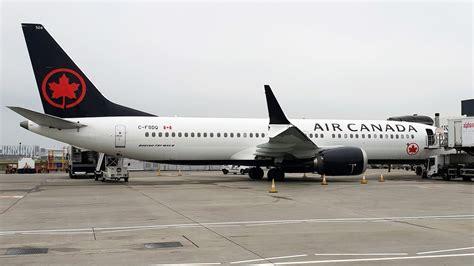
As the mercury drops across Canada, Air Canada’s Boeing 737 MAX 8 fleet gears up for a winter schedule that boldly stretches the limits of narrowbody aircraft endurance. Operating across routes that nearly touch the 7-hour threshold, these aircraft demonstrate not only technological prowess but also the airline’s strategic alignment with seasonal demand and efficiency goals.
The 737 MAX 8, with its enhanced fuel economy and superior range profile, forms the backbone of Air Canada’s transcontinental and transborder winter missions. This winter, from December 2025 to February 2026, these jets will serve destinations as far-flung as Hawaii, Mexico, Florida, and even Europe, navigating up to 2,800 miles in a single hop.
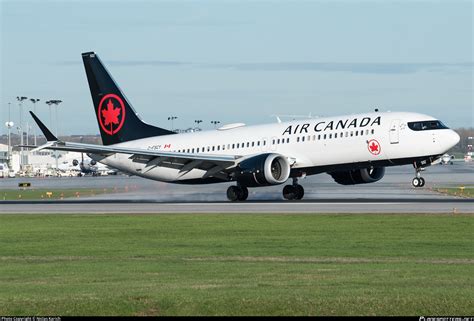
Record-Breaking Routes: A Closer Look at the Top 10 Longest Flights
Leading the charge is the nearly 7-hour trek from Miami (MIA) to Vancouver (YVR). Clocking in at 6 hours and 59 minutes, this domestic itinerary crowns the winter route list as Air Canada’s longest Boeing 737 MAX 8 flight. Interestingly, this journey is not a transoceanic leap but a sprawling cross-border trek linking the southeastern United States with Canada’s Pacific gateway.
Equally impressive is the second-longest itinerary: London Heathrow (LHR) to Halifax (YHZ). At 6 hours and 55 minutes, it is the only transatlantic route operated with a 737 MAX 8 this winter—marking an ambitious demonstration of the aircraft’s capability.
The remaining top contenders in the longest-flight lineup reveal a strong preference for sun-drenched getaways:
- Cancún (CUN) to Vancouver (YVR) – 6h 45m
- Huatulco (HUX) to Vancouver (YVR) – 6h 40m
- Vancouver (YVR) to Kona (KOA) – 6h 34m
- Vancouver (YVR) to Honolulu (HNL) – 6h 33m
- Montreal (YUL) to San Francisco (SFO) – 6h 32m
- Montreal (YUL) to San José del Cabo (SJD) – 6h 30m
- Montreal (YUL) to Puerto Vallarta (PVR) – 6h 30m
- Vancouver (YVR) to Honolulu (HNL) – 6h 30m
What’s notable here is the overwhelming representation of Vancouver and Montreal as Canadian departure points and Mexican resort cities as destinations, underlining a robust winter holiday market.
Geographic Reach Meets Aircraft Efficiency
The winter 2025–2026 schedule illustrates Air Canada’s tactical fleet optimization. The Boeing 737 MAX 8’s competitive edge lies in its range of up to 3,500 miles (6,480 km), slightly edging out its larger sibling, the MAX 9. This range allows it to serve long and thin routes—those with lower passenger demand but higher mileage—more economically than widebody alternatives.
Vancouver’s frequent appearance on the list is no accident. Its position as a West Coast hub allows direct access to Pacific destinations, while Montreal’s eastern geography provides efficiency in reaching both California and Latin America.
The MAX 8’s Role in Air Canada’s Broader Strategy
This winter, Air Canada significantly expanded its Latin American footprint, adding 13 new routes and increasing capacity by 16%. The MAX 8 is integral to this push, enabling point-to-point services between Canada and smaller, under-served cities in Mexico, like Huatulco, which debuted on the schedule with 12 flights.
Executive VP Mark Galardo emphasized the importance of this network diversification: “Canadians looking to visit sunny climates, or travellers interested in exploring new adventures anywhere on the six continents we fly to, customers can plan and book their winter travels now.”
These new offerings also reflect a broader risk mitigation strategy: with travel to the U.S. softening, expanding into Latin America and the Caribbean helps balance revenue streams.
Operational Challenges and Fleet Realignment
Despite the winter expansion, 2025 hasn’t been without turbulence. An August labor strike grounded over 3,200 flights, translating to a $375 million financial hit. In response, Air Canada is reshuffling its fleet strategy, preparing to transition all Boeing 737 MAX 8 aircraft to its lower-cost subsidiary, Air Canada Rouge, by late 2026. The vacated slots will be filled by the new Airbus A321XLR, promising longer range and higher seating capacity.
This restructuring could redefine Air Canada’s approach to medium-haul markets, with Rouge poised to absorb cost-sensitive leisure routes, freeing up mainline capacity for higher-yield opportunities.
A Fleet Built for Versatility and Reach
According to Planespotters.net, Air Canada operates 47 Boeing 737 MAX 8s, with no current orders for MAX 9 or MAX 10 variants. The deliberate choice to focus on the MAX 8 speaks volumes about the aircraft’s versatility and range-to-cost ratio—traits that align with Air Canada’s winter operating model.
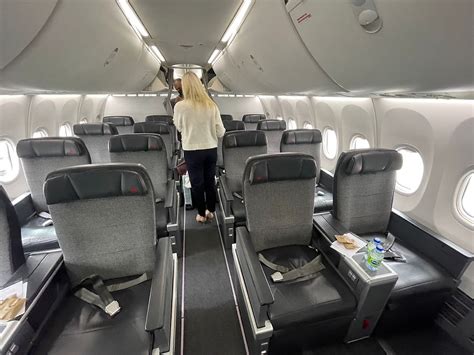
Unlike the still-grounded and high-density MAX 10s, the MAX 8 delivers efficiency, reliability, and cabin comfort, making it ideal for journeys that stretch over six hours but don’t quite demand a widebody’s payload or costs.
Looking Ahead: Toward a Stronger 2026
Air Canada enters 2026 with cautious optimism. Though recovery from operational and financial disruptions is still underway, the strategic fleet moves and renewed focus on international leisure travel point to improved margins ahead.
The upcoming integration of A321XLRs, paired with the continued leverage of Rouge as a leisure carrier, will strengthen the airline’s ability to respond to changing demand dynamics. In this evolving landscape, the Boeing 737 MAX 8 remains a cornerstone asset—bridging geography, seasonality, and strategic vision.
As winter approaches, Air Canada’s long-haul narrowbody ambitions soar higher, redefining what travelers can expect from a single-aisle jet and proving that range, comfort, and destination diversity are not exclusive to widebodies.