The Rise of Ultra-Long Boeing 737 MAX Operations at United Airlines
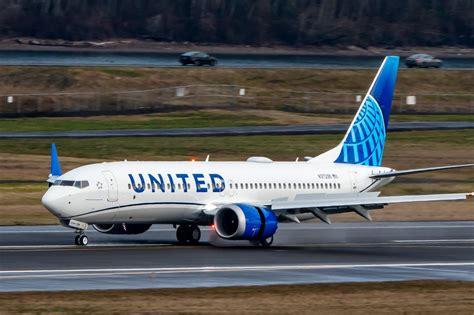
For decades, flights approaching eight hours were almost exclusively operated by widebody aircraft. Today, however, advances in aircraft efficiency, range, and economics are reshaping that traditional model. Among the airlines leading this transformation is United Airlines, which has increasingly deployed its growing fleet of Boeing 737 MAX 8 aircraft on routes once considered beyond the practical limits of narrowbody operations.
During the second half of 2026, United will operate several Boeing 737 MAX flights with scheduled block times approaching eight hours. These services stretch across North America, the Caribbean, and even the Atlantic Ocean, demonstrating how modern narrowbody aircraft are redefining route planning and opening opportunities that were previously difficult to justify economically.
The airline’s longest Boeing 737 MAX flights reveal not only the impressive capabilities of the aircraft itself but also United’s broader strategy of connecting underserved markets directly to its major hubs.
By combining lower operating costs with transatlantic range, the Boeing 737 MAX 8 has become one of the most versatile aircraft in United’s fleet.
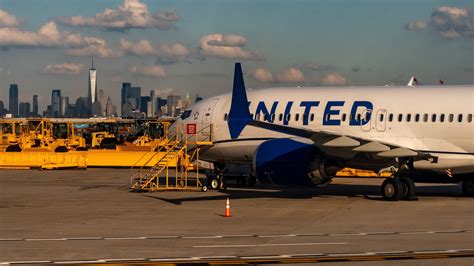
United Airlines’ 10 Longest Boeing 737 MAX Routes in 2026
The longest scheduled Boeing 737 MAX flight in United’s network during the July–December 2026 scheduling season is a recently launched transatlantic service connecting Spain and the United States.
- Santiago de Compostela (SCQ) – Newark (EWR) — 7 hours 55 minutes
- Newark (EWR) – Anchorage (ANC) — 7 hours 50 minutes
- Newark (EWR) – Madeira/Funchal (FNC) — 7 hours 45 minutes
- Washington Dulles (IAD) – Anchorage (ANC) — 7 hours 45 minutes
- Glasgow (GLA) – Newark (EWR) — 7 hours 40 minutes
- Houston Intercontinental (IAH) – Anchorage (ANC) — 7 hours 27 minutes
- San José, Costa Rica (SJO) – San Francisco (SFO) — 7 hours 5 minutes
- Chicago O’Hare (ORD) – Anchorage (ANC) — 6 hours 48 minutes
- San Juan, Puerto Rico (SJU) – Denver (DEN) — 6 hours 47 minutes
- Punta Cana (PUJ) – Denver (DEN) — 6 hours 45 minutes
These routes highlight the remarkable flexibility of the Boeing 737 MAX platform, allowing United to operate sectors that would have been challenging for earlier generations of the Boeing 737 family.
Santiago de Compostela to Newark Leads the Network
The standout route on the list is the new Santiago de Compostela–Newark service. Scheduled at nearly eight hours, it represents United’s longest Boeing 737 MAX operation and one of its most ambitious narrowbody transatlantic routes.
The service reflects a growing industry trend toward connecting secondary European cities directly with North American destinations. Rather than relying on passengers to connect through larger European hubs such as London, Paris, or Frankfurt, airlines can now offer nonstop flights from smaller markets with sufficient demand but insufficient traffic to fill larger widebody aircraft.
For United, the route provides direct access to northwestern Spain while leveraging Newark’s extensive domestic and international network. The Boeing 737 MAX makes such a service financially viable thanks to its combination of long range and efficient fuel consumption.
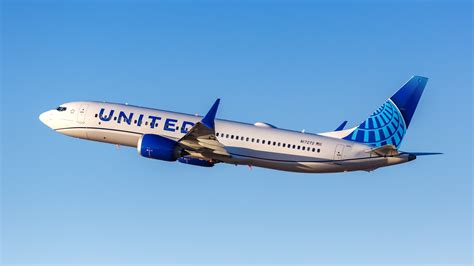
Alaska Dominates United’s Longest Domestic Routes
One of the most striking patterns among United’s longest Boeing 737 MAX flights is the overwhelming presence of Anchorage.
Four of the airline’s ten longest MAX routes involve Alaska, with services from Newark, Washington Dulles, Houston, and Chicago. These flights cover vast distances across the North American continent and routinely approach or exceed seven hours in duration.
Alaska continues to generate strong demand from leisure travelers, outdoor enthusiasts, seasonal workers, and passengers visiting friends and relatives. During peak travel periods, these routes experience substantial traffic, making them ideal candidates for efficient narrowbody aircraft.
The Boeing 737 MAX enables United to maintain frequency while avoiding the higher operating costs associated with larger widebody jets. This strategy provides flexibility and allows the airline to adjust capacity according to seasonal demand patterns.
Transatlantic Expansion Through Narrowbody Efficiency
Beyond Alaska, Europe plays a major role in United’s longest Boeing 737 MAX network.
Flights between Newark and Madeira, as well as Glasgow and Newark, demonstrate how airlines are increasingly relying on narrowbody aircraft to cross the Atlantic. These routes were once almost exclusively operated by larger aircraft such as the Boeing 767, Boeing 777, or Airbus A330.
The economics of modern narrowbody aircraft have fundamentally changed that equation. Airlines can profitably serve thinner markets where demand may not justify a larger aircraft but remains strong enough to support regular nonstop service.
The Glasgow–Newark route is particularly significant because it marks a new chapter for the Scottish service. Operating the route with a Boeing 737 MAX allows United to maintain transatlantic connectivity while optimizing operational efficiency and reducing overall trip costs.
Why the Boeing 737 MAX Is Transforming Long-Haul Route Planning
The success of these routes highlights the growing importance of long-range narrowbody aircraft in modern aviation.
The Boeing 737 MAX 8 offers a range exceeding 3,500 nautical miles (6,500 kilometers), giving airlines the ability to connect city pairs that previously required larger aircraft or connecting itineraries. This capability has become increasingly valuable as carriers seek to maximize profitability while offering travelers more direct flight options.
Compared with earlier Boeing 737 variants, the MAX delivers substantial improvements in fuel efficiency, operating economics, and environmental performance. These advantages allow airlines to explore new markets with lower financial risk while maintaining competitive ticket pricing.
United has embraced this flexibility by deploying the aircraft on a diverse mix of domestic, Caribbean, Central American, and transatlantic routes. The result is a network that stretches the capabilities of the Boeing 737 family further than ever before.
The Future of United’s Longest Boeing 737 MAX Flights
As United continues to expand and modernize its fleet, the role of the Boeing 737 MAX is expected to grow even further. The aircraft has evolved from a traditional short- and medium-haul workhorse into a platform capable of supporting missions approaching eight hours.
Half of United’s ten longest Boeing 737 MAX routes either launched recently or are scheduled to begin during 2026, illustrating the airline’s confidence in the aircraft and its long-term network strategy.
For now, the nearly eight-hour journey from Santiago de Compostela to Newark stands as the airline’s longest scheduled Boeing 737 MAX operation. Yet as narrowbody technology continues to advance and airlines search for new opportunities, even longer routes may soon emerge, further blurring the line between traditional short-haul aircraft and long-haul international travel.