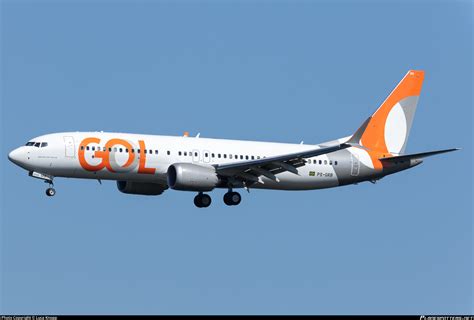
Spanning 3,778 miles across two continents, the world’s longest Boeing 737 MAX 8 route is not just a testament to engineering — it’s a bold statement in modern aviation economics. Operated by GOL Linhas Aéreas, this eight-hour nonstop flight connects Brasília International Airport (BSB) in Brazil with Orlando International Airport (MCO) in the United States. On paper, it’s a route typically reserved for widebody aircraft. But in practice, it represents the growing reach of the next-generation narrowbody jetliner.
The Rise of the Boeing 737 MAX 8 on Long-Haul Routes
Traditionally, flights of such distance were the exclusive domain of widebody aircraft — think Boeing 777s or Airbus A330s. But the 737 MAX 8, with its 4,150-mile range, has torn up that playbook. With fuel-efficient LEAP-1B engines, optimized aerodynamics, and upgraded avionics, the MAX 8 allows airlines to operate what the industry calls “long, thin routes” — city pairs that generate moderate demand but are too long for legacy narrowbodies and too uneconomical for larger jets.
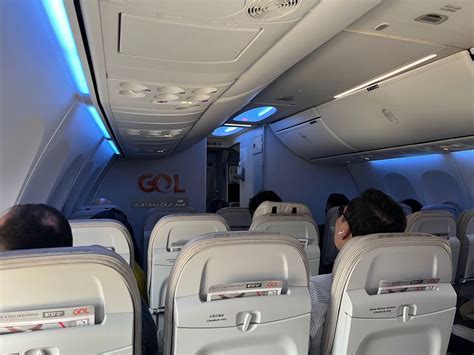
GOL’s pioneering use of the MAX 8 on the Brasília–Orlando route is a case study in cost-effective connectivity. Instead of deploying a larger aircraft with excess capacity, the airline uses its 186-seat narrowbody in a modified international configuration, reducing seating to 176 passengers by converting the first five rows into premium economy with blocked middle seats.
Inside the World’s Longest MAX 8 Route
The Brasília–Orlando route clocks in at 3,778 miles — just within the aircraft’s certified range with reserves. The flight typically takes just under eight hours northbound and slightly less southbound, depending on jet stream winds.
Throughout 2025, GOL will operate 500 flights in each direction, averaging about ten flights per week. The significance isn’t just in its length — it’s also the only nonstop service between Brazil’s federal capital and Central Florida.
GOL Linhas Aéreas: A Strategic Narrowbody Player
GOL has been steadily expanding its MAX 8 operations, with a fleet of 57 aircraft as of July 2025 and 46 more on order. The carrier’s aggressive adoption of the MAX has allowed it to connect Brazilian cities directly to North American leisure destinations without relying on larger aircraft or connecting hubs.
Besides Orlando, GOL also uses the MAX 8 to reach Miami and Cancún from Brasília — both flights clocking in over 3,600 miles, placing them in the top five longest MAX 8 routes globally.
Furthermore, GOL has placed orders for 30 Boeing 737 MAX 10 aircraft, although certification delays may see these converted into more MAX 8 or MAX 9 variants. With its focus on operational efficiency, GOL exemplifies how the MAX 8 can be weaponized as a long-range, low-cost enabler.
Other Longest 737 MAX 8 Routes Around the World
GOL may operate the longest MAX 8 flight, but it isn’t alone in stretching the capabilities of this aircraft. Other airlines have also staked out ambitious long-haul routes using the jet:
- Arajet, the Dominican Republic’s rising low-cost airline, flies from Santo Domingo (SDQ) to Buenos Aires (EZE), a 3,734-mile journey. This is the second-longest MAX 8 route globally.
- Arajet also operates the third-longest route, from Punta Cana (PUJ) to Buenos Aires, at 3,728 miles, with over 530 flights scheduled for 2025.
- Icelandair rounds out the top five with a 3,622-mile transatlantic route between Reykjavík Keflavik (KEF) and Denver (DEN).
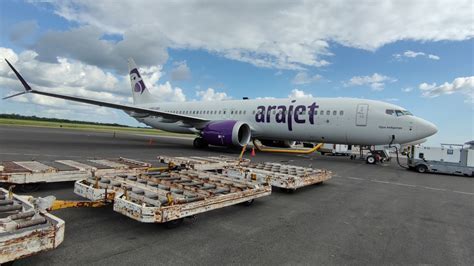
These routes, while challenging, demonstrate the 737 MAX 8’s ability to carve out new markets previously inaccessible to narrowbody aircraft. In essence, airlines are rewriting network strategy playbooks with this jet at the core.
Inside the MAX 8 Cabin Experience on Long Flights
Flying a narrowbody for nearly eight hours might raise eyebrows, but airlines like GOL and Arajet have worked to make the journey palatable. On international configurations:
- Premium economy seating features extra legroom and blocked middle seats.
- New-generation Boeing Sky Interior with sculpted sidewalls and LED lighting enhances passenger comfort.
- Enhanced cabin pressurization and quieter engines reduce fatigue compared to older narrowbodies.
Of course, these flights lack some amenities found on widebodies, such as multiple lavatories, business class cabins, or lie-flat seats. But for budget-conscious leisure travelers, the trade-off is acceptable — especially when it means skipping a connection.
Orlando: Brazil’s Favorite U.S. Gateway
Orlando International Airport (MCO) has become a key North American destination for Brazilian carriers. As of 2025, it is served directly from six major Brazilian cities, including:
- Brasília (GOL)
- Fortaleza (GOL)
- Belo Horizonte (Azul)
- Recife (Azul)
- Campinas (Azul)
- São Paulo (LATAM)
Brazilian demand for travel to Orlando remains robust due to its family-friendly appeal, large Brazilian diaspora, and relaxed visa policies. The MAX 8 has enabled more point-to-point connectivity, bypassing congested hubs like Miami or São Paulo.
A Technological Leap: Boeing 737 MAX 8 Specs
To understand why this aircraft is capable of such feats, here are its essential performance specs:
- Range: 4,150 miles
- Length: 129 ft 8 in
- Wingspan: 117 ft 10 in
- Typical seating: 162–178 passengers
- Engines: 2x CFM LEAP-1B turbofans
Since its entry into service in 2017, the Boeing 737 MAX 8 has become a cornerstone of many global fleets, with over 1,800 aircraft delivered and thousands more on order.

Not Without Controversy: A Checkered Safety History
Despite its commercial success, the MAX 8 has had a turbulent history. The Lion Air Flight 610 and Ethiopian Airlines Flight 302 crashes in 2018 and 2019, respectively, led to a global grounding that lasted nearly two years. Boeing was forced to revamp the aircraft’s flight control systems, especially the MCAS (Maneuvering Characteristics Augmentation System), which was implicated in both incidents.
More recently, a door plug failure on an Alaska Airlines 737 MAX 9 in January 2024 renewed public scrutiny. While the MAX 8 variant has not been involved in a similar failure, safety oversight and public perception continue to hover around Boeing’s narrowbody flagship.
Who Operates the Most MAX 8s Today?
While GOL and Arajet have made headlines, the bulk of MAX 8 operations is still centered in the United States. Here are the world’s largest operators as of mid-2025:
- Southwest Airlines: 257 aircraft
- United Airlines: 123 aircraft
- American Airlines: 77 aircraft
Other significant MAX 8 operators include Turkish Airlines, Singapore Airlines, Icelandair, WestJet, Ethiopian Airlines, and flydubai. These carriers have leveraged the MAX 8 to tap into new transcontinental and inter-regional markets without scaling up to widebodies.
Can Airbus Steal the Crown?
The 737 MAX 8’s reign as the king of long-haul narrowbody flying may face a serious challenge with the upcoming launch of the Airbus A321XLR. With a projected range of 4,700 miles and availability starting in late 2025, Airbus’ new single-aisle jet could outperform the MAX 8 in both distance and efficiency.
But for now, GOL’s Brasília–Orlando route remains the longest 737 MAX 8 flight anywhere on the globe — a symbol of how the boundaries of narrowbody aviation have been redefined.