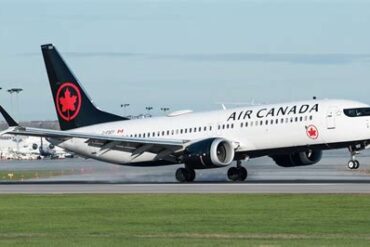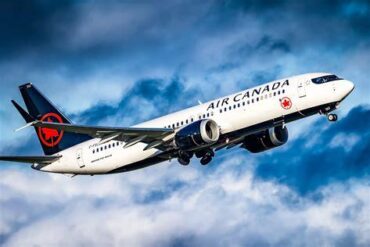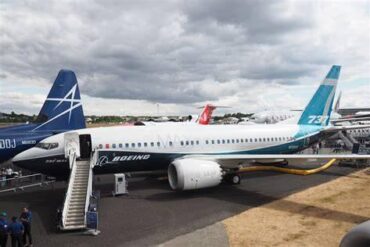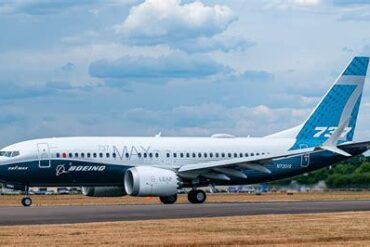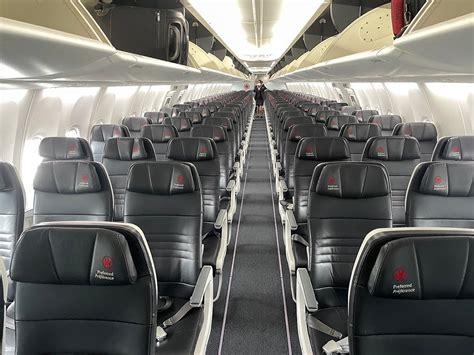
Air Canada’s adoption of the Boeing 737 MAX 8 marks a significant evolution in its fleet modernization strategy, aligning fuel efficiency with operational flexibility. The aircraft’s integration into the airline’s operations reflects not only a technological upgrade but also a strategic pivot toward sustainability, cost efficiency, and targeted market segmentation.
The Role of the Boeing 737 MAX 8 in Modern Aviation
The Boeing 737 MAX 8 is not merely a successor to its predecessors; it is a transformational aircraft tailored for 21st-century air travel. Designed for short- to medium-haul routes, the MAX 8 boasts LEAP-1B engines, advanced winglets, and an aerodynamic frame that collectively contribute to a 20% improvement in fuel efficiency and a 50% reduction in noise footprint compared to the previous generation. With a range of 3,550 miles and capacity for up to 210 passengers in high-density configurations, this aircraft meets the dual demands of passenger comfort and operational viability.
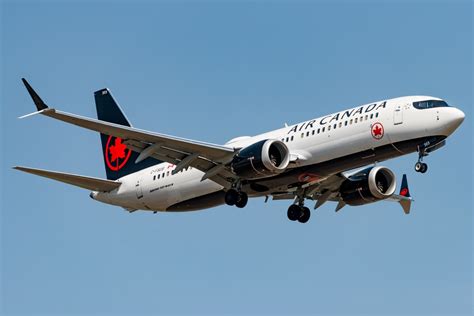
For airlines like Air Canada, the MAX 8 offers critical advantages: lower fuel consumption translates into reduced greenhouse gas emissions and cost savings, while its advanced avionics and upgraded cabin interiors enhance both the pilot and passenger experience. These attributes have helped the MAX 8 maintain relevance despite its temporary grounding in 2019.
Air Canada’s Strategic Adoption of the MAX 8
Air Canada first introduced the Boeing 737 MAX 8 into its fleet in November 2017, marking a return to the 737 platform after over a decade. The decision was rooted in a broader ambition to retire aging Airbus A320-family aircraft and renew the narrowbody fleet with more efficient models. The airline configured the MAX 8s with a two-class layout to serve both domestic business travelers and international leisure passengers effectively.
By early 2025, Air Canada operated a fleet of 47 Boeing 737 MAX 8s, with 46 active in regular service. These aircraft are central to Air Canada’s operations across Canada, the United States, and select Caribbean and Central American destinations. One aircraft remains inactive but is still part of the fleet portfolio, potentially undergoing maintenance or awaiting deployment.
Evolution Through Grounding and Return
The 2019 global grounding of the 737 MAX following two fatal accidents disrupted operations but also marked a turning point in aircraft safety culture. For Air Canada, the grounding meant reassigning routes and rebalancing the narrowbody fleet temporarily. However, after extensive safety reviews and software updates, the airline reinstated the MAX 8 in January 2021 with enhanced training and stringent regulatory compliance.
The aircraft’s return to service reaffirmed Air Canada’s trust in its capabilities. Since then, the MAX 8 has played a pivotal role in achieving network agility and cost containment, critical in a post-pandemic aviation environment. The jet’s improved fuel performance has also contributed to the carrier’s broader sustainability goals, an increasingly important metric for investors and passengers alike.
Aircraft Specifications and Capabilities
The Boeing 737 MAX 8 offers a compelling balance of capacity, range, and performance:
- Seating: 162–178 passengers in two-class configuration, up to 210 in high-density
- Range: 3,550 miles (6,480 km)
- Length: 129 feet, 8 inches
- Wingspan: 117 feet, 10 inches
- Height: 41 feet, 2 inches
- Engines: 2 × CFM International LEAP-1B turbofans
- Noise footprint: 50% smaller than 737-800
- Fuel savings: ~20% more efficient than previous-generation 737s
These performance metrics make the aircraft an ideal solution for high-frequency routes, transcontinental flights, and even select long-range services.
The MAX 8 in Air Canada’s Day-to-Day Operations
Air Canada uses the MAX 8 extensively across its North American network. It is a backbone for key routes such as Toronto–Vancouver, Montreal–Calgary, and Ottawa–Newark, balancing capacity with demand and efficiency. With fewer empty seats and lower per-seat operating costs, the MAX 8 allows the airline to maintain service on thinner routes that would be uneconomical with larger widebody aircraft.
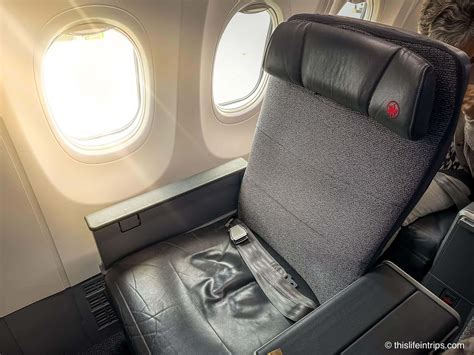
The aircraft also allows Air Canada to preserve a premium passenger experience in Business Class while offering high-density Economy Class for leisure routes. Features such as personal entertainment systems, mood lighting, and Wi-Fi connectivity further enhance onboard service.
Future of the MAX 8 Within Air Canada Rouge
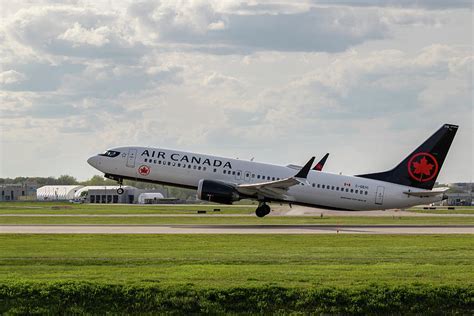
In late 2025, Air Canada announced a strategic fleet reorganization: all Boeing 737 MAX 8 aircraft would be transferred from the mainline fleet to its leisure subsidiary, Air Canada Rouge, by the end of 2026. This move is more than a reshuffle — it’s a targeted repositioning of aircraft to better match market needs.
Rouge will become a single-type 737 MAX operator, simplifying maintenance, training, and scheduling. The MAX 8s in Rouge livery will undergo reconfiguration to cater to leisure travelers, including higher-density seating, free Wi-Fi for Aeroplan members, and updated inflight entertainment systems. This transition also entails establishing a new Rouge crew base in Vancouver, optimizing operations for Western Canada’s leisure demand.
Implications of Fleet Realignment
Air Canada’s decision to split its narrowbody operations between Rouge (737 MAX 8) and the mainline (Airbus A220-300 and A320-family) demonstrates a nuanced understanding of market segmentation. Mainline operations increasingly focus on premium travel and business-heavy routes, requiring a more uniform Airbus fleet to enhance consistency and premium service offerings. Meanwhile, Rouge, with its MAX 8s, is positioned to aggressively serve price-sensitive leisure markets, where operating costs and fare flexibility are paramount.
This clear delineation also improves operational control, reduces costs through economies of scale, and facilitates more targeted marketing and route planning. For example, Rouge’s standardized MAX 8 fleet can operate high-utilization schedules with minimal disruptions, supporting network expansion into competitive vacation markets like Mexico, the Caribbean, and Central America.
No Major New Orders — Focus on Optimization
While Air Canada continues to expand its overall fleet, new orders for additional 737 MAX 8s are not prioritized beyond those already expected. The airline’s order book currently emphasizes newer Airbus models, including the Airbus A321XLR and A220-300, which provide extended range and flexibility for both mainline and regional operations.
This shift indicates that Air Canada’s focus with the MAX 8 is operational optimization, not numerical expansion. The remaining four MAX 8 deliveries, anticipated by mid-2026, will complete the transition to a Rouge-exclusive fleet. Future growth in this segment will come from network development and schedule efficiency rather than fleet enlargement.
The MAX 8’s Continued Importance in a Changing Industry
Even as fleet strategies evolve and newer aircraft types gain prominence, the 737 MAX 8 remains a cornerstone of Air Canada’s narrowbody operations. Its fuel efficiency, range, and passenger amenities keep it competitive, particularly in an industry that is under continuous pressure to improve both profitability and sustainability.
In an era where fleet flexibility, emissions targets, and cost structures define long-term success, the MAX 8’s ability to deliver consistent performance across diverse markets ensures its continued relevance. Whether operating short-haul flights within Canada or seven-hour missions to Central America, the aircraft provides Air Canada with unmatched adaptability.
Conclusion: A Calculated Deployment for Lasting Value
Air Canada’s use of the Boeing 737 MAX 8 represents a strategic convergence of technology, economics, and market strategy. With a current fleet of 47 aircraft, poised to be fully integrated into Rouge operations by 2026, the MAX 8’s story is one of careful planning and adaptive execution.
While headlines may focus on newer widebodies or ultra-long-range narrowbodies, the MAX 8 remains one of the most versatile and valuable aircraft in the airline’s fleet. Through deliberate repositioning and a sharp focus on efficiency, Air Canada continues to maximize the potential of the 737 MAX 8 — not just as a mode of transport, but as a lever for market expansion, brand differentiation, and sustainable growth.