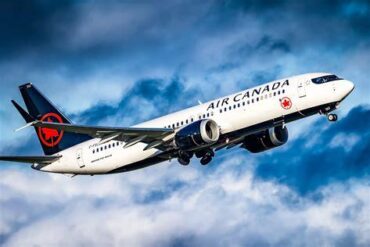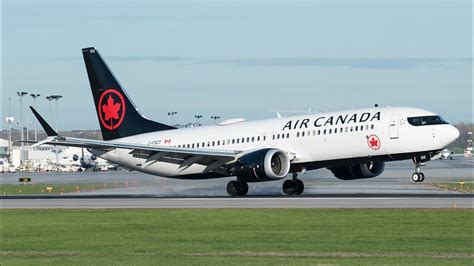
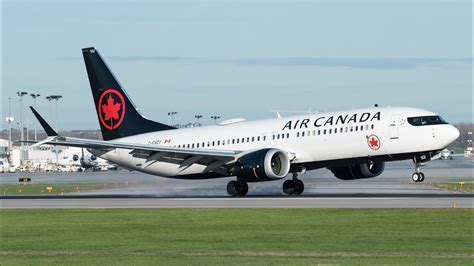
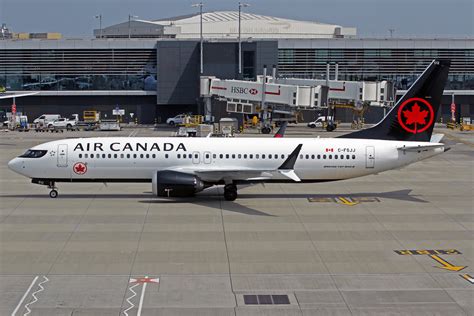
Air Canada has taken a pivotal step forward in redefining transatlantic travel by launching a new direct route from Montreal to Edinburgh, utilizing the Boeing 737 MAX 8—its longest scheduled flight yet with this narrowbody jet. This milestone, scheduled for regular service starting June 2025, marks a significant evolution in the airline’s international route strategy and showcases the capabilities of the 737 MAX 8 far beyond traditional regional boundaries.
The new route connects Montreal-Pierre Elliott Trudeau International Airport (YUL) with Edinburgh Airport (EDI), opening up a vital and underserved corridor between Canada and Scotland. With a flight time of approximately 7 hours and 20 minutes, this journey stretches the operational performance of the 737 MAX 8 to its upper limits, highlighting its technological advancements in range, fuel economy, and passenger comfort.
The Strategic Move Behind the Montreal–Edinburgh Route
Launching a long-haul flight with a narrowbody aircraft isn’t a conventional decision. However, for Air Canada, this route is less about traditional playbooks and more about seizing strategic opportunity. As global travel demand rebounds in the post-pandemic era, and with cost-efficiency under the spotlight, flexibility and precision network planning have become essential.
The choice of Edinburgh is particularly savvy. Scotland’s capital is not only a major European tourist magnet—drawing visitors with its historic castles, arts festivals, and literary heritage—but also a key gateway for business and diaspora connections between the UK and Canada. The route also taps into growing demand for mid-sized European destinations that aren’t always well served from North America.
Air Canada’s use of the 737 MAX 8 on this route signals its ambition to pair high-demand leisure markets with low-risk aircraft. Unlike widebodies that require high passenger volumes to break even, the MAX 8 enables profit on thinner routes by slashing operating costs while maintaining high service standards.
Inside the 737 MAX 8: More Than Just Efficiency
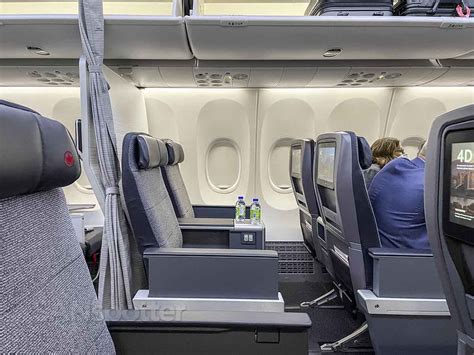
The Boeing 737 MAX 8 isn’t just a tool of economic efficiency—it’s a reengineered aircraft built for modern travel expectations. On the Montreal to Edinburgh service, the plane will be configured with 169 total seats, comprising:
- 20 Business Class seats with enhanced recline, extra legroom, and personal entertainment systems.
- 149 Economy Class seats, including several rows with preferred legroom, mood lighting, and larger overhead bins.
Passengers can expect amenities that rival widebody service on many legacy transatlantic routes. Features like Wi-Fi availability, quieter engines, and advanced cabin pressurization help reduce jet lag and ensure a more pleasant long-haul experience.
Fuel economy remains one of the aircraft’s greatest strengths. The 737 MAX 8 uses CFM International LEAP-1B engines and Advanced Technology winglets, which collectively deliver up to 14% lower fuel burn compared to previous-generation aircraft. This efficiency not only reduces operating costs but also significantly shrinks the carbon footprint of each flight.
From North America to Europe: 737 MAX 8’s Expanding Reach
While the Montreal to Edinburgh route is grabbing headlines, it’s just one example of Air Canada’s broader push into long-haul narrowbody operations. The airline is actively deploying its 737 MAX 8 fleet across both transcontinental and transatlantic routes, taking full advantage of the jet’s sweet spot in terms of range and passenger capacity.
One notable example is the Vancouver to Tampa service, covering over 4,180 kilometers (2,257 nautical miles). This route reflects how Air Canada is leveraging the 737 MAX 8 not only for international expansion but also for seasonal and demand-responsive markets.
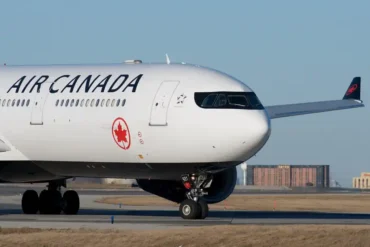
Another recent example is the Montreal to Porto route, originally planned for a MAX 8 but eventually upgraded to an Airbus A330-300 due to overwhelming demand. This flexibility underscores how the 737 MAX 8 acts as a bridge aircraft—enabling route testing and rapid adaptation based on passenger trends.
Why Not the Airbus A321XLR?
Given the success of Airbus A321XLR in extended-range narrowbody operations worldwide, some observers questioned why Air Canada didn’t assign that aircraft to the Edinburgh route. The answer lies in fleet composition, delivery timelines, and unit economics.
The A321XLR, while promising, is not yet widely available in Air Canada’s fleet, and its operational integration is still ongoing. The 737 MAX 8, on the other hand, is already a staple within the airline’s narrowbody strategy. Its availability and versatility allow for immediate deployment on newer routes without incurring additional training, maintenance, or scheduling complexity.
Moreover, the MAX 8’s operational costs—combined with its more established track record—make it the ideal choice for launching a high-potential but relatively lean transatlantic service like Montreal–Edinburgh. As more A321XLR units join the fleet in the coming years, we may see them supporting denser markets or acting as replacements on more demanding rotations.
Passenger Demand and Market Dynamics
Scotland has seen a significant uptick in Canadian tourism over the past decade, buoyed by strong cultural ties and increased promotion of Scottish heritage destinations across Canada. With no direct competitor currently flying the Montreal–Edinburgh route nonstop, Air Canada enjoys a first-mover advantage, especially during peak summer travel seasons.
Additionally, this route caters to a diverse passenger mix, including:
- Leisure travelers exploring the Scottish Highlands, Edinburgh Castle, or the Isle of Skye.
- Canadian-Scottish diaspora visiting family and reconnecting with cultural roots.
- Business travelers capitalizing on growing fintech and educational ties between Montreal and Edinburgh.
These segments are willing to pay for nonstop convenience, even on narrowbody aircraft, especially when backed by the reliability and brand assurance of Air Canada.
Environmental Considerations and Fleet Diversification
In line with its sustainability roadmap, Air Canada is strategically aligning aircraft choice with emissions targets. The 737 MAX 8 delivers on this front by cutting CO2 emissions per seat, thanks to its high fuel efficiency and optimized aerodynamics. It supports the airline’s commitment to achieving net-zero emissions by 2050.
The deployment of MAX 8s on longer routes is also helping Air Canada free up widebody aircraft for premium-heavy markets or ultra-long-haul flights where their size and range are irreplaceable. This balance ensures that resources are utilized effectively without compromising on passenger expectations.
Looking Ahead: More MAX Routes and Expansion Potential
The success of the Montreal–Edinburgh route could open the floodgates for more direct narrowbody transatlantic services. Potential next steps for Air Canada may include:
- Toronto to Dublin, especially as traffic from tech sectors grows.
- Montreal to Manchester, another underserved UK city with strong ties to Canada.
- Halifax to Amsterdam, connecting Eastern Canada to mainland Europe via a leaner aircraft.
Expect the 737 MAX 8 to become a backbone of flexible transatlantic travel, enabling the airline to trial and optimize routes that might have been economically unviable with widebodies.

Final Thoughts: A Tactical, Timely Leap Forward
Air Canada’s Montreal to Edinburgh launch is more than just a new line on a route map—it’s a statement of intent, signaling the airline’s deep confidence in next-generation narrowbody aircraft to unlock global connectivity. As traditional route economics evolve and travelers seek direct flights to niche destinations, the Boeing 737 MAX 8 is emerging as a catalyst for change.
Passengers can now travel from Quebec’s cultural capital to Scotland’s historic heartland with unprecedented efficiency and comfort. With more MAX 8 deployments on the horizon, this is only the beginning of a broader shift in international air travel, where size no longer limits reach and innovation drives connection.