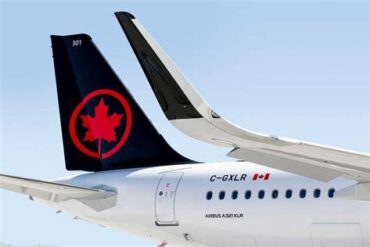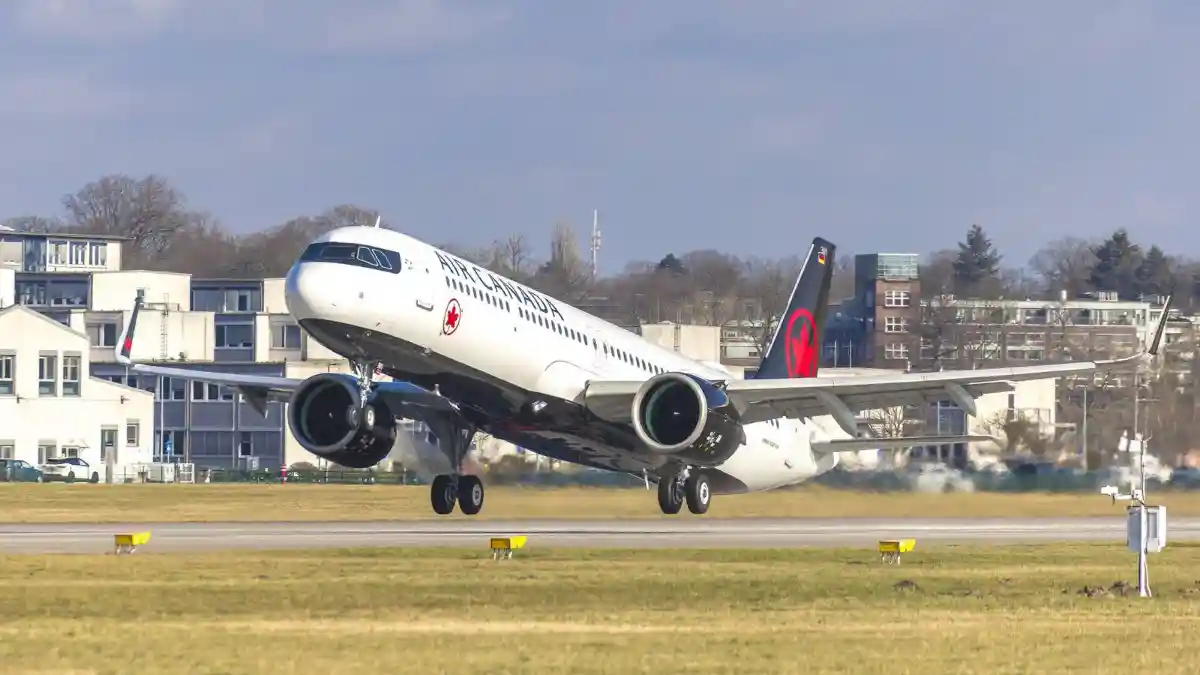
Air Canada is entering a new phase of long-haul efficiency with the launch of its first-ever Airbus A321XLR-operated transatlantic service, connecting Montréal–Trudeau International Airport (YUL) to Berlin Brandenburg Airport (BER). The milestone route marks a significant shift in how Air Canada is structuring its European network, leveraging next-generation narrowbody range to unlock thinner but strategically valuable markets. With flight times approaching nine hours, the new service demonstrates how aircraft such as the Airbus A321XLR are reshaping traditional widebody economics while maintaining long-haul connectivity standards. The addition of Berlin also strengthens Canada’s presence in Central Europe, a region historically reliant on one-stop connections through major hubs like Frankfurt, Amsterdam, and Paris.
Strategic Europe Growth and Network Expansion Momentum
The launch of the Montréal–Berlin route comes amid a broader surge in Air Canada’s European capacity growth. For August 2026, the airline is planning an average of 53 daily departures across the Atlantic region, representing an 8% year-over-year increase and the highest August capacity in its history. This expansion reflects a deliberate strategy by Air Canada to capture post-pandemic leisure demand while reinforcing high-yield business and visiting-friends-and-relatives traffic flows.
New and returning destinations have been carefully selected to balance leisure appeal and connectivity strength. Routes such as Toronto to Budapest and Ponta Delgada, Halifax to Brussels, and Montréal to cities including Berlin, Catania, Nantes, and Palma de Mallorca are reshaping the carrier’s map of Europe. Among these, Berlin stands out as a landmark addition—not only because it is newly served from Montréal, but also because it marks the first mainline service by Air Canada to the German capital, enhancing bilateral air connectivity between Canada and Germany at a time of growing tourism demand.
Inaugural Montréal–Berlin A321XLR Service and Route Profile
The inaugural flight from Montréal–Trudeau International Airport (YUL) to Berlin Brandenburg Airport (BER) is scheduled to commence on July 2, operated three times weekly. The route covers approximately 3,263 nautical miles (6,043 km) and will be flown using the airline’s new A321XLR fleet, configured specifically for long-range missions. The westbound and eastbound timings have been optimized for both connectivity and operational efficiency, with westbound flights departing late evening from Montréal and arriving in Berlin the following morning after an overnight transatlantic sector.
The launch is particularly significant for Berlin, as it introduces direct long-haul connectivity from Montréal for the first time in history. Previously, passengers traveling between the two cities relied heavily on one-stop connections through European hubs such as Frankfurt, Munich, Amsterdam, Paris Charles de Gaulle, Zurich, and London Heathrow. With nonstop service now in place, Air Canada is effectively compressing travel time while capturing demand that was previously distributed across multiple competing carriers.
Aircraft Configuration and Next-Generation Narrowbody Experience
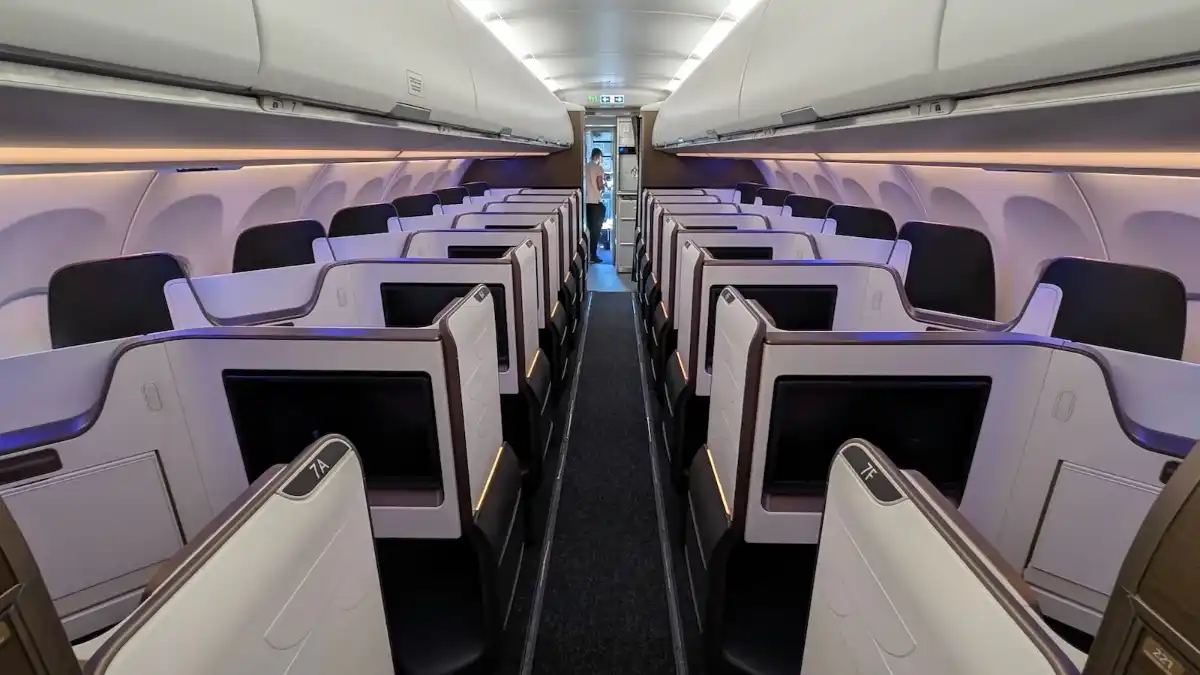
The route is operated using Air Canada’s 182-seat Airbus A321XLR aircraft, configured to bridge the gap between narrowbody efficiency and widebody comfort. The cabin layout includes 14 fully flat Signature Class business seats arranged in a 1-1 configuration, alongside 168 economy seats in a 3-3 layout. Economy passengers benefit from competitive seat pitch ranging between approximately 31 inches and up to 34 inches in select rows, offering a noticeably enhanced experience for a narrowbody aircraft operating ultra-long-range missions.
While the Signature Class does not feature privacy doors, the lie-flat product is designed to maintain premium competitiveness on long-haul routes where demand is strong but not sufficient to justify widebody deployment. The introduction of the A321XLR allows Air Canada to deploy premium capacity more flexibly, especially on routes where demand peaks seasonally or where yields can be optimized without excessive seat supply.
Seasonal Economics, Scheduling Strategy, and Yield Optimization
Originally scheduled to operate through mid-October, the Montréal–Berlin service has been strategically adjusted to conclude on September 5, focusing capacity on the peak summer travel window. This decision highlights a clear revenue management strategy: concentrating operations during periods of maximum demand to achieve stronger yields, which are essential for sustaining profitability on long-haul narrowbody operations.
The westbound service departs Montréal at 8:30 PM and arrives in Berlin at 10:15 AM local time the following day, with a block time of approximately seven hours and 45 minutes. The return sector leaves Berlin at 11:40 AM and lands in Montréal at 2:20 PM, taking about eight hours and 40 minutes. These timings are structured not only for passenger convenience but also to maximize aircraft utilization across Air Canada’s broader transatlantic network.
The economics of the route are also supported by strong underlying demand. Historical booking data indicates that approximately 23,000 round-trip passengers traveled between Montréal and Berlin in the year leading up to April 2026, making it the largest unserved European market from Montréal at the time. With a reported average base fare of around US$558, the route presents strong yield potential, especially when combined with the A321XLR’s lower operating costs relative to widebody aircraft.
Connectivity Impact and Competitive Positioning via Montréal Hub
Beyond point-to-point traffic, the new Berlin service is designed to function as a connectivity engine through Montréal–Trudeau International Airport (YUL). Using network analysis tools, multiple North American cities have been identified as strong one-stop opportunities via Montréal, including Los Angeles, San Francisco, Toronto, Boston, and Washington Dulles. These markets collectively represent hundreds of thousands of annual passengers with potential connections to Berlin, reinforcing Montréal’s role as a transatlantic transfer hub.
By tightening connection windows and optimizing routing efficiency, Air Canada is positioning itself to compete more effectively against European carriers such as Lufthansa, KLM, Air France, SWISS, and British Airways, all of which previously dominated indirect traffic flows between Canada and Berlin. The introduction of nonstop service fundamentally alters this competitive landscape, reducing reliance on European hubs and increasing the airline’s share of origin-and-destination demand.
Outlook: A321XLR as a Network Game-Changer for Air Canada
The Montréal–Berlin launch signals a broader transformation in how Air Canada plans to deploy its fleet in the coming years. The A321XLR is not merely an aircraft addition; it represents a structural shift toward thinner long-haul routes that were previously uneconomical for widebody operations. As more aircraft enter service, similar city pairs across Europe, North America, and potentially beyond could become viable nonstop markets.
In this context, the Berlin route serves as a blueprint for future expansion—balancing demand density, aircraft efficiency, and seasonal flexibility. If successful, it may pave the way for a new generation of transatlantic connectivity where frequency, agility, and cost efficiency outweigh traditional hub-and-spoke limitations.