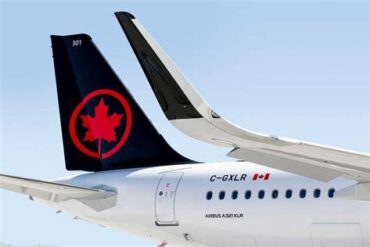
Air Canada is preparing to reshape its transatlantic network strategy with the launch of a new nonstop route between Montreal and Dublin using the Airbus A321XLR, one of the aviation industry’s most closely watched next-generation narrowbody aircraft. Scheduled to begin on May 2, 2027, the service will connect Montréal–Trudeau International Airport (YUL) with Dublin Airport (DUB) four times weekly, opening a new chapter in the airline’s evolving long-haul operations.
The move represents far more than the addition of another Europe route. It signals Air Canada’s growing confidence in long-range narrowbody flying and highlights how airlines are increasingly redesigning international networks around efficiency, flexibility, and targeted demand rather than relying exclusively on large widebody aircraft.
For Montreal, the route strengthens the city’s role as a major transatlantic gateway. For Air Canada, it offers a strategic opportunity to maintain year-round European connectivity while controlling operational costs in a market where seasonal demand can fluctuate sharply.
The decision also places the airline squarely within a broader industry transformation that is redefining how carriers approach medium-density international markets across the North Atlantic.
Air Canada’s Airbus A321XLR Strategy Marks a Major Fleet Evolution
The Airbus A321XLR has rapidly become one of the most influential aircraft developments in modern commercial aviation. Built as the longest-range member of the A321neo family, the aircraft gives airlines the ability to operate routes exceeding 4,700 nautical miles while using a single-aisle platform traditionally associated with short- and medium-haul flights.
For Air Canada, the aircraft unlocks a new category of route planning possibilities.
Instead of deploying larger Boeing 787s or Airbus A330s on every transatlantic market, the airline can now target thinner routes with lower passenger volumes while still maintaining nonstop connectivity. That shift is especially important on routes like Montreal to Dublin, where demand is strong but may not consistently justify daily widebody service throughout the entire year.
Industry analysts have pointed to the six-to-eight-hour sector range as the A321XLR’s sweet spot. Flights within that window allow carriers to balance fuel efficiency, passenger comfort, and aircraft utilization more effectively than previous narrowbody generations ever allowed.
Air Canada appears determined to capitalize on that advantage.
Current schedule filings show evening departures from Montreal with morning arrivals into Dublin, mirroring traditional eastbound overnight Atlantic operations. Westbound flights would depart Ireland during the morning and return to Canada around midday local time, maximizing both aircraft productivity and passenger connection opportunities.
The route also complements Air Canada’s existing European strategy by feeding passengers into broader Star Alliance and codeshare networks beyond Dublin.
Montreal–Dublin Service Returns After Earlier Uncertainty
The announcement is especially notable because Air Canada had previously removed Montreal–Dublin flights from earlier planning cycles, leading many aviation observers to question whether the carrier intended to reduce its Ireland presence from Quebec altogether.
Instead, the opposite appears to be happening.
By introducing the Airbus A321XLR into the equation, Air Canada has effectively found a way to restore the route with a more economically sustainable operating model. The aircraft’s lower trip costs and reduced seating capacity provide airlines with greater flexibility during shoulder seasons when demand softens outside peak summer travel periods.
This is becoming a defining trend across the airline industry.
Rather than abandoning routes entirely when widebody economics become challenging, carriers are increasingly using long-range narrowbody aircraft to preserve connectivity while lowering financial exposure. The approach allows airlines to maintain strategic markets, protect customer loyalty, and continue feeding international alliance networks without overcommitting capacity.
Montreal itself remains one of Air Canada’s most strategically important hubs. The city generates substantial local demand for Europe thanks to business travel, tourism flows, educational ties, and strong cultural connections with multiple European destinations. Dublin fits naturally into that network structure, particularly given Ireland’s growing role as both a tourism destination and business hub for North American travelers.
Why the Airbus A321XLR Is Changing Transatlantic Aviation
The launch of this route reflects a much larger shift occurring across the North Atlantic aviation market.
For decades, transatlantic flying was dominated by large twin-aisle aircraft operating primarily between massive hub airports. Airlines concentrated passengers through gateways like London Heathrow, Paris Charles de Gaulle, Frankfurt, and New York JFK before redistributing travelers onward through connecting banks.
The A321XLR is disrupting that model.
Because the aircraft can profitably operate longer sectors with fewer seats, airlines now have the ability to launch direct flights between secondary cities that previously lacked sufficient demand for widebody service. This creates more point-to-point options for travelers while allowing airlines to bypass congested mega-hubs.
Several major carriers have already embraced the concept.
Aer Lingus, Iberia, American Airlines, United Airlines, and other international operators have all outlined extensive A321XLR deployment plans on long-haul routes. Air Canada’s Montreal–Dublin announcement places the carrier firmly within that competitive landscape.
The aircraft’s economics are central to its appeal. Compared with traditional widebody jets, the A321XLR consumes significantly less fuel per trip and requires fewer passengers to reach profitability thresholds. In periods of economic uncertainty or fluctuating travel demand, that flexibility becomes enormously valuable.
At the same time, modern narrowbody cabins have evolved considerably from earlier generations.
Passengers on Air Canada’s future A321XLR flights are expected to see upgraded premium seating, advanced inflight entertainment systems, modern cabin lighting, and improved passenger comfort features tailored specifically for longer journeys. Although Air Canada has not finalized the onboard product publicly, industry expectations suggest a premium-heavy configuration similar to the airline’s existing transcontinental fleet.
Air Canada Will Continue Widebody Operations Before the XLR Arrives
While the Airbus A321XLR will ultimately headline the Montreal–Dublin service, Air Canada is not waiting until 2027 to maintain its Ireland presence.
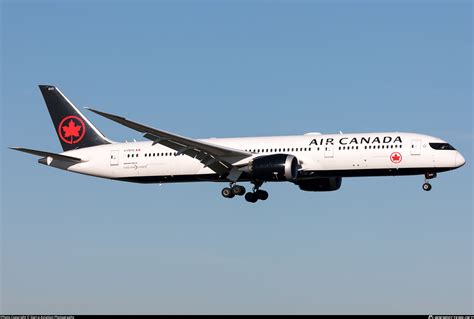
Between May and December 2026, the airline is expected to operate the route using Boeing 787-9 Dreamliner aircraft, with Airbus A330-300 jets supplementing service depending on operational requirements and seasonal demand patterns.
That interim strategy serves several purposes.
First, it allows Air Canada to maintain visibility and market presence on the route before the XLR enters regular operations. Second, it provides operational flexibility during a period when aircraft deliveries across the aviation industry remain highly sensitive to manufacturing delays and supply chain pressures.
Aircraft availability continues to influence network planning globally. Airlines are carefully balancing expansion ambitions with uncertain delivery timelines from both Airbus and Boeing. As a result, schedule filings often remain fluid until much closer to launch dates.
Still, the reappearance of the Montreal–Dublin route in Air Canada’s reservation systems strongly suggests the airline views the market as strategically important over the long term.
Competitive Pressure Across the North Atlantic Continues to Intensify
Air Canada’s latest move arrives during a period of aggressive competition across North Atlantic markets as airlines continue rebuilding international networks after years of disruption and volatility.
Carriers are no longer competing solely on frequency or hub dominance. Increasingly, the battle centers around convenience, nonstop access, and network flexibility.
That trend has accelerated demand for aircraft like the Airbus A321XLR.
The ability to launch direct routes between mid-sized cities creates opportunities to capture premium travelers who prefer avoiding major transfer hubs. Business passengers, in particular, increasingly value time savings and simplified itineraries over traditional connecting options.
Dublin also offers Air Canada additional strategic advantages beyond local traffic alone. Ireland has become a major European gateway for North American companies, particularly in the technology and pharmaceutical sectors. The airport’s growing connectivity across Europe further enhances its attractiveness within broader alliance and partnership structures.
For Air Canada, the route therefore represents more than a simple leisure link. It is part of a broader effort to position Montreal as a stronger transatlantic hub while leveraging next-generation aircraft technology to expand efficiently into evolving international markets.
The success of the Airbus A321XLR in this role could ultimately influence far more than a single route. If the Montreal–Dublin service performs well, similar aircraft deployments may follow across other medium-density European markets where traditional widebody economics remain difficult to sustain year-round.
That possibility explains why aviation analysts are watching the program so closely. The aircraft is not merely adding new routes — it is reshaping how airlines think about long-haul flying altogether.