Boeing’s Chevron Engine Technology Was Designed To Silence The Skies
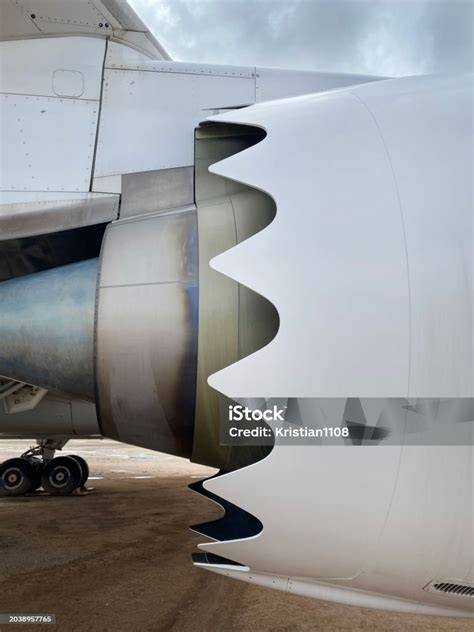
Modern commercial aircraft engines are far quieter than the jet engines that dominated aviation several decades ago. Behind this transformation are decades of aerodynamic research, advanced materials, and increasingly sophisticated noise-control technologies. Among the most recognizable solutions introduced in recent years is the engine chevron, the distinctive sawtooth pattern visible on the nacelles of aircraft such as the Boeing 787 Dreamliner, Boeing 747-8, and Boeing 737 MAX.
At first glance, chevrons appeared to represent the next major step in aircraft engine development. They reduced noise, helped airlines meet increasingly strict airport regulations, and became a visual signature of Boeing’s newest aircraft families. However, aviation engineering rarely offers a free advantage. The same technology that made Boeing aircraft quieter also introduced small but measurable penalties in thrust efficiency, fuel performance, weight, and maintenance complexity.
Airbus, meanwhile, largely avoided the technology altogether. Its latest-generation aircraft, including the Airbus A350, Airbus A320neo, and Airbus A330neo, achieved competitive noise levels through different engineering approaches. This created an interesting divide between two major aircraft manufacturers: Boeing embraced an external noise-reduction solution, while Airbus and newer engine programs focused on solving the problem inside the engine itself.
The story of chevrons is not simply about one company making a different design choice. It represents a broader transition in aerospace engineering. Technologies that appear revolutionary at one moment can become temporary bridges toward more advanced solutions. Boeing’s quieter engines demonstrate how aviation innovation often involves balancing competing priorities rather than finding a perfect answer.
NASA’s Chevron Technology Changed Commercial Engine Noise Reduction
The origins of engine chevrons can be traced back to research conducted by NASA, which explored ways to reduce aircraft noise during the late 20th century. The aviation industry faced growing pressure from communities near airports, where engine noise became one of the biggest challenges limiting expansion.
NASA researchers discovered that concepts originally explored for military applications could also improve commercial aircraft noise performance. Military engineers had experimented with serrated shapes on exhaust systems to influence airflow behavior. NASA found that similar patterns could help commercial turbofan engines by improving the mixing between the hot exhaust gases from the engine core and the cooler bypass air surrounding them.
Normally, the difference between these two airflow streams creates powerful turbulence. This turbulence generates some of the loudest sounds produced by a jet engine, especially during takeoff. By adding small sawtooth structures at the rear of the engine nacelle, engineers could create controlled miniature vortices that reduced the intensity of larger turbulent structures.
NASA’s early research showed that chevron nozzles could significantly reduce perceived aircraft noise while causing only a very small reduction in thrust. The technology became attractive because even a modest noise reduction could help airlines operate at airports with strict noise regulations.
The development was particularly valuable during the period when aircraft manufacturers were searching for ways to make large turbofan engines quieter without sacrificing performance. Boeing incorporated the technology into several aircraft programs, turning NASA’s experimental research into a commercial aviation feature.
Why Boeing Added Chevrons To The 787, 747-8, And 737 MAX
Boeing’s adoption of chevrons was closely connected to the company’s strategy for reducing aircraft noise while improving overall efficiency. The Boeing 787 Dreamliner, introduced in 2011, was designed as a revolutionary aircraft using composite structures, advanced systems, and highly efficient engines.
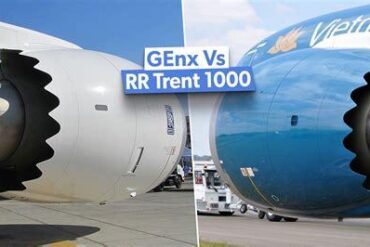
The aircraft’s General Electric GEnx engines featured chevron nozzles as part of a broader effort to reduce operating noise. The same engine family later influenced the Boeing 747-8, which used a modified version of the GEnx to modernize the iconic jumbo jet without requiring an entirely new engine design.
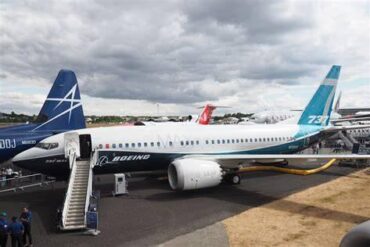
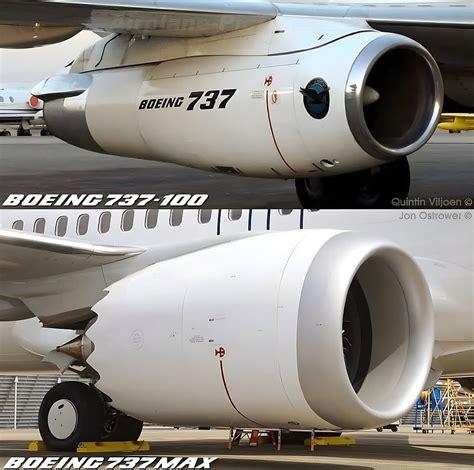
The technology also appeared on the Boeing 737 MAX, which uses the CFM International LEAP-1B engine. Although the MAX’s engines were primarily developed for improved fuel efficiency, Boeing retained chevron technology as part of its noise-control strategy.
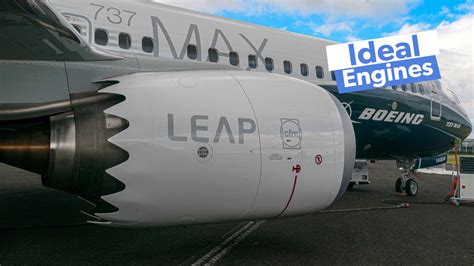
The benefits were clear. Chevrons could reduce engine noise by several decibels, particularly during takeoff when airports and surrounding communities are most affected. This helped aircraft comply with strict noise standards and gave airlines more flexibility when operating from noise-sensitive airports.
There was also another indirect advantage. Because quieter aircraft require less sound insulation, manufacturers could potentially remove some cabin insulation material. Since insulation adds weight, reducing it could partially offset the efficiency penalty created by the chevrons themselves.
However, the trade-off remained. Chevrons reduced noise by intentionally disturbing airflow. That same airflow disruption meant the engine was not operating at its absolute aerodynamic maximum.
The Hidden Efficiency Penalty Behind Boeing’s Quieter Engines
The biggest challenge with engine chevrons is that they solve one problem by introducing another. The technology works by creating controlled turbulence, but turbulence always comes with an energy cost.
A turbofan engine produces thrust by accelerating a large volume of air. Any feature that interferes with the smooth movement of that airflow can slightly reduce efficiency. Chevrons create small vortices that help mix airflow more quietly, but those vortices also consume some of the energy that would otherwise contribute to propulsion.
Estimates vary, but the thrust penalty associated with chevrons is often considered to be around 0.5%. In aviation, where airlines spend millions of dollars optimizing fuel consumption, even a fraction of a percent matters.
The aerodynamic penalty is not the only disadvantage. Chevron-equipped engines can also involve:
- Additional manufacturing complexity due to specialized nozzle designs.
- Slight increases in component weight.
- More complicated maintenance requirements.
- Potential aerodynamic compromises compared with smoother nacelle designs.
For a new aircraft program expected to remain in service for several decades, engineers must carefully evaluate whether a technology’s advantages will continue outweighing its disadvantages.
During the early 2010s, the answer appeared to be yes. But as engine technology improved, the balance began to change.
Why Airbus Never Adopted Engine Chevrons
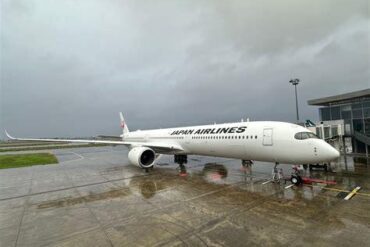
Airbus took a different approach. The European manufacturer introduced several next-generation aircraft without engine chevrons, including the A350, A320neo, and A330neo.
This was not because Airbus ignored aircraft noise. Instead, Airbus relied on alternative methods to achieve similar or better results. Modern turbofan engines became quieter through improvements in fan design, bypass ratios, acoustic materials, and internal airflow management.
The Rolls-Royce Trent XWB powering the Airbus A350, for example, was designed with advanced acoustic treatment and aerodynamic improvements that reduced noise without requiring external chevron structures.
Similarly, the Pratt & Whitney GTF engines used on many A320neo-family aircraft incorporated a geared architecture that allows the fan and turbine sections to operate at different speeds. This improves efficiency and reduces noise by allowing a larger fan to rotate more slowly.
Airbus’ decision reflected a different engineering philosophy. Instead of treating noise reduction as an external aerodynamic challenge, newer engines increasingly addressed the causes of noise directly inside the propulsion system.
The result was that Airbus aircraft could achieve strict noise standards without accepting the aerodynamic compromises associated with chevrons.
Why Boeing Removed Chevrons From The 777X
The most significant sign that Boeing was moving away from chevrons came with the Boeing 777X program.
Early concepts of the 777X showed aircraft designs featuring chevron-equipped engines. Many observers expected Boeing to continue using the technology because it had been associated with the company’s newest aircraft families.
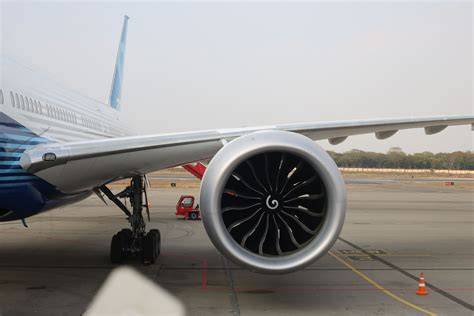
However, when Boeing introduced the final 777X design, the aircraft featured the enormous GE Aerospace GE9X engine without chevrons.
The decision was logical. The GE9X represents a new generation of turbofan technology with a massive fan diameter of approximately 134 inches and a bypass ratio around 10:1. Its advanced aerodynamic design, improved fan blades, optimized exhaust flow, and sophisticated acoustic liners reduced the need for external noise-control devices.
The engine itself became quieter through better engineering rather than additional components attached to the nacelle.
This marked an important shift. Boeing was not abandoning quiet aircraft. Instead, it was moving toward the same philosophy already adopted by Airbus: reduce noise at the source rather than correcting it afterward.
Modern Engines Are Replacing Chevron Technology
The aviation industry has continued moving toward increasingly efficient engines with higher bypass ratios and improved internal airflow control. These developments have reduced the importance of chevrons.
Manufacturers such as GE Aerospace, Rolls-Royce, and Pratt & Whitney have invested heavily in alternative noise-reduction methods. These include improved fan blade designs, advanced acoustic liners, optimized pressure ratios, and smoother exhaust systems.
The next generation of propulsion technology will push this trend even further. Programs such as CFM International’s RISE open fan demonstrator aim to dramatically improve fuel efficiency while addressing noise challenges through completely new engine architectures.
Open fan designs will create their own engineering challenges because exposed blades can generate different noise patterns. However, manufacturers are approaching these problems using advanced simulation, materials, and aerodynamic optimization rather than returning to chevrons.
The future of aviation noise reduction will likely come from smarter engines rather than additional external features.
Chevron Engines Were A Valuable But Temporary Aviation Solution
Boeing’s quieter engines with chevrons represent an important chapter in commercial aviation development. They successfully reduced aircraft noise at a time when airlines and manufacturers needed practical solutions for increasingly strict regulations.
However, aviation technology rarely remains unchanged. As engines became larger, more efficient, and more sophisticated, the disadvantages of chevrons became harder to justify. The small penalties in thrust, weight, and complexity became less attractive compared with newer internal noise-reduction techniques.
Airbus effectively skipped this intermediate step, choosing technologies that addressed noise at the engine level from the beginning. Boeing eventually followed a similar path with the GE9X-powered 777X.
Chevron technology was not a failure. It was an engineering solution that solved an important problem during a specific period. But as aircraft engines continue evolving, the industry has moved toward cleaner aerodynamic designs that achieve the same goal without carrying the same penalties.
The quietest aircraft of tomorrow will probably not have more visible noise-reduction features. Instead, their silence will come from the advanced engineering hidden inside the engines themselves.