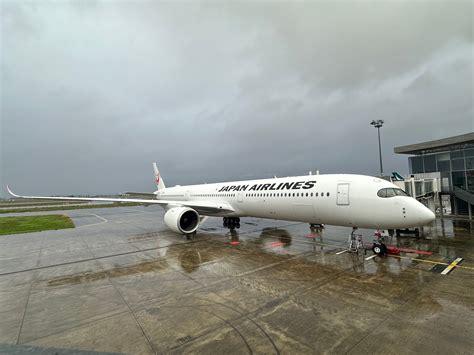
The absence of the Airbus A350-1000 from US airline fleets has long stood out as one of the more curious gaps in global commercial aviation. While the aircraft has become a flagship long-haul platform for some of the world’s most prestigious international carriers, none of the United States’ major airlines have operated it—at least not yet. This omission is not the result of technical shortcomings or market rejection, but rather a convergence of fleet philosophy, route economics, historical procurement decisions, and strategic timing that has uniquely shaped the US aviation landscape.
For years, the US “Big Three”—American Airlines, Delta Air Lines, and United Airlines—have approached widebody fleet planning with a distinctly different mindset than many of their overseas counterparts. Where global carriers often rely on ultra-high-capacity aircraft to funnel traffic through centralized hubs, US airlines tend to emphasize frequency, flexibility, and fleet commonality, even on long-haul international routes. This structural difference lies at the heart of why the Airbus A350-1000 has remained largely absent from American skies.
By design, the A350-1000 is a high-capacity, premium-leaning, long-haul aircraft optimized for dense intercontinental routes. It excels when airlines need to move large numbers of passengers and cargo between major global gateways while maintaining industry-leading fuel efficiency. Yet for much of the past decade, US airlines simply did not see enough routes where such a large aircraft made consistent economic sense—especially when alternatives like the Boeing 787 Dreamliner or A350-900 offered greater operational flexibility.
The Airbus A350-1000: Built for Scale, Yield, and Prestige
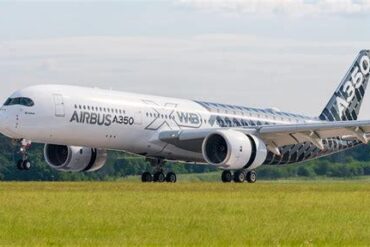
The Airbus A350-1000 represents the upper end of Airbus’ modern widebody portfolio. Stretching approximately 23 feet longer than the A350-900, it typically accommodates around 40 additional passengers in standard airline configurations, with significantly more space available for premium cabins and long-haul cargo.
Powered exclusively by the Rolls-Royce Trent XWB-97, one of the most powerful and efficient civil aviation engines ever produced, the A350-1000 delivers up to 97,000 pounds of thrust, enabling strong climb performance even at maximum takeoff weight. Although its range—approximately 7,970 nautical miles—is slightly shorter than that of the A350-900, the trade-off comes in the form of superior payload capability and higher revenue potential per flight.
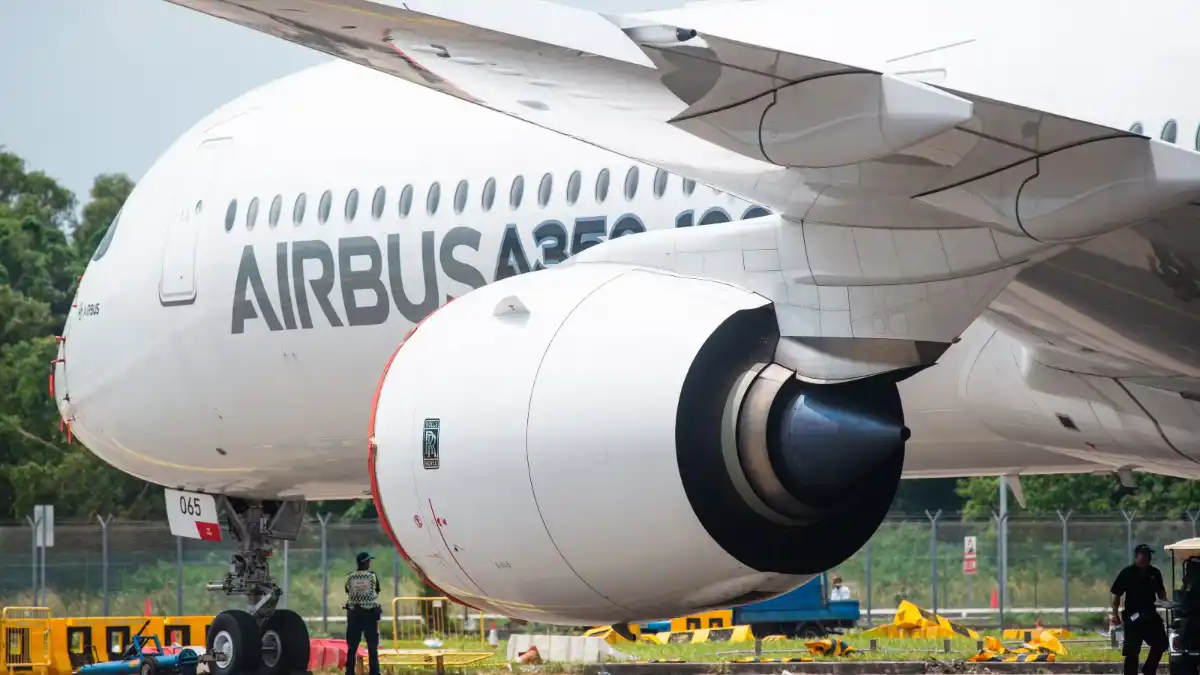
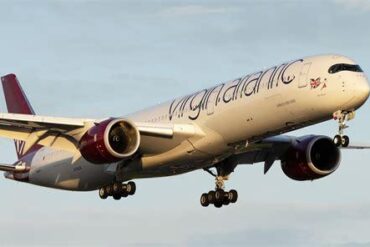
For airlines operating between megahubs such as London Heathrow, Doha, Hong Kong, and Tokyo, these attributes are invaluable. Carriers like Qatar Airways, British Airways, Cathay Pacific, and Virgin Atlantic have embraced the A350-1000 as a cornerstone of their long-haul fleets, deploying it on routes where passenger demand, premium traffic, and cargo yields justify its size.
US airlines, however, historically have not structured their networks around this model.
Delta Air Lines: The Exception That Proves the Rule
Among North American carriers, Delta Air Lines has consistently charted its own course in fleet strategy, and its relationship with Airbus reflects that independence. Delta is currently the only airline in North America operating the Airbus A350, though until now exclusively in the A350-900 variant.
With 38 A350-900s already in service and more on the way, Delta has leveraged the aircraft on long-haul routes from hubs such as Atlanta, Detroit, Los Angeles, and Seattle, prioritizing fuel efficiency, passenger comfort, and cargo capability. Yet even Delta initially stopped short of committing to the larger A350-1000—until market conditions shifted.
In January 2024, Delta announced an order for 20 Airbus A350-1000 aircraft, with options for 20 more, marking a decisive evolution in its long-term strategy. According to CEO Ed Bastian, the aircraft will play a crucial role in international expansion, replacing aging widebodies while enabling more premium seating, modern onboard amenities, and expanded freight capacity.
The A350-1000 will become the largest aircraft in Delta’s fleet, surpassing even the Airbus A330-900 and Boeing 767-400ER. Its introduction reflects Delta’s confidence that certain trunk international routes now warrant higher-capacity aircraft without sacrificing efficiency—a threshold that many US airlines are only now beginning to reach.
Why American Airlines Has Stayed Away
For American Airlines, the absence of the A350-1000 is rooted in a long-standing commitment to an all-Boeing widebody fleet. The Fort Worth–based carrier currently operates a mix of Boeing 777-200ERs, 777-300ERs, 787-8s, and 787-9s, with future growth centered around the Dreamliner family.
This approach simplifies pilot training, maintenance logistics, and spare-parts inventories across a global network. While American maintains deep ties with Airbus on the narrowbody side—where it is one of the world’s largest operators of the A321 family—its widebody philosophy remains firmly aligned with Boeing.
The Boeing 777-300ER, in particular, has filled the same high-capacity role that the A350-1000 might otherwise occupy. Although less fuel-efficient by modern standards, it offers proven reliability and a cabin size American already understands operationally and commercially. For American, the incremental benefits of switching to the A350-1000 have not yet outweighed the costs of introducing a new widebody type.
United Airlines and the Long Road to the A350
United Airlines presents a more complex case. The Chicago-based carrier does have Airbus widebodies on order—but not the A350-1000. Instead, United has committed to the A350-900, intended primarily as a replacement for its aging Boeing 777-200ER fleet.
However, delivery delays have pushed United’s first A350-900 arrival to around 2030, leaving the airline reliant on a mix of Boeing 787 variants and 777s for the foreseeable future. United’s strategy emphasizes flexibility, with different aircraft optimized for international and high-density domestic missions.
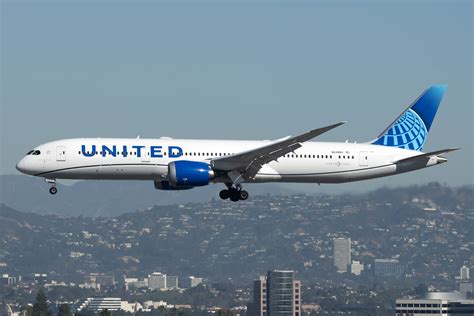
The A350-1000, while technologically impressive, sits outside United’s immediate needs. Its size exceeds what many United routes can consistently support, especially in a network that prioritizes route diversification over concentration. For now, the airline sees greater value in expanding its 787 fleet, which offers lower trip costs and broader deployment options.
Why Airlines Prefer the A350-900
Globally, the A350-900 has emerged as the dominant variant within the A350 family, and its popularity helps explain the slower adoption of the -1000. With a range of up to 8,100 nautical miles, the -900 excels on ultra-long-haul and thin intercontinental routes, making it ideal for airlines seeking maximum flexibility.
From an economic standpoint, the A350-900 typically carries lower acquisition and operating costs, while still delivering many of the same efficiency benefits as the -1000. Its versatility allows airlines to open new long-haul routes with lower risk, a priority for carriers navigating volatile demand patterns.
The shared common type rating between the A350-900 and A350-1000 further simplifies operations for airlines that operate both, but for many carriers, the -900 alone already meets their strategic requirements.
The Global Success of the A350-1000
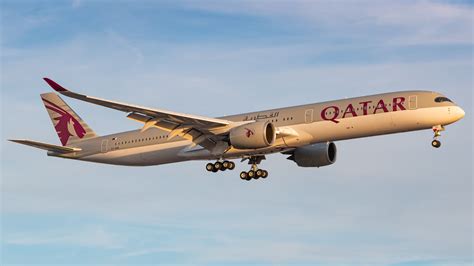
Despite its limited presence in North America, the A350-1000 has achieved substantial success worldwide. According to industry data, more than 640 A350 aircraft are currently in service across over 40 global operators, with the -1000 playing a central role in premium long-haul markets.
Airlines such as Qatar Airways, the largest A350-1000 operator, deploy the aircraft on flagship routes where premium demand, cargo revenue, and slot constraints justify its capacity. British Airways uses the type between London and New York, while Japan Airlines, Cathay Pacific, and Virgin Atlantic rely on it for similarly high-profile services.
What Comes Next for the A350-1000 in the US
The impending arrival of the A350-1000 at Delta marks a turning point for the aircraft in the United States. As international travel demand rebounds and premium cabins once again drive profitability, US airlines are reassessing the economics of higher-capacity widebodies.
Airbus is also investing heavily in the future appeal of the A350-1000, unveiling concepts for next-generation first-class suites, including ultra-luxury layouts with private bathrooms, double beds, and lounge areas. These innovations align closely with airlines’ renewed focus on high-yield premium passengers.
Meanwhile, global programs such as Qantas’ Project Sunrise, which will use the A350-1000 for nonstop flights from Sydney to London and New York, continue to showcase the aircraft’s unmatched long-haul capabilities. As more airlines demonstrate what the A350-1000 can achieve, its relevance within the US market is likely to grow.
The aircraft’s absence from American fleets was never about performance or appeal. It was about timing, strategy, and network design. With Delta leading the way, the Airbus A350-1000 is finally poised to claim its place in the skies over the United States—not as a niche outlier, but as a new benchmark for long-haul efficiency, scale, and passenger experience.