When you scan the transoceanic fleets of the United States’ major airlines—Delta Air Lines, United Airlines, and American Airlines—you’ll notice a conspicuous absence: none currently operate the Airbus A350-1000, Airbus’ flagship long-range twinjet. Despite its reputation for efficiency, passenger comfort, and capacity, the A350-1000 has yet to find a foothold among U.S. carriers. But that story is slowly shifting.
Understanding the Airbus A350-1000’s Capabilities
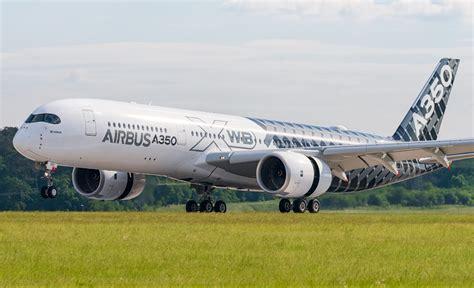
The Airbus A350-1000 is a widebody marvel, engineered to bridge high-demand routes with lower environmental impact and greater profitability. Compared to the smaller A350-900, the -1000 is 23 feet longer, allowing it to carry around 40 more passengers in standard configuration. It’s powered by the Rolls-Royce Trent XWB-97 engines—generating up to 97,000 pounds of thrust—which elevate its performance even on fully loaded long-haul missions.
While the A350-900 edges it out slightly in range (8,100 nautical miles vs. the -1000’s 7,970), the A350-1000 makes up the difference with higher passenger and cargo capacity. Airlines like Qatar Airways, British Airways, and Cathay Pacific routinely deploy the aircraft on trunk routes between major global hubs, capitalizing on its payload advantage.
Delta: Breaking Ground with the A350-1000
In 2026, Delta Air Lines will become the first North American airline to fly the A350-1000, marking a pivotal shift. Delta already operates 38 A350-900s and has an additional six en route. However, in January last year, the airline announced an order for 20 A350-1000s, with options for 20 more—a bold signal of confidence in the aircraft’s future on long-haul U.S. routes.
According to Delta CEO Ed Bastian, the A350-1000 is key to the airline’s global growth strategy and sustainability goals. The jet will serve premium-heavy international routes, bringing more first-class and Delta One seating to customers while phasing out older Boeing 767s.
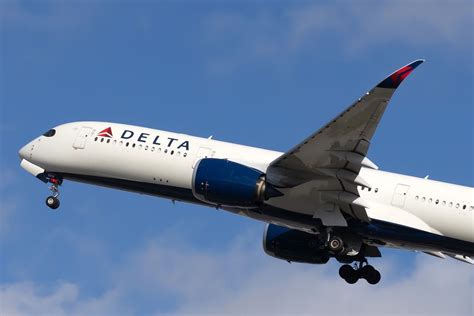
This acquisition aligns with Delta’s broader fleet modernization agenda. It already operates an extensive lineup of Airbus aircraft—ranging from the A220 to the A330neo—and views the A350-1000 as a long-term replacement for legacy widebodies like the 767-300ER.
Why American Airlines Isn’t Interested
At present, American Airlines shows no sign of embracing the A350-1000. The Fort Worth-based carrier has committed to an all-Boeing widebody fleet, operating 47 Boeing 777-200ERs, 20 777-300ERs, 37 787-8s, and 26 787-9s. It continues to receive new Dreamliners, and its fleet strategy remains anchored in the 787 platform.
While American maintains robust Airbus narrowbody operations—being the largest operator of the A319 and A321-200, and holding orders for 96 A321neos and 50 A321XLRs—its loyalty to Boeing on the widebody front remains steadfast. Industry insiders speculate that cost synergies, commonality, and existing pilot training infrastructure are key reasons behind its resistance to Airbus’ largest long-haul jet.
United Airlines: A Delayed Embrace
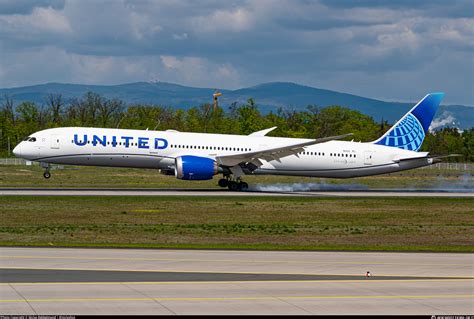
United Airlines, on the other hand, does have Airbus widebodies on order—but only the A350-900. The Chicago-based carrier placed an order for 45 A350-900s, but has deferred deliveries until 2030. United’s current long-haul fleet is exclusively Boeing, featuring 767s, 777s, and 787 Dreamliners across multiple variants.
In a dual strategy, United plans to use the A350-900 for international routes while leaning on the 787 for domestic and medium-haul international services. The decision to avoid the -1000 variant may reflect route demand optimization: the A350-900 offers better fuel economy and longer range, ideal for thinner but extended city pairs. Moreover, the longer -1000 may simply be too large for many of United’s current long-haul route structures.
Why Most U.S. Airlines Prefer the A350-900
Globally, many carriers are flocking to the A350-900 over its larger sibling. The A350-900’s design offers exceptional fuel efficiency, long-range capabilities, and fleet flexibility. It can operate ultra-long-haul flights—as shown by Singapore Airlines’ nonstop service from Singapore to both JFK and Newark using A350-900ULRs—while remaining economical on shorter intercontinental routes.
From a business perspective, the -900’s lower acquisition cost and broader operational viability across a wider range of routes make it a more attractive investment. Since both variants share a common pilot type rating and similar maintenance profiles, airlines already flying the -900 don’t face significant hurdles if they wish to add the -1000. Still, many choose not to.
Who Else Operates the A350-1000?
As of today, the A350-1000 flies with over 10 major global carriers, including:
- Qatar Airways (24 aircraft, largest operator)
- British Airways
- Cathay Pacific
- Virgin Atlantic
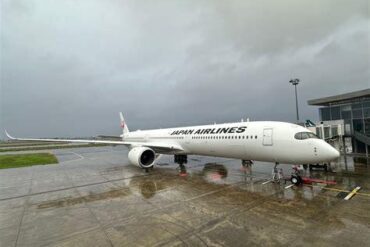
- Japan Airlines
- Etihad Airways
- Air Caraïbes
- French bee
- Ethiopian Airlines
Upcoming operators include Qantas (for its ambitious Project Sunrise), Air India, Turkish Airlines, Lufthansa, Korean Air, EVA Air, KLM, Philippine Airlines, and Riyadh Air—the new Saudi national airline, which has ordered 25 A350-1000s to form the backbone of its intercontinental fleet.
Delta’s Bet on Premium Travel
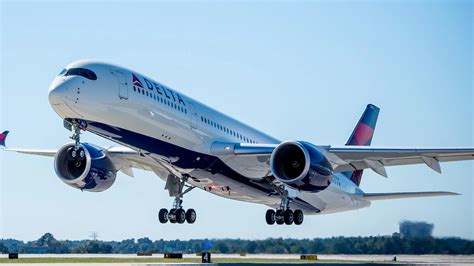
What makes the A350-1000 particularly compelling for Delta is its potential to transform the premium travel experience. More than half of Delta’s A350-1000 cabin is expected to be allocated to premium seating, including Delta One suites and Premium Select. This supports a strategy that favors yield over volume, aligning with growing demand for high-end transcontinental and transatlantic travel.
The aircraft also supports Delta’s push into new cabin innovations. Airbus has teased first-class “Master Suites” for future A350-1000 layouts, offering double beds, private lavatories, and bar areas in a 1-1-1 aisle configuration. As the luxury air travel market matures post-pandemic, the -1000’s large cabin opens up new monetization possibilities.
The Boeing Factor and Fleet Politics
Another reason for the A350-1000’s absence in the U.S. market until now is the deep industrial and political ties between U.S. carriers and Boeing. Widebody fleet decisions are not made in a vacuum—they reflect years of relationships, subsidies, lobbying, and labor agreements. Committing to Airbus’ largest widebody jet can appear counterintuitive when domestic alternatives like the Boeing 777X or 787-10 are available.
That said, Boeing’s delays on the 777X and production challenges with the 787 series have created strategic openings for Airbus, especially as airlines seek delivery certainty and lower fuel burn. Delta’s decision to double down on the A350-1000 may prompt others to reevaluate their options, especially if the jet performs well on flagship routes.
What the Future Holds
The arrival of Delta’s A350-1000s in 2026 will serve as a litmus test for the U.S. market. If the aircraft delivers on fuel savings, premium revenue, and maintenance predictability, other airlines may follow suit—particularly if Boeing continues to face production setbacks.
United’s deferred A350-900 order also leaves the door open for future upgrades to the -1000, especially if international demand continues to surge. Meanwhile, American’s rigid Boeing strategy may soften over time as the fleet ages and new global competitors force their hand.
In a world increasingly shaped by sustainability, efficiency, and long-haul comfort, the Airbus A350-1000 is no longer an exotic option—it’s becoming an essential tool for next-generation global air travel. U.S. airlines may have hesitated, but Delta’s move signals a clear shift: the A350-1000’s era in American skies is about to begin.