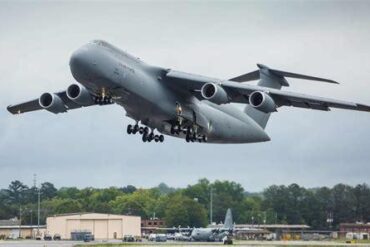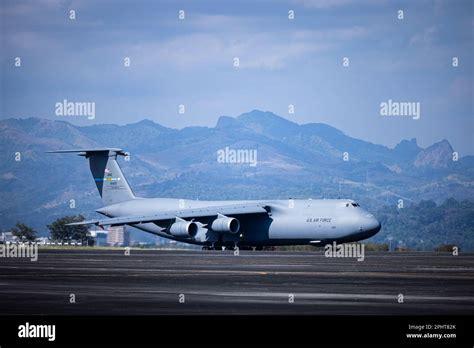
The Lockheed C-5 Galaxy, the largest military cargo aircraft ever operated by the United States Air Force, presents a fascinating paradox in aviation history. Despite its sheer size, strategic importance, and continued relevance into the 21st century, it spent the majority of its operational life without a glass cockpit—a feature that became standard in commercial aviation decades earlier. This apparent technological lag is not a story of oversight or inability. Instead, it reveals a deeper truth about how military priorities, engineering realities, and operational demands shape aircraft design in ways that differ fundamentally from the commercial world.
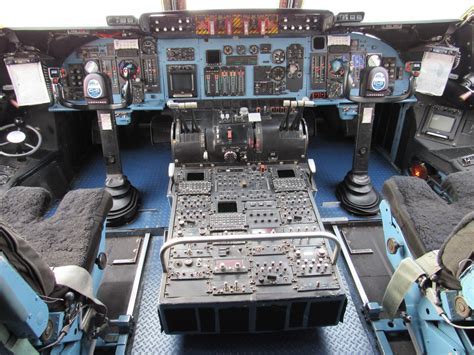
Understanding why the C-5 did not initially adopt a glass cockpit requires stepping back into the era of its creation. Conceived in the 1960s during the Cold War, the aircraft was built to solve a very specific problem: how to move enormous quantities of cargo—tanks, helicopters, and heavy equipment—across intercontinental distances quickly and reliably. At the time, digital avionics simply did not exist in any meaningful form. The cockpit was filled with analog gauges, mechanical switches, and dedicated system panels, all of which represented the pinnacle of aviation technology at the time.
Yet what is more intriguing is not why the C-5 began its life without a glass cockpit—but why it remained that way for so long, even as digital flight decks revolutionized aviation elsewhere. The answer lies in a combination of design philosophy, mission requirements, and the immense complexity of modernization.
The Short Answer: Timing, Not Technological Limitation
At its core, the absence of a glass cockpit in the early C-5 Galaxy boils down to timing and necessity. When the aircraft first flew in 1968, there was no such thing as a glass cockpit. Pilots relied entirely on electromechanical instrumentation, and these systems were considered both reliable and sufficient for the mission.
As digital avionics began to emerge in the late 1970s and 1980s, commercial aviation quickly embraced them. Airlines saw immediate benefits: reduced pilot workload, improved situational awareness, and lower operating costs. For them, upgrading to a glass cockpit was not just a technological improvement—it was a competitive necessity.
The military, however, operates under a different logic. The C-5 already fulfilled its mission effectively. It could carry over 120 tons of cargo, land on relatively austere airfields, and operate globally with remarkable reliability. There was no urgent operational gap that a glass cockpit needed to fill. As a result, modernization was deferred rather than denied.
Cold War Engineering: Built for Reliability, Not Digital Elegance
The design philosophy behind the C-5 Galaxy reflects the strategic realities of the Cold War era, where reliability and survivability often outweighed technological sophistication. Engineers prioritized systems that could endure harsh environments, limited infrastructure, and extended missions.
Analog systems, while less advanced by modern standards, offered several key advantages:
- Mechanical simplicity, making them easier to repair in the field
- Proven reliability, with well-understood failure modes
- Independence from complex software, reducing vulnerability to systemic faults
In a scenario where an aircraft might land at a remote or underdeveloped airfield, these qualities were not just beneficial—they were essential. A malfunctioning digital system could require specialized diagnostic tools and software expertise, while an analog gauge might be repaired or replaced with basic equipment.
This emphasis on field repairability explains why the C-5 retained a flight engineer, a role largely eliminated in commercial aviation. The flight engineer actively monitored and managed the aircraft’s complex systems, providing a human layer of redundancy that digital automation would later replace.
Mission Over Modernity: Why the Military Thinks Differently
The divergence between military and commercial aviation priorities becomes particularly clear when examining cockpit evolution. Commercial airlines operate in a world driven by efficiency, cost reduction, and standardization. Every technological upgrade is evaluated in terms of its impact on profitability and operational consistency.
Military aircraft, by contrast, are designed to fulfill specific mission profiles. For the C-5 Galaxy, that mission involves transporting outsized cargo into unpredictable environments, often under conditions where infrastructure is limited or nonexistent.
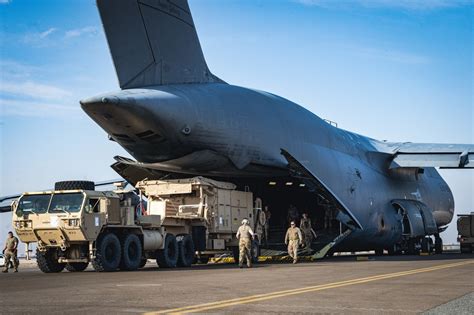
In this context, the benefits of a glass cockpit—while real—were not immediately transformative. Reducing crew size, for example, offers significant savings for airlines but is less critical in a military setting where mission success outweighs operating costs. Similarly, while digital displays improve situational awareness, the existing analog systems were already sufficient for the aircraft’s operational requirements.
This difference in priorities meant that the C-5’s cockpit remained largely unchanged for decades, even as aircraft like the Boeing 747 transitioned to fully digital flight decks.
The 747 Comparison: Same Era, Different Evolution
The comparison between the C-5 Galaxy and the Boeing 747 is particularly revealing. Both aircraft were developed in the late 1960s, both are massive, and both serve as icons of their respective domains. Yet their technological trajectories diverged dramatically.
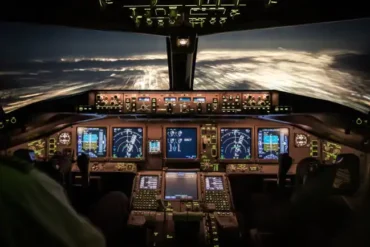
By the time the 747-400 entered service in the late 1980s, it featured a fully digital glass cockpit. This allowed airlines to eliminate the flight engineer position, reducing cockpit crew from three to two. The financial implications were enormous, driving rapid adoption across the industry.
The C-5, however, faced no such economic pressure. Its role as a strategic airlifter meant that cost efficiency was secondary to capability and reliability. The aircraft continued to operate with a four-person cockpit crew, including flight engineers, because that configuration worked—and worked well.
This contrast highlights a key insight: technological adoption is not just about capability, but about incentive. Where airlines saw immediate returns, the military saw incremental benefit at significant cost.
The Hidden Challenge: Retrofitting a Giant
Upgrading an aircraft the size of the C-5 Galaxy is not as simple as replacing a few displays. It involves reengineering the entire avionics architecture, ensuring that every system—from navigation to cargo handling—can communicate seamlessly within a digital framework.
The Avionics Modernization Program (AMP), which eventually transformed the C-5 into the C-5M Super Galaxy, illustrates the scale of this challenge. Engineers had to:
- Replace legacy analog instruments with modern LCD displays
- Integrate advanced navigation and communication systems
- Redesign data processing pathways across the aircraft
- Conduct extensive testing and certification to ensure reliability
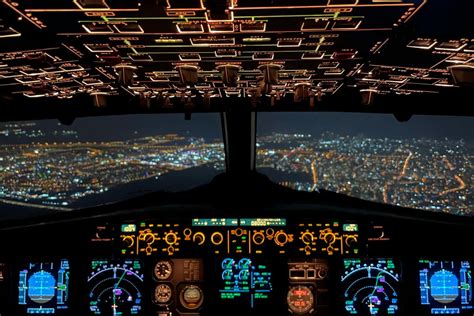
This was not merely an upgrade—it was a fundamental transformation of how the aircraft operated. The cost and complexity of such a program explain why it was delayed for so long. Unlike building a new aircraft from scratch, retrofitting requires working within the constraints of an existing design, often leading to unexpected technical challenges.
Digital Isn’t Always Better: The Trade-Offs of Modern Avionics
While glass cockpits offer undeniable advantages, they also introduce new complexities. Digital systems rely on software, integrated circuits, and data networks, all of which can be more difficult to troubleshoot in certain environments.
In military operations, where aircraft may operate far from well-equipped bases, this can be a significant drawback. A failed digital system might require specialized tools or replacement components that are not readily available. Analog systems, by contrast, often allow for quick, improvised repairs.
This trade-off explains why even the modernized C-5M retains some analog backups and mechanical controls. The goal is not to replace reliability with sophistication, but to balance both.
Training and Transition: The Human Factor
Another often-overlooked aspect of cockpit modernization is the human element. Transitioning from analog to digital systems requires retraining pilots, flight engineers, and maintenance crews. This process is both time-consuming and expensive, particularly for a large fleet.
Military crews are typically highly specialized, trained extensively on specific aircraft types. Introducing a new cockpit interface means not only learning new systems but also adapting to a different way of managing information and decision-making.
This adds another layer of complexity to modernization efforts, reinforcing the need for gradual, carefully managed upgrades rather than rapid transformation.
The C-5M Super Galaxy: Finally Entering the Digital Age
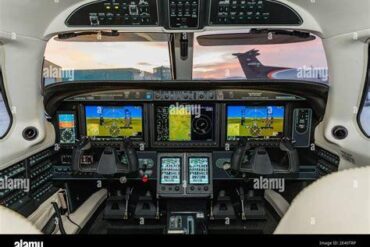
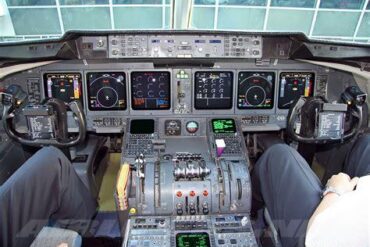
The introduction of the C-5M Super Galaxy marked a turning point in the aircraft’s history. Equipped with a glass cockpit, upgraded engines, and modern avionics, the C-5M represents the successful fusion of legacy design and contemporary technology.
Pilots now benefit from:
- Enhanced situational awareness through integrated displays
- Improved navigation and communication capabilities
- Reduced workload thanks to advanced automation
Despite these advancements, the aircraft retains elements of its original design philosophy, including the presence of a flight engineer and certain analog systems. This hybrid approach ensures that the C-5M remains both technologically advanced and operationally resilient.
The Bottom Line: The Right Technology at the Right Time
The story of the C-5 Galaxy and its late arrival to the glass cockpit era is not one of technological delay, but of strategic decision-making. Every aspect of the aircraft—from its vast cargo hold to its cockpit design—was shaped by the demands of its mission.
In the end, the absence of a glass cockpit for much of its service life reflects a simple truth: innovation in aviation is not about adopting the newest technology as quickly as possible, but about adopting the right technology when it truly adds value.
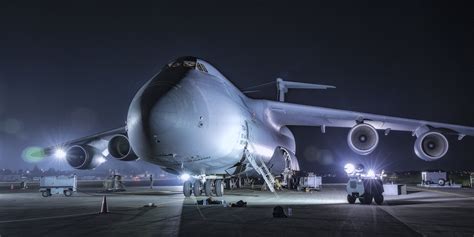
Today, the C-5M stands as a testament to this philosophy. It bridges the gap between Cold War engineering and modern avionics, proving that even the largest and most complex machines can evolve—carefully, deliberately, and always with the mission in mind.