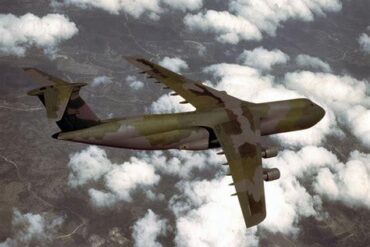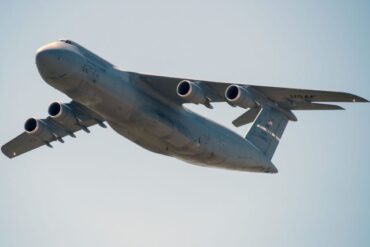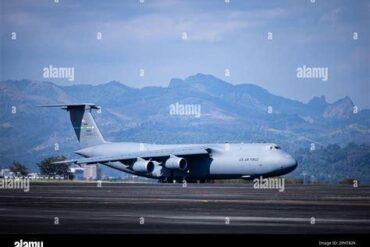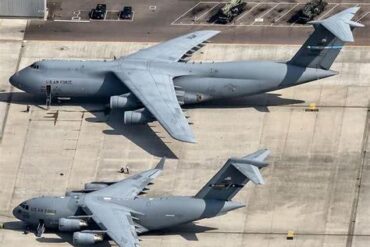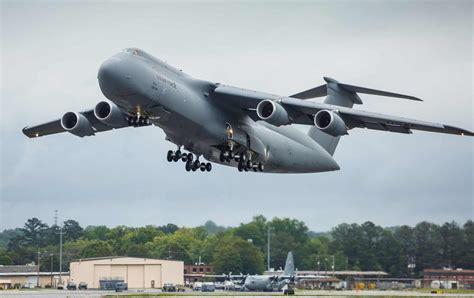
The Lockheed C-5 Galaxy stands as one of the most formidable achievements in military aviation, a machine built not merely to fly, but to redefine how nations project power across continents. Towering above most aircraft on the tarmac and stretching nearly the length of a football field, this strategic airlifter embodies a singular purpose: move enormous payloads across vast distances with unmatched efficiency. While commercial giants like the Boeing 747 and Airbus A380 may dominate passenger and cargo markets, the C-5 Galaxy operates in a realm where flexibility, ruggedness, and sheer carrying capacity are paramount.
Born from Cold War urgency, the Galaxy was never intended to be subtle. It was designed to carry entire military ecosystems—tanks, helicopters, engineering units—directly into theaters of operation. What sets it apart is not just its size, but its ability to perform under conditions that would ground most civilian aircraft. Short runways, austere environments, and rapid deployment scenarios are all part of its operational DNA.
Even today, decades after its first flight, the modernized C-5M Super Galaxy continues to anchor the United States Air Force’s long-range airlift capability. With upgraded engines, avionics, and structural enhancements, it remains a critical logistical lifeline, ensuring that no matter where a crisis emerges, the necessary resources can arrive swiftly and decisively.
Cold War Origins and the Birth of a Giant
The story of the C-5 Galaxy begins in the turbulent 1960s, when the United States Air Force recognized a pressing need for a strategic transport aircraft capable of moving outsized cargo globally. Existing platforms lacked the size, range, or adaptability required for modern warfare logistics. The challenge sparked fierce competition among aerospace giants, with Lockheed and Boeing emerging as the primary contenders.
Lockheed’s proposal ultimately secured the contract, leveraging innovative design concepts and pairing them with the powerful General Electric TF39 turbofan engines, which were revolutionary at the time. Boeing’s competing design, although unsuccessful in this military bid, would later evolve into the iconic Boeing 747, proving that even in defeat, transformative ideas can find new life.
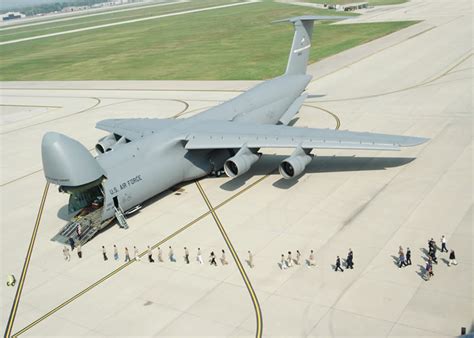
Despite its technological brilliance, the C-5 Galaxy remained a uniquely American asset. Unlike the Boeing 747, which achieved massive global adoption, the Galaxy never found export customers. Lockheed produced 131 units exclusively for the U.S. Air Force, cementing its role as a specialized instrument of national power rather than a commercial success story.
From C-5A to C-5M: Evolution Into the Super Galaxy
Time, as it does with all engineering marvels, demanded evolution. The original C-5A and later C-5B variants served faithfully, but aging systems and rising maintenance demands signaled the need for modernization. The result was the C-5M Super Galaxy, a comprehensive upgrade that transformed the aircraft’s performance and reliability.
The most significant improvement came with the replacement of the original engines. The new General Electric CF6-80C2-L1F engines delivered dramatic gains:
- 22% increase in thrust
- 30% reduction in takeoff distance
- 58% faster climb rate
These enhancements were not incremental—they fundamentally reshaped how the aircraft operates. Missions that once required careful planning due to performance constraints could now be executed with greater speed, efficiency, and payload flexibility.
Beyond propulsion, avionics upgrades introduced modern navigation and communication systems, ensuring the C-5M remains compatible with contemporary operational environments. Today, approximately 50 Super Galaxies remain in active service, representing the pinnacle of decades of iterative engineering.
Design Brilliance: Built for the Impossible
At first glance, the C-5 Galaxy’s design appears almost exaggerated, as if scaled beyond reason. Yet every dimension serves a purpose. Its high-mounted wings, massive fuselage, and distinctive T-tail configuration are all optimized for cargo capacity and operational versatility.
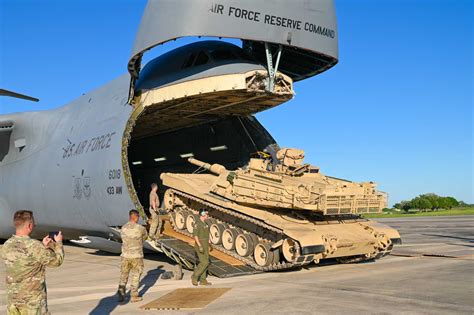
One of its most iconic features is the hinged nose section, which opens upward to reveal a cavernous cargo bay. Combined with a rear loading ramp, the aircraft enables drive-through loading, allowing vehicles to enter from one end and exit the other. This dramatically reduces loading times and simplifies logistics during high-tempo operations.
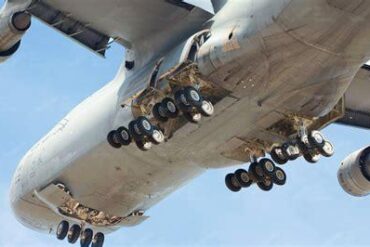
Equally impressive is the aircraft’s kneeling landing gear system. By lowering the fuselage closer to the ground, the Galaxy aligns its cargo deck with standard truck bed heights, streamlining the transfer of heavy equipment. It’s a small detail with enormous practical impact—exactly the kind of engineering nuance that defines the aircraft.
Inside the Cargo Hold: A Flying Warehouse
Step inside the C-5 Galaxy, and the scale becomes almost surreal. The cargo compartment stretches 143 feet 9 inches in length, with a width of 19 feet and a height of 13 feet 6 inches. This immense volume allows the aircraft to carry up to 281,000 pounds of cargo, distributed across 36 pallet positions.
This capacity enables the transport of some of the most critical and heavy assets in the U.S. military inventory. From M1A1 Abrams tanks to fully equipped infantry units, the Galaxy can deliver combat-ready forces anywhere in the world.
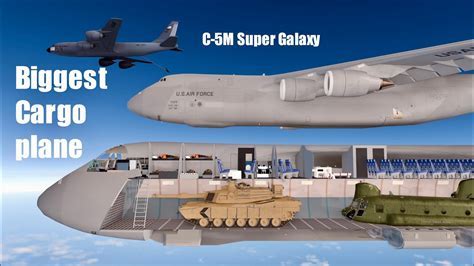
Interestingly, despite its immense capacity, the aircraft is rarely loaded to its absolute limits during routine operations. Doing so would accelerate wear and tear on the airframe. Instead, the Galaxy operates with a strategic balance, preserving longevity while maintaining readiness for moments when maximum capacity becomes essential.
Specialized variants, such as the C-5C, have been adapted for unique missions, including transporting components of the Hubble Space Telescope. These missions highlight the aircraft’s versatility—not just as a military transporter, but as a platform for moving irreplaceable, high-value cargo.
C-5 Galaxy vs Boeing 747-8F: Military Muscle vs Commercial Efficiency
Comparisons between the C-5M Super Galaxy and the Boeing 747-8F are inevitable, given their similar size and role as heavy transport aircraft. Yet beneath the surface, these machines are designed for entirely different worlds.
The 747-8F, optimized for commercial freight, boasts greater thrust, higher maximum takeoff weight, and faster cruise speeds. It thrives in structured environments—major airports with long runways and advanced infrastructure.
The C-5M, by contrast, sacrifices some of that efficiency in exchange for operational flexibility. It can operate from shorter runways, perform aerial refueling, and handle uneven or minimally prepared airfields. These capabilities make it indispensable in military scenarios where infrastructure is limited or nonexistent.
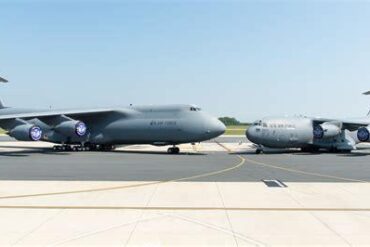
Visually, the differences are subtle yet telling. The Galaxy stands slightly taller, with a bulkier, more utilitarian profile, while the 747 maintains the sleek lines of a commercial airliner. One is built for global commerce, the other for global reach under pressure.
Operational Mastery: Delivering Power Anywhere on Earth
The true value of the C-5 Galaxy reveals itself not in specifications, but in its operational impact. It enables the United States to deploy forces rapidly across continents, ensuring that distance is never a barrier to response.
From humanitarian missions delivering aid after natural disasters to military deployments in remote regions, the Galaxy serves as a strategic enabler. Its ability to carry oversized cargo—often without disassembly—reduces preparation time and accelerates mission timelines.
The aircraft’s aerial refueling capability further extends its reach, allowing it to remain airborne for extended durations and reach destinations that would otherwise require multiple stops. In a world where speed and responsiveness are critical, this capability provides a decisive advantage.
The Future of Heavy Airlift: Will Anything Surpass the Galaxy?
Despite its enduring relevance, the C-5 Galaxy may not hold its title forever. Emerging concepts like the Radia WindRunner aim to push the boundaries of cargo aviation even further, focusing on massive internal volume rather than sheer payload weight.
The WindRunner concept proposes an aircraft capable of carrying seven times the volume of the C-5M, enabling the transport of entire systems—such as helicopters or wind turbine blades—without disassembly. If realized, it could redefine how oversized cargo is moved, much like the Galaxy did decades earlier.
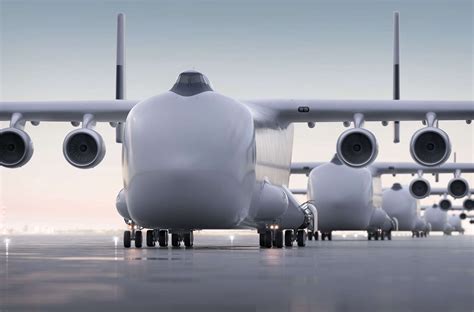
Yet even as new designs emerge, they build upon the legacy established by the C-5. The challenges it addressed—volume limitations, operational flexibility, and global reach—remain central to the evolution of airlift technology.
Enduring Legacy of the Lockheed C-5 Galaxy
The Lockheed C-5 Galaxy is more than an aircraft; it is a statement of capability. It represents a time when engineering ambition met strategic necessity, resulting in a machine that continues to shape global logistics decades after its introduction.
Its immense cargo hold, innovative loading systems, and unmatched adaptability have made it a cornerstone of military operations. While newer aircraft may challenge its dominance in specific areas, few can match its combination of size, versatility, and mission impact.
In an era of rapidly advancing technology, the Galaxy remains a reminder that true innovation is not just about building bigger machines—it’s about building machines that change what is possible.