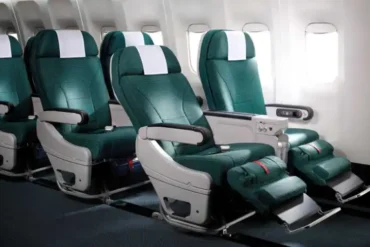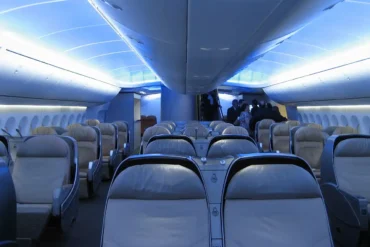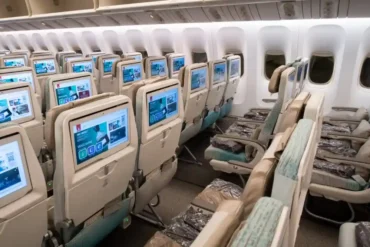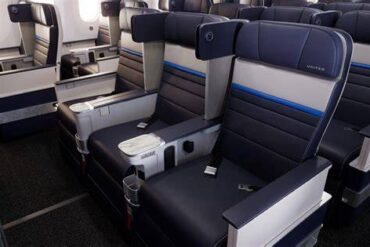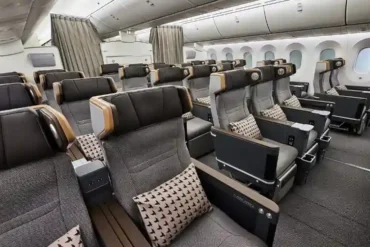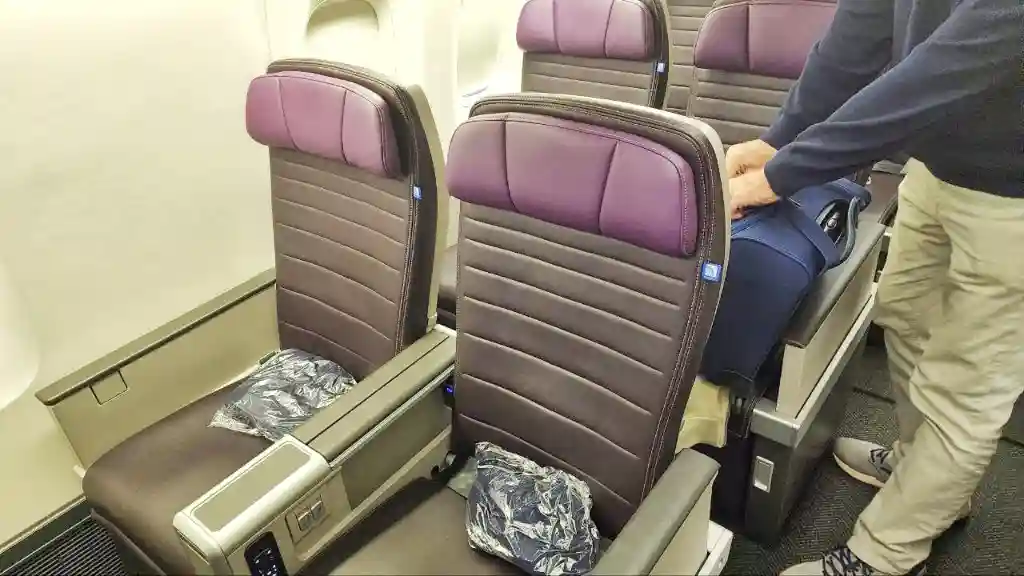
Premium economy is often marketed with one number above all others: seat pitch. More inches between rows are easy to advertise, easy to understand, and easy for passengers to compare. Yet focusing entirely on legroom can obscure what actually makes a premium economy ticket worthwhile. The most meaningful upgrades are often found in the details surrounding the seat rather than in the seat itself.
The cabin has evolved considerably since premium economy first emerged in the 1990s. What began as a relatively niche product has become a standard feature on many long-haul aircraft, particularly among full-service international airlines. Carriers have learned that passengers are willing to pay significantly more than economy fares for a more comfortable and refined experience without spending business-class money. That has encouraged airlines to add benefits that are not always prominently displayed during the booking process.
For travelers evaluating whether premium economy deserves the extra money, those hidden differences can matter enormously. A slightly wider seat is useful, but faster service, better food, higher mileage earnings, dedicated lavatories, and even lounge access can transform the overall value of the ticket. These benefits also vary dramatically between airlines, aircraft types, and airport locations, making the premium economy label less standardized than many passengers realize.
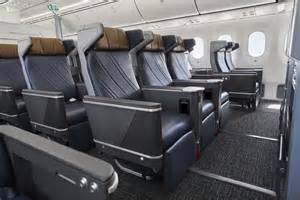
1. Premium Economy Can Earn More Miles
One of the least visible benefits of premium economy appears after the flight rather than during it. Mileage earning can be substantially better than it is in economy, depending on the airline’s loyalty program and the fare purchased.
For airlines using revenue-based frequent-flyer systems, the explanation is relatively straightforward. A more expensive ticket generally generates more redeemable miles because earnings are linked to the amount spent. However, premium economy can remain advantageous even when an airline uses a different loyalty structure. Many international carriers have historically maintained distance-based or segment-based earning systems, under which premium economy fares may receive higher mileage percentages than standard economy.
This distinction becomes particularly valuable for travelers who fly frequently with one airline or alliance. Someone who regularly chooses premium economy may accumulate miles considerably faster than a passenger who remains in economy, especially when the ticket earns a cabin or fare-class bonus. The additional earnings can help offset some of the premium paid for the ticket while simultaneously accelerating progress toward elite status.
The value is therefore not limited to the miles themselves. Elite-qualifying benefits can be even more important. Depending on the program, premium economy fares may provide a better route toward status than economy tickets, giving frequent travelers another reason to move up one cabin.
Airlines understand the psychology behind this structure. Flights are fundamentally similar products: a passenger buys transportation from one airport to another. Loyalty programs create a reason to choose one carrier over another when fares are otherwise close. Better mileage treatment for premium economy strengthens that relationship and makes the higher-priced ticket more attractive to passengers who value long-term benefits.
2. Smaller Cabins Often Mean More Attentive Service
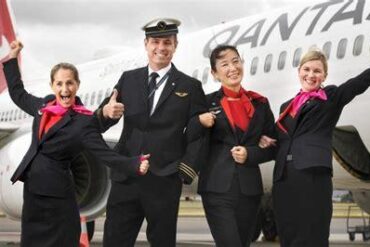
A premium economy passenger does not normally receive a dedicated flight attendant in the way a business-class passenger might. Instead, the same cabin crew generally serves both premium economy and economy. That does not necessarily mean the experience feels identical.
The biggest advantage comes from cabin size. Premium economy sections are usually much smaller than economy cabins. With fewer passengers competing for attention, flight attendants can complete the service more efficiently and provide a more personal interaction.
Premium economy passengers are also commonly served before economy. Meals and drinks arrive earlier, trays are cleared sooner, and passengers do not have to watch the entire economy cabin receive its meal before service reaches their row. This can make a surprisingly large difference on a long overnight flight, particularly when passengers want to eat quickly and maximize their sleeping time.
The relationship between cabin size and service is worth watching as premium economy continues to grow. Airlines are increasing the number of premium economy seats because demand has proved stronger than many carriers initially expected. American Airlines and Air France, for example, have introduced newer Boeing 777-300ER configurations with 44 premium economy seats, compared with smaller previous installations.
That growth could eventually make the cabin somewhat less exclusive. Still, even a larger premium economy section normally contains far fewer passengers than economy. The service should therefore remain faster and more attentive in many cases.
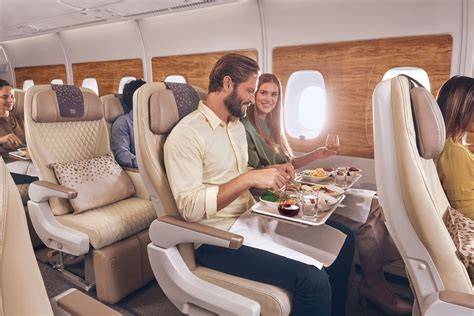
3. Some Premium Economy Cabins Have Dedicated Lavatories
A dedicated bathroom may sound like a minor perk until a long-haul flight reaches the middle of the night. After dinner and drinks, lavatory queues can become one of the most frustrating parts of an economy journey. Premium economy can sometimes solve that problem through dedicated lavatories.
This benefit is highly dependent on aircraft configuration rather than simply the airline’s premium economy policy. Airlines frequently place lavatories near aircraft exits. If the premium economy cabin sits directly behind a set of doors, the available lavatories may naturally become associated with that cabin.
The Airbus A380 provides some of the clearest examples. Several airlines position premium economy on the main deck between exit areas, allowing lavatories to sit conveniently within or immediately beside the cabin. Other carriers place premium economy toward the rear or front of the upper deck, where passengers may have access to lavatories serving that section.
American Airlines’ older Boeing 777-300ER configuration is another useful example. Its 28-seat premium economy cabin sits behind an exit area with two sets of lavatories nearby. In practical terms, passengers can avoid walking through a large economy cabin simply to find an available restroom.
The catch is that not every premium economy passenger gets a private bathroom area. On many single-deck widebody aircraft, premium economy passengers share facilities with business class or economy. Travelers should therefore investigate the exact aircraft layout rather than assuming that every premium economy ticket includes this perk.
4. The Soft Product Can Be a Bigger Upgrade Than the Seat
Airline cabins are often divided into two broad categories: the hard product and the soft product. The hard product includes physical features such as the seat, screen, storage, and cabin layout. The soft product covers the things passengers experience during the journey, including food, service, bedding, amenities, and presentation.
For premium economy, the soft product can determine whether the cabin feels genuinely premium or merely like economy with additional legroom.
A carrier may install a larger seat but provide the same meal, blanket, service sequence, and amenities as economy. In that case, passengers are essentially buying space. That can still be worthwhile, but the experience is fundamentally different from an airline that has redesigned the entire journey around premium economy.
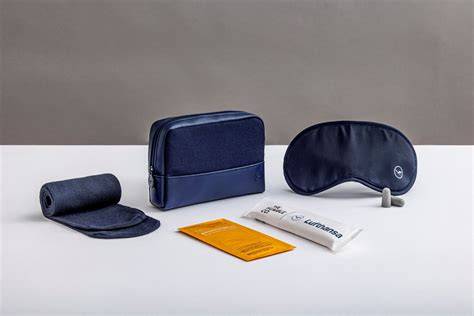
Some airlines provide amenity kits containing sleeping masks, socks, or other travel essentials. Blankets and pillows may also be superior to economy versions. Hot towels, printed menu cards, upgraded tableware, and more polished service can further reinforce the sense that passengers have moved into a different class.
These details are easy to overlook during booking because they cannot be summarized neatly as a seat dimension. Yet on an eight-, ten-, or twelve-hour flight, the cumulative effect can be substantial. The physical seat determines how passengers sit, while the soft product determines how the journey feels.
That is why travelers should look beyond seat pitch when evaluating premium economy. A 40-inch seat with an economy-level service can be less impressive than a slightly tighter seat accompanied by significantly better catering and amenities.
5. Upgraded Catering Can Change the Entire Experience
Food is another premium economy feature that varies considerably between airlines. Some carriers essentially serve an enhanced version of the economy meal, while others create a noticeably different dining experience.
The distinction often appears in presentation first. Premium economy passengers may receive meals on better tableware, with improved cutlery, larger portions, more choices, or a more deliberate presentation. Some airlines also offer beverages that are unavailable in economy.
Emirates is one of the more ambitious examples. Its premium economy service includes rotating seasonal menus with regional influences, generous portions, fine china, metal cutlery, and white tablecloths. The beverage selection can also include wines drawn from the airline’s business-class offering.
The importance of this upgrade extends beyond the food itself. Eating is one of the few activities that breaks up the monotony of a long-haul flight. A meal served thoughtfully, with proper tableware and attentive service, creates a meaningful psychological separation from economy.
Not every airline invests to the same extent. Some premium economy products remain closer to an upgraded economy service, particularly on routes where the airline believes passengers are primarily paying for additional space. As competition in the segment increases, however, catering is becoming an increasingly important way for airlines to distinguish their premium economy cabins.
For passengers comparing two tickets with similar seat dimensions, the meal service can therefore become a deciding factor.
6. Lounge Access Exists, But It Is Rare
The most surprising premium economy benefit may be airport lounge access. It is not a standard feature of the cabin, and most airlines continue to reserve complimentary lounge entry for business class, first class, or qualifying elite-status passengers. Nevertheless, a small number of airlines have made exceptions.
All Nippon Airways (ANA) and Japan Airlines (JAL) are notable examples. At selected airports, premium economy passengers can receive lounge access even without business-class status. Eligible locations include Tokyo Haneda, Tokyo Narita, and Honolulu, while JAL extends the benefit to additional airports such as Osaka, Nagoya, Manila, Bangkok, and Frankfurt in applicable circumstances.
The significance of this benefit is difficult to overstate because lounge access affects the journey before the aircraft even leaves the ground. A quieter place to sit, complimentary food and drinks, workspace, showers at selected facilities, and a calmer airport experience can make a long travel day substantially easier.
Still, passengers should read the conditions carefully. Premium economy does not automatically mean lounge access. Eligibility can depend on the airline, airport, route, lounge, and specific fare. Some airlines instead provide discounted lounge access to premium economy passengers, while others sell access to almost anyone willing to pay.
Even without a lounge, premium economy often includes smaller ground advantages. Dedicated check-in counters and priority boarding can reduce queues and make the airport process more predictable. These benefits are rarely as glamorous as a lounge, but they become valuable when airports are crowded.
Why Seat Pitch Should Not Be the Only Metric
Seat pitch remains important. Nobody wants to spend ten hours feeling trapped between rows. However, pitch is only one component of premium economy’s value proposition.
The real difference between airlines often comes from everything surrounding the seat. A premium economy passenger could receive more frequent-flyer miles, earlier and more attentive service, a better meal, upgraded bedding, a dedicated lavatory, priority airport treatment, and, in rare cases, lounge access.
The challenge is that airlines do not always present these benefits equally during the booking process. Seat dimensions are easy to publish, while service details may be buried in cabin descriptions, aircraft-specific information, or loyalty-program rules. This creates a situation in which two tickets carrying the same premium economy label can deliver noticeably different experiences.
Aircraft configuration is especially important. The same airline can offer different lavatory arrangements, seat layouts, catering standards, or cabin sizes across its fleet. A passenger booking premium economy should therefore investigate the specific aircraft and configuration, not merely the airline’s general product description.
The Best Premium Economy Ticket Is More Than Extra Legroom
Premium economy has matured from a simple halfway point between economy and business class into a sophisticated product with its own identity. The strongest versions do not merely give passengers a larger seat. They create a more comfortable journey from the airport counter to the aircraft door and, eventually, to baggage claim.
For frequent flyers, the additional mileage earning can provide long-term value. For passengers on overnight flights, faster service and better bedding can mean more useful sleep. For travelers facing crowded airports, priority check-in and boarding can reduce stress. And for those lucky enough to fly an airline with qualifying lounge access or a dedicated premium economy lavatory, the benefits extend well beyond the seat itself.
That is ultimately why seat pitch is not everything. The number of inches between rows tells us how much physical space we have, but it does not tell us how the airline treats us throughout the journey. When evaluating a premium economy fare, the smarter question is not simply, “How much legroom do I get?”
It is “What else comes with this ticket?”
That question can reveal the difference between an ordinary extra-legroom seat and a genuinely elevated premium economy experience.