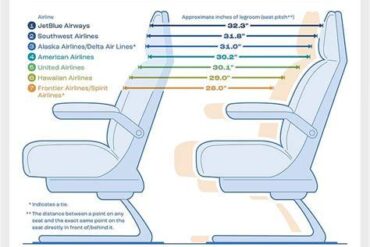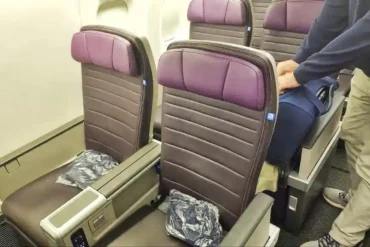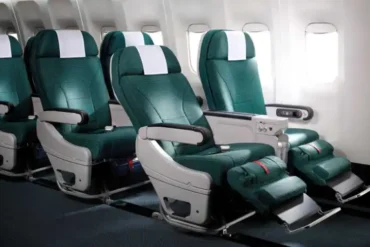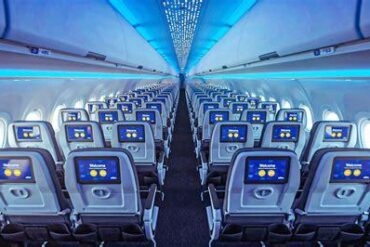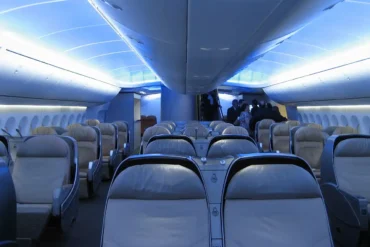
In an era where airline cabins are engineered with surgical precision to maximize revenue per square meter, economy seat pitch has quietly become one of the most telling indicators of an airline’s philosophy. It is the invisible line between tolerable and exhausting, between a journey remembered and one endured. While the industry average has steadily declined to around 30–31 inches, a select group of airlines has chosen a different path—one that resists compression and preserves dignity in long-haul travel.
This is not about premium economy, nor about extra-legroom upsells disguised as generosity. This is about standard economy cabins—the seats most travelers actually book. And within that space, these six airlines have drawn a clear line in the sand, offering some of the longest seat pitch measurements in the world today.
Why Seat Pitch Still Defines the Economy Experience
Seat pitch, measured as the distance between a point on one seat and the same point on the seat in front, sounds deceptively simple. Yet, the difference between 30 inches and 35 inches is transformative. Those extra inches translate into real knee clearance, improved circulation, and the ability to shift posture without negotiation.
Historically, economy cabins in the 1970s offered around 34–35 inches as standard. Over time, that space has been gradually eroded. Airlines added seats, reduced pitch, and introduced slimline designs that promise space while subtly taking it away. Against this backdrop, the airlines featured here stand out—not because they innovate loudly, but because they refuse to compromise quietly.
Emirates: Generous Pitch Meets Dense Reality
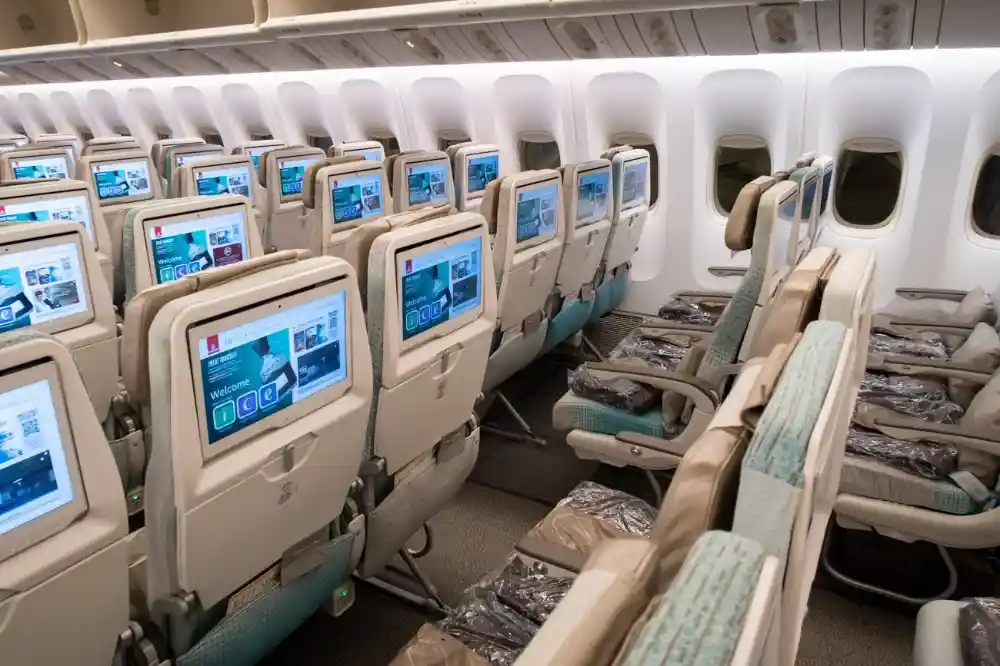
Emirates often presents itself as the gold standard of global aviation luxury, and in economy class, it delivers 32 to 34 inches of seat pitch—a figure that comfortably exceeds the industry norm. On paper, this places Emirates among the most generous carriers in the world.
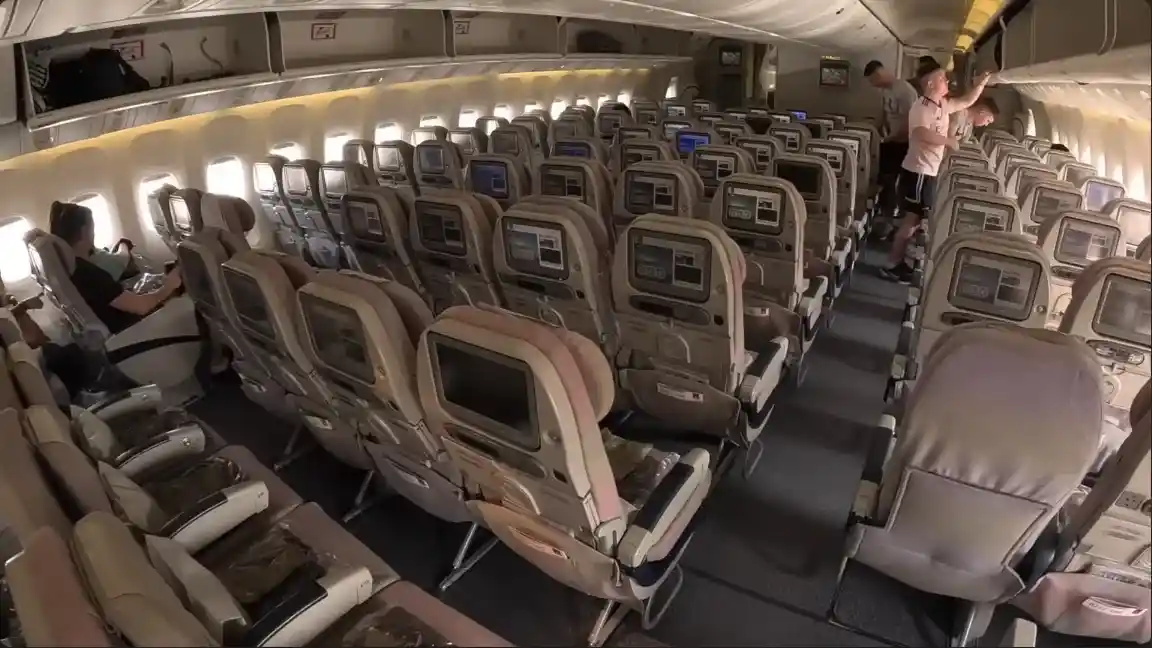
Yet, the reality is more nuanced. The airline’s Boeing 777 fleet, where this pitch is most consistently found, is configured in a ten-abreast 3-4-3 layout. This creates a paradox: while legroom is generous, seat width shrinks to around 17.2 inches, resulting in tighter shoulder space. It’s a trade-off that becomes noticeable on longer flights, where lateral comfort matters just as much as forward space.
Interestingly, Emirates’ older 777 cabins—often overlooked in favor of the newer Airbus A380—quietly deliver one of the better economy experiences in the sky. With ongoing retrofits, these aircraft continue to hold their ground, offering a surprisingly competitive product hidden beneath a dense configuration.
Oman Air: The Quiet Overachiever of Economy Comfort
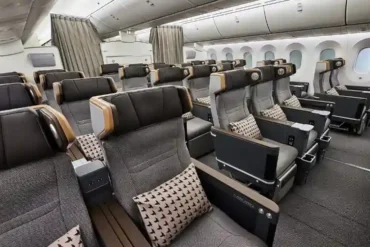
Oman Air rarely enters mainstream discussions about economy class excellence, yet its Boeing 787 Dreamliner tells a different story. On select long-haul routes, passengers are treated to a full 34 inches of seat pitch, placing the airline firmly among the global elite.
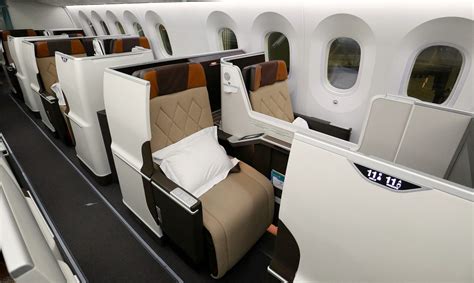
This generosity, however, is highly specific. Step onto one of its narrowbody Boeing 737 aircraft, and the experience reverts to a more conventional 30–31 inches. Oman Air’s comfort advantage is therefore not a brand-wide promise, but a carefully placed offering within its widebody fleet.
What makes this particularly compelling is the absence of marketing noise. There is no flashy branding, no premium-tier repackaging—just quiet, consistent space where it matters most. On routes like Muscat to London, this translates into a noticeably more relaxed journey, often at a price point that doesn’t reflect the added comfort.
Korean Air: Defying Density Through Regulation and Design
Korean Air’s economy class is a fascinating case of comfort preserved not by trend, but by intervention. Offering 33 to 34 inches of pitch alongside an impressive 18.1-inch seat width, the airline’s Boeing 777-300ER cabins remain configured in a nine-abreast 3-3-3 layout.
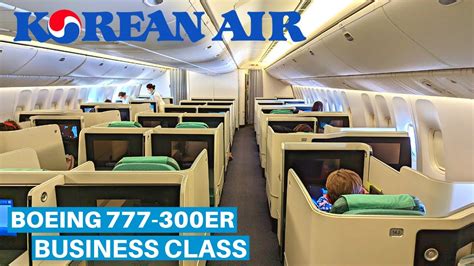
In an industry where ten-abreast configurations have become standard, this decision is nothing short of radical. The result is a cabin that feels noticeably more open, with wider seats, broader aisles, and improved personal space.
The backstory adds another layer of intrigue. Plans to densify the fleet were halted due to regulatory intervention tied to the airline’s merger conditions. What could have been a shift toward tighter seating instead became an enforced commitment to passenger comfort.
The difference is not subtle. That extra inch of width—often dismissed on paper—translates into a dramatically improved long-haul experience. It’s the kind of detail that doesn’t just enhance comfort; it redefines expectations.
All Nippon Airways (ANA): Engineering Space, Not Illusion
All Nippon Airways approaches economy class with a distinctly Japanese philosophy: precision, efficiency, and thoughtful design. With a standard 34-inch seat pitch across its widebody fleet, ANA already competes at the top tier. But the real innovation lies in how that space is utilized.
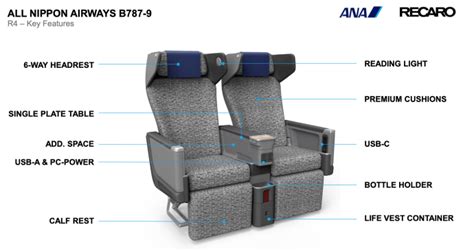
The introduction of the Recaro R3 seat on new Boeing 787-9 aircraft represents a shift from measuring space to maximizing its usability. By redesigning the seatback, relocating literature pockets, and increasing recline to six inches, ANA creates more functional room without increasing pitch.
This is not the illusion of space created by thinner padding; it is engineered space, where every millimeter serves a purpose. The additional knee clearance, in particular, transforms the experience for taller passengers, offering relief that goes beyond simple measurements.
ANA’s strategy is subtle but powerful. Instead of chasing headline numbers, it focuses on how passengers actually experience the seat, delivering comfort that feels greater than the data suggests.
Japan Airlines (JAL): The Sky Wider Advantage
Japan Airlines has taken a bold and increasingly rare stance in the aviation world: it has refused to densify its Boeing 787 fleet. The result is the Sky Wider economy cabin, featuring 33 to 34 inches of pitch and an exceptional 18.9-inch seat width.
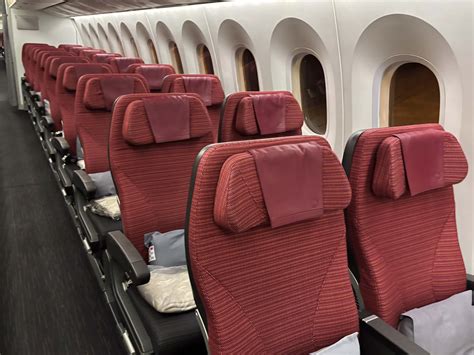
Configured in an eight-abreast 2-4-2 layout, JAL sacrifices one seat per row compared to the industry-standard nine-abreast configuration. This decision yields nearly two additional inches of width per passenger, a difference that is immediately noticeable.
In 2026, JAL continues to double down on this philosophy with ongoing cabin upgrades, reinforcing its commitment to spacious economy travel. Recognition from global rating agencies has followed, but more importantly, so has passenger loyalty.
The brilliance of Sky Wider lies in its consistency. It is not a limited feature or a fleet-specific anomaly—it is a core identity, one that transforms economy class into something far more livable.
Air Premia: Redefining Economy Around 35 Inches
If there is one airline that has turned seat pitch into a defining statement, it is Air Premia. Its Economy 35 cabin offers a remarkable 35 inches of pitch, making it the most generous standard economy configuration currently in operation.
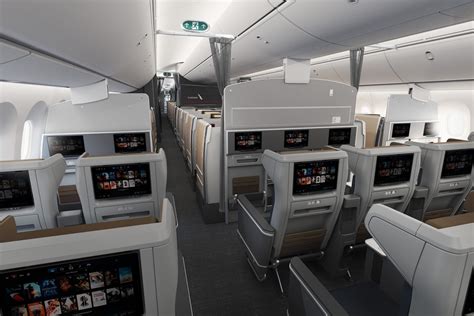
This is not a subtle improvement; it is a structural reimagining of economy class. By reducing seat density on its Boeing 787-9 aircraft, Air Premia prioritizes legroom above all else. The result is a cabin tailored for travelers who value forward space—particularly taller passengers.
There is, however, a deliberate balance. The airline maintains a nine-abreast configuration, meaning seat width remains standard. This makes the product highly specialized: exceptional for legroom, conventional for shoulder space.
What sets Air Premia apart is its clarity. The 35-inch pitch is not buried in specifications; it is the headline, the promise, and the delivery. In an industry often defined by compromise, this is a rare example of uncompromised intent.
The Bigger Picture: A Subtle Rebellion Against Compression
Taken together, these six airlines represent more than just generous seat measurements. They embody a quiet resistance to an industry trend that has steadily prioritized density over comfort. Whether through regulatory circumstance, engineering innovation, or deliberate strategy, each has found a way to preserve space in an environment that increasingly seeks to eliminate it.
For travelers, the implication is clear. Not all economy seats are created equal, and the difference is not marginal—it is transformational. A few extra inches can mean the difference between arriving ready to explore and arriving in recovery mode.
And here’s the part that feels almost ironic: these superior experiences are often hidden in plain sight. They are not always the most advertised, nor the most expensive. But for those who know where to look, they offer something increasingly rare in modern aviation—room to breathe.