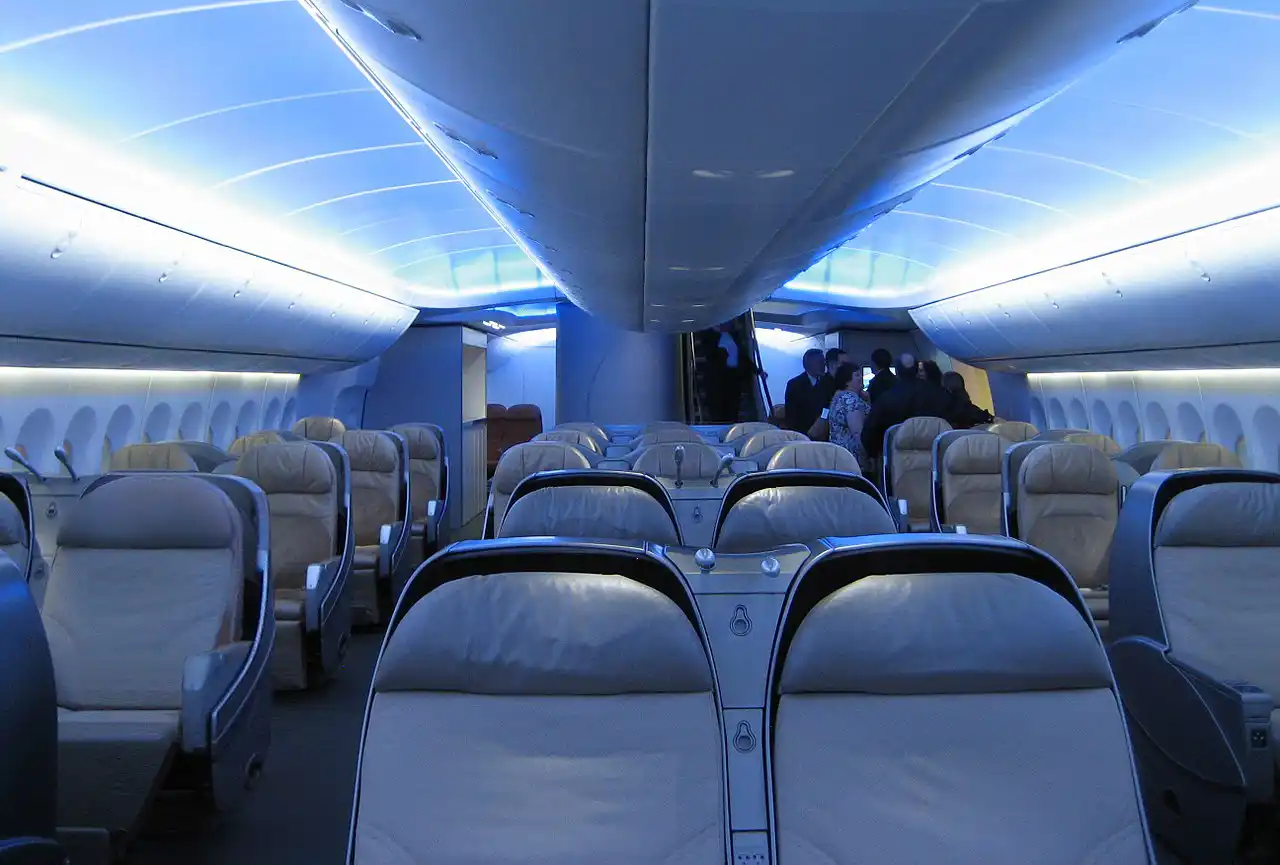
Commercial aviation comfort has quietly shifted away from the narrow obsession with seat pitch and recline. In 2026, the real battleground for passenger satisfaction is space itself—the width of the cabin, the height of the ceiling, the way light moves through the fuselage, and how the architecture interacts with the human brain over ten or fifteen hours in the air. Boeing has spent decades refining this invisible science, learning that comfort is as psychological as it is physical.
The modern Boeing cabin is no longer a metal tube filled with seats. It is a carefully engineered environment where shoulder room, vertical volume, and horizon visibility combine to reduce anxiety and fatigue. The introduction of the Boeing Sky Interior, the shift toward wider fuselages, and the deliberate shaping of sidewalls have fundamentally changed how spacious an aircraft feels, even before a passenger sits down.
Some Boeing aircraft stand above the rest in this regard. Whether through clever geometry, sheer width, or innovative use of materials, these cabins deliver an experience that feels open, calm, and human-scaled. What follows is a detailed look at the five most spacious Boeing cabins still flying today, ranked not by hype, but by how space is actually perceived once the doors close and the engines spool up.
Boeing 767: A Surprisingly Open Classic That Still Wins on Comfort
The Boeing 767 occupies a unique place in aviation history. Designed to bring widebody comfort to thinner long-haul routes, it remains one of the most passenger-friendly cabins in the sky despite its age. With an internal cabin width of 15 feet 6 inches, it is technically the narrowest aircraft on this list. Yet numbers alone fail to explain why travelers consistently describe it as relaxed and uncramped.
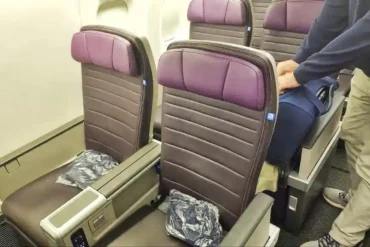
The secret lies in the 2-3-2 seating layout. This configuration radically alters how space is experienced. Only one seat in every seven is a middle seat, meaning roughly 85% of passengers sit either on an aisle or by a window. Compared to the 33% middle-seat ratio found in most 3-3-3 widebody cabins, the difference is immediate and deeply felt.
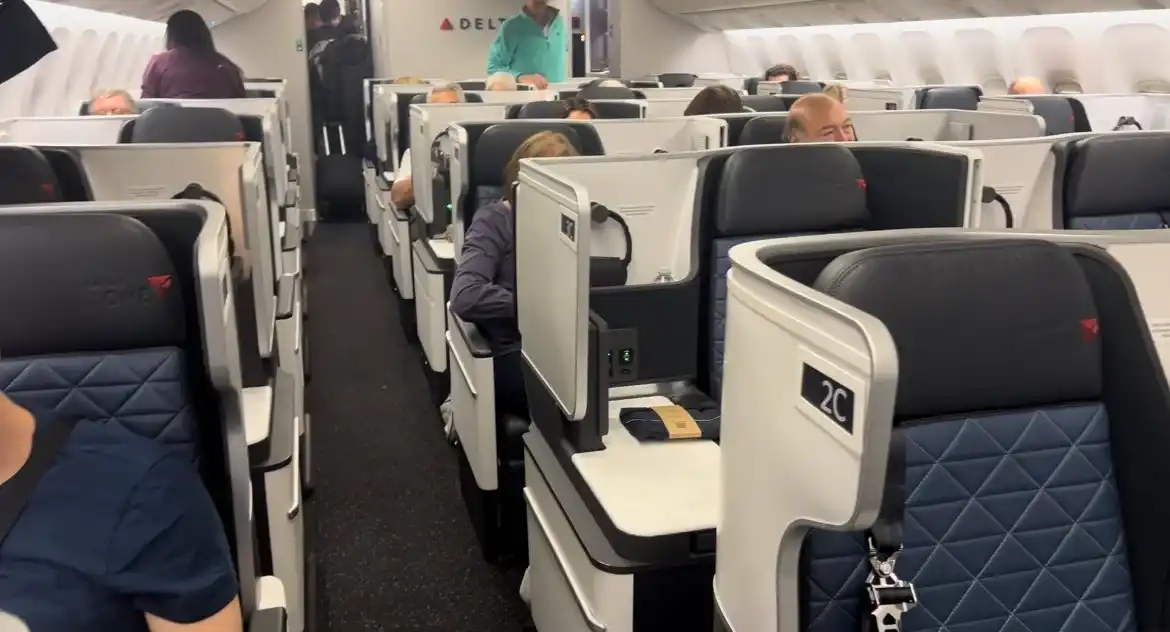
The circular fuselage of the 767 also plays a psychological trick. The curved sidewalls sweep away from passengers at head level, increasing perceived shoulder room. Later variants, particularly the 767-400ER, introduced redesigned overhead bins inspired by the Boeing 777, improving head clearance and reinforcing the sense of openness.
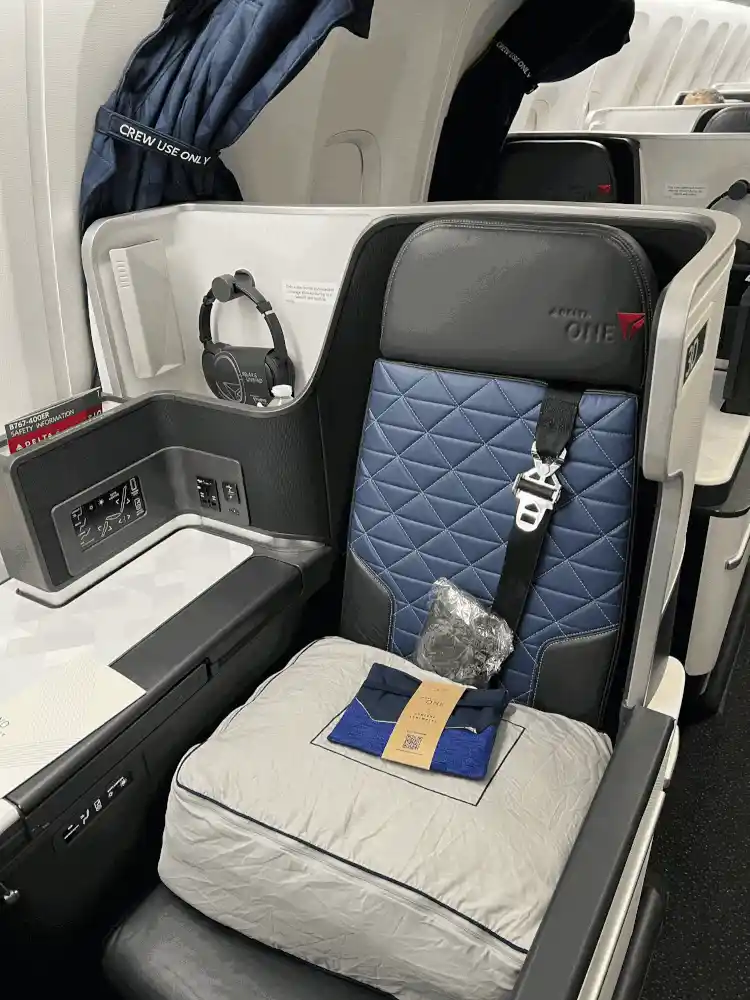
For window-seat travelers, the paired seating creates a level of privacy that larger, higher-density aircraft often struggle to replicate. This is why airlines such as Delta Air Lines and United Airlines continue to deploy the 767 on transatlantic routes. It offers the stability and storage capacity of a widebody without the impersonal feel of larger jets.
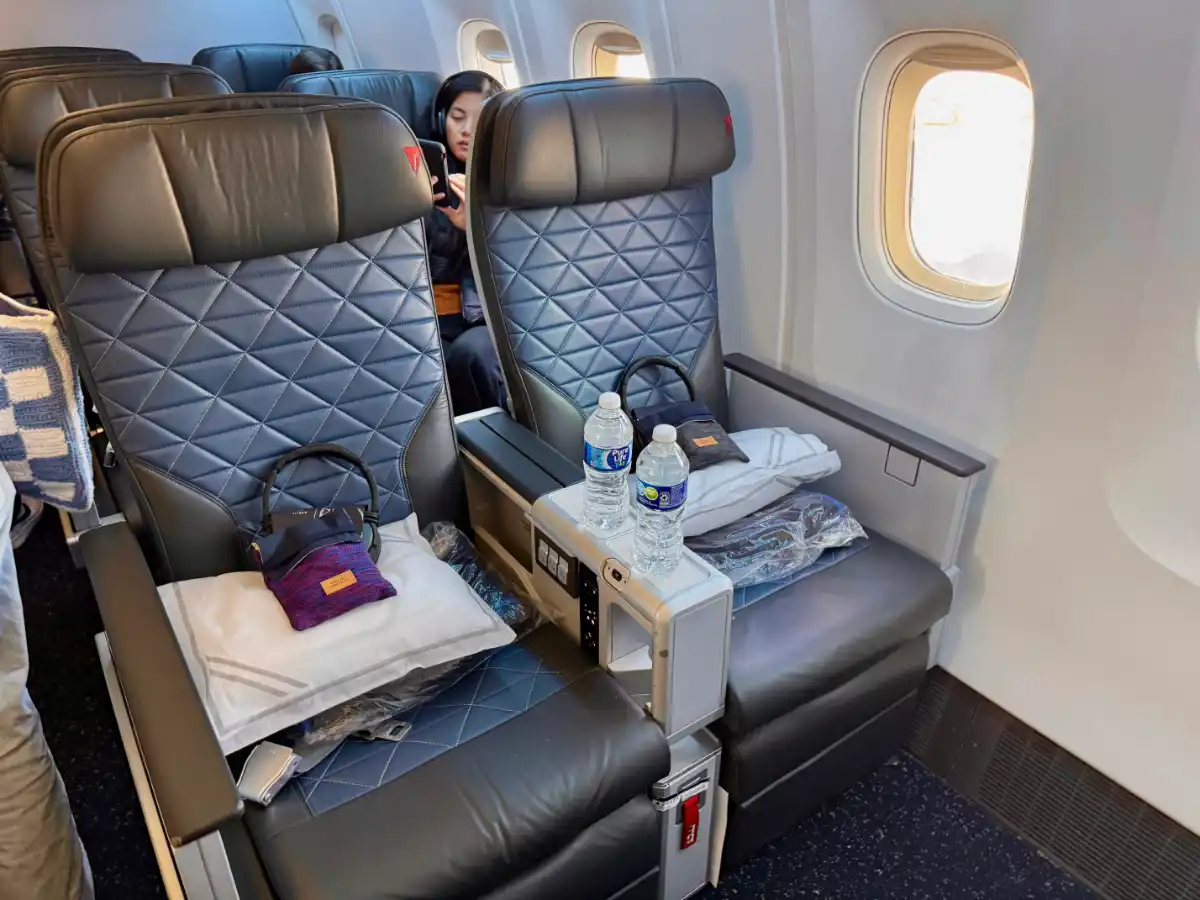
The 767 earns its place here not through raw size, but through exceptionally intelligent spatial design, proving that comfort is often about proportions, not scale.
Boeing 787 Dreamliner: Engineering Space Through Materials and Light
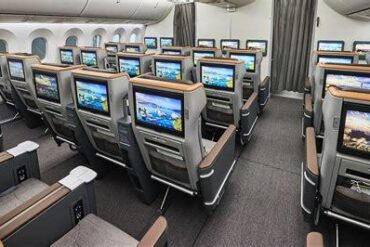
The Boeing 787 Dreamliner represents a philosophical leap in cabin design. Built from carbon-fiber-reinforced polymer, its fuselage allows for a wider, more vertically straight cabin profile than traditional aluminum aircraft. At 18 feet wide, the Dreamliner supports a 3-3-3 layout that feels noticeably less constricted, particularly at shoulder height.
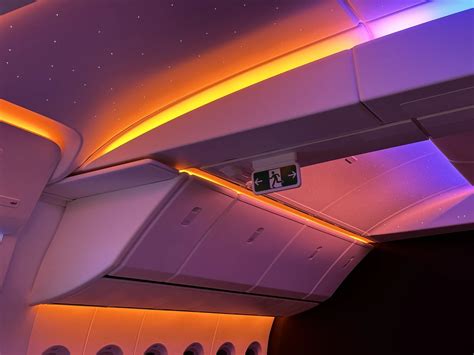
What truly separates the 787 is its mastery of perceived space. The aircraft features the largest windows ever installed on a commercial airliner, measuring nearly 19 inches tall. These oversized windows ensure that almost every passenger can see the horizon, a design choice rooted in extensive psychological research. Visibility reduces motion sickness, lowers heart rate, and minimizes spatial anxiety during long-haul flight.
The Dreamliner also operates at a lower cabin altitude of 6,000 feet, combined with higher humidity levels. This environmental openness makes the cabin feel fresher and less oppressive over flights exceeding ten hours. Passengers arrive feeling less dehydrated and mentally clearer, which reinforces the impression of a larger, more breathable space.
The Sky Interior’s vaulted ceiling and adaptive LED lighting further stretch the cabin visually. Subtle gradients of light simulate dawn, daylight, and dusk, turning the cabin into something closer to a softly lit room than a pressurized cylinder. The result is a cabin that feels architectural rather than mechanical.
The 787 belongs on this list because it proves that spaciousness is not merely about width. It is about how materials, light, and air quality reshape human perception, setting a new benchmark for modern long-haul comfort.
Boeing 777-300ER: The Gold Standard of Single-Deck Widebody Volume
The Boeing 777-300ER remains the undisputed heavyweight champion of single-deck widebody cabins. With an internal width of 19 feet 3 inches, it delivers a vast interior volume that feels immediately imposing once onboard. This aircraft was engineered specifically for ultra-long-haul missions, where sustained comfort matters more than novelty.
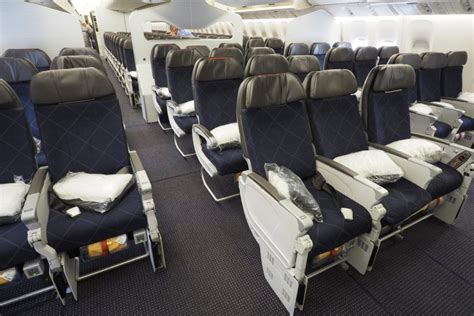
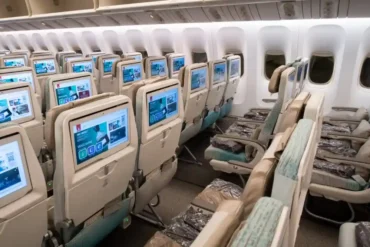
Originally designed for nine-abreast seating, the 777 has increasingly been configured with ten seats across. Even in this denser layout, the cabin retains a sense of lateral freedom unmatched by many newer aircraft. The nearly vertical sidewalls provide exceptional shoulder room, especially for passengers seated by the windows.
The signature 777 pivoting overhead bins tuck neatly into the ceiling, removing visual clutter and creating a high, vaulted appearance. This architectural openness reduces the feeling of compression often associated with high-density cabins. Even when configured in a 3-4-3 layout, the cabin never feels pinched.
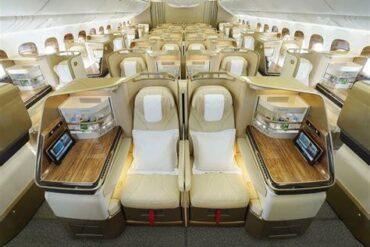
Unlike jumbo jets, the 777 offers its volume in a single, uninterrupted space. There are no staircases or deck separations, which preserves visual continuity from nose to tail. Airlines such as Emirates and Qatar Airways take advantage of this width to install expansive premium cabins while maintaining generous aisle widths in economy.
The 777-300ER earns its place because it delivers pure spatial authority. It feels big because it is big, and its design ensures that this size translates directly into passenger comfort.
Boeing 747-400: Monumental Main Deck Space and Iconic Geometry
Few aircraft inspire the same sense of awe as the Boeing 747-400. While its upper deck is often associated with exclusivity, the true spatial magic happens on the main deck, where the aircraft’s famous double-bubble fuselage reveals its full grandeur.
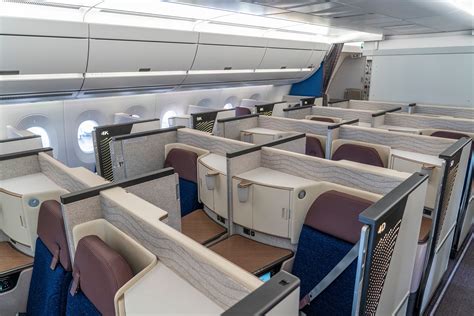
With an internal width approaching 20 feet, the main deck feels vast, almost cathedral-like. The ceilings rise well above eight feet, creating vertical openness that modern twin-engine jets rarely match. The curved fuselage moves away from passengers at head level, amplifying the sense of scale.
One of the most distinctive experiences aboard the 747-400 occurs in the nose section. As the fuselage tapers forward, the windows angle slightly toward the front of the aircraft. Passengers seated here enjoy an almost private-jet perspective, where the cabin seems to wrap gently around them.
Despite its capacity, the 747-400 avoids feeling crowded. Its geometry was designed to carry large passenger loads without psychological compression. Even in a 3-4-3 configuration, the cabin maintains an airy, ceremonial feel that has earned the aircraft its legendary status.
The 747-400 is included here because its main deck offers a sense of monumental space that remains unmatched, even as the aircraft gradually exits global fleets.
Boeing 747-8: The Pinnacle of Boeing’s Spacious Cabin Philosophy
The Boeing 747-8 Intercontinental represents the ultimate evolution of jumbo-jet design. Stretched by over 18 feet compared to the 747-400, it once held the title of the world’s longest passenger aircraft. More importantly, it refined the concept of space into something deliberate and modern.
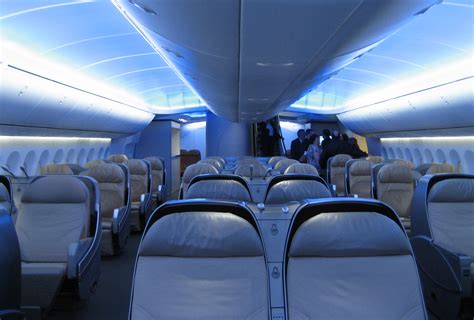
The 747-8 incorporates the full Boeing Sky Interior, complete with sculpted sidewalls, dynamic LED lighting, and enlarged overhead bins. These features soften the immense 20-foot-wide main deck, making the space feel refined rather than overwhelming.
One of the aircraft’s most ingenious spatial innovations lies above the ceiling. The crown area, traditionally unused, was reimagined as the SkyLoft. This triangular volume can accommodate dozens of sleeping berths without consuming any passenger cabin floor space. While most airlines reserve it for crew rest, it highlights the sheer scale of the aircraft’s internal architecture.
The upper deck of the 747-8 is the longest ever built, offering a quiet, boutique atmosphere distinct from the vastness below. A sweeping staircase connects the two levels, reinforcing the feeling of moving through a building rather than a machine.
The 747-8 stands at the top of this list because it offers two different spatial experiences in one aircraft: horizontal grandeur on the main deck and intimate elegance above. It is Boeing’s most ambitious expression of cabin space, and likely its final masterpiece in this category.
In an era increasingly defined by efficiency, these five aircraft remind us that space still matters. Not just measured in inches, but felt in breath, light, and the quiet relief of not feeling boxed in at 35,000 feet.