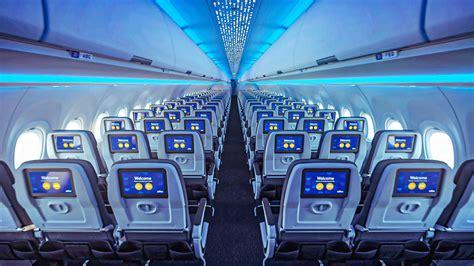
In an era when many airlines are squeezing more seats into their cabins, a handful of carriers continue to prioritize passenger comfort. Seat pitch and seat width remain two of the most important factors influencing the economy-class experience, particularly on medium- and long-haul flights. While premium cabins often attract the spotlight, travelers spending hours in economy understand that a few extra inches can make a dramatic difference.
Airlines that consistently provide generous legroom and wider seats stand apart from competitors. Using seat dimensions across fleets, several carriers emerge as leaders in 2026, offering some of the world’s most spacious economy-class products.
Passengers evaluating comfort generally focus on seat pitch, which determines legroom, and seat width, which affects personal space. Airlines with strong consistency across their fleets are especially attractive because travelers know what to expect regardless of aircraft type.
After analyzing the seat layouts and configurations available throughout major fleets, six airlines stand out for offering exceptional economy-class comfort.
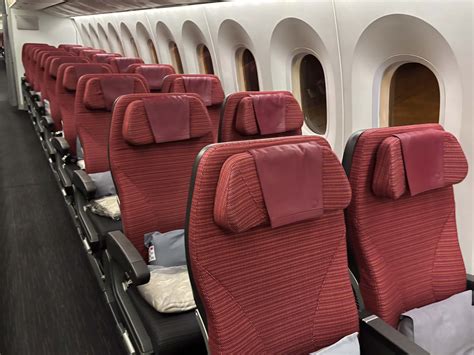
Why Seat Pitch and Width Matter More Than Ever
Economy-class travel has become increasingly competitive. Airlines attempt to maximize profitability by increasing seat density, but this often comes at the expense of passenger comfort. Even a single inch of additional seat pitch can significantly improve the experience on flights lasting eight hours or longer.
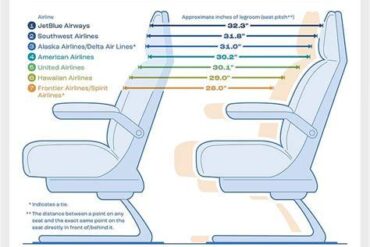
Seat pitch refers to the distance between one seat and the seat in front. Greater pitch translates into better legroom. Seat width determines shoulder room and overall personal space. A wider seat reduces the feeling of confinement and contributes to better rest during long journeys.
Consistency also plays a major role. Some airlines offer excellent seats on one aircraft and cramped layouts on another. The most passenger-friendly carriers maintain similar standards across most of their fleets, ensuring a predictable experience.
Qatar Airways Delivers Consistency Across a Diverse Fleet
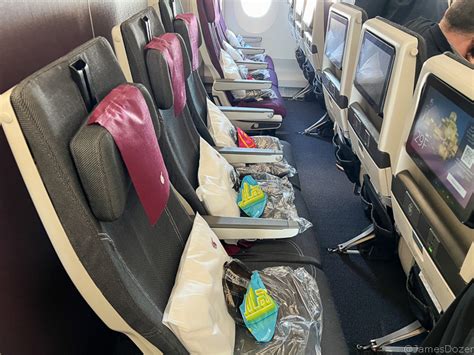
Qatar Airways has established a reputation for world-class service, and its economy-class seating remains among the most comfortable in the industry. Most aircraft provide passengers with 31 inches of seat pitch and 18-inch-wide seats, dimensions that place the airline comfortably above average.
Despite operating one of the world’s most varied fleets, Qatar maintains remarkable consistency in economy. Whether flying aboard the Airbus A350, Airbus A380, or Boeing 777, travelers generally receive a spacious experience.
Certain Boeing 777 variants offer even more legroom, increasing pitch to 32 inches, though seat width narrows slightly. Some Boeing 787-8 aircraft feature narrower seats because of the Dreamliner’s fuselage dimensions, but the carrier’s premium reputation extends throughout the cabin.
The airline’s ability to maintain a comfortable economy product despite operating numerous aircraft types makes it one of the strongest choices for long-haul travelers.
Emirates Continues Investing in Passenger Comfort
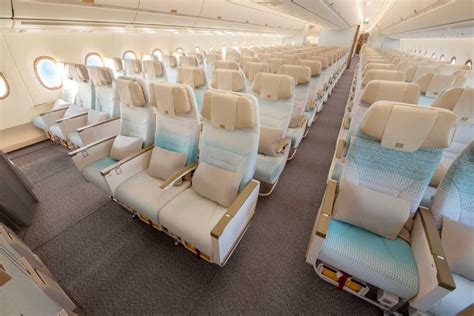
Emirates remains synonymous with luxury, and the airline’s economy cabin reflects that philosophy. Across most of its fleet, passengers enjoy 32 inches of seat pitch, exceeding what many competitors provide.
The airline’s Airbus A380 fleet offers particularly comfortable accommodations. Combined with generous cabin dimensions and excellent onboard entertainment, Emirates delivers one of the best overall economy experiences available.
The Boeing 777 fleet maintains the same pitch, although seat widths are slightly narrower. Meanwhile, the newest Airbus A350-900 introduces even wider seats measuring approximately 18 inches.
Rather than waiting for delayed aircraft deliveries, Emirates has invested billions into cabin modernization programs. This strategy ensures that even existing aircraft continue to offer high levels of comfort.
Consistency remains one of Emirates’ greatest strengths. With a relatively simple fleet structure and standardized cabins, passengers rarely encounter surprises when boarding.
Singapore Airlines Maintains Premium Standards Throughout Economy Class
Few airlines command as much respect as Singapore Airlines, and that reputation extends far beyond business class.
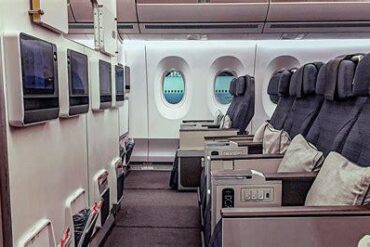
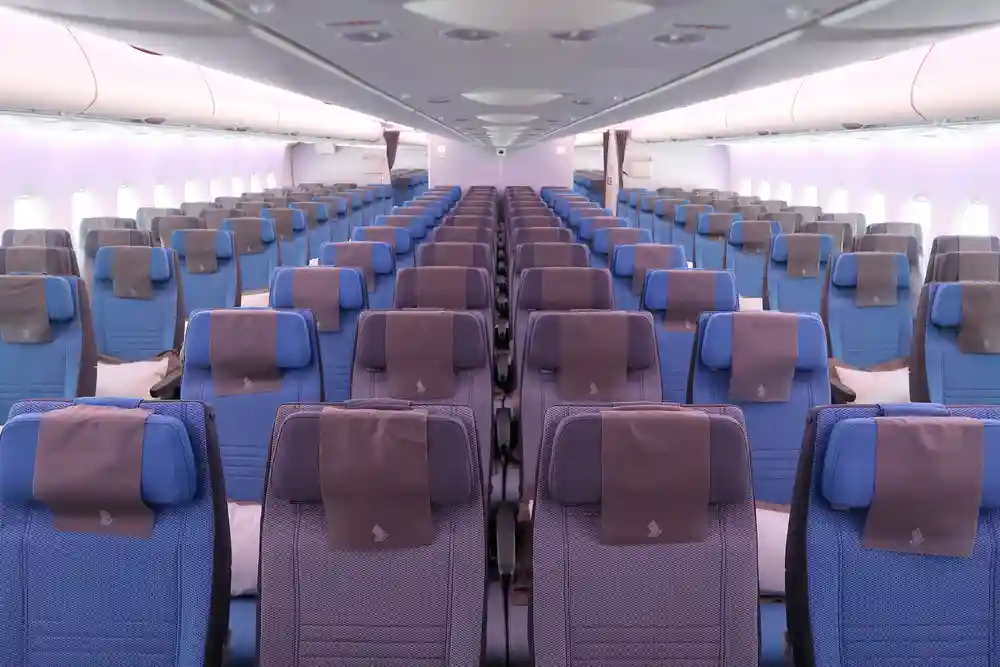
Across most aircraft, economy passengers enjoy 32 inches of seat pitch and seats approximately 18 inches wide, providing substantial comfort for long-haul flights. The flagship Airbus A380 fleet raises the bar further with seats reaching 18.5 inches in width.
Although the Boeing 787-10 and Boeing 737 MAX 8 feature slightly narrower seats due to cabin dimensions, the overall experience remains among the industry’s best.
Singapore Airlines has built its brand around delivering excellence at every level. Comfortable seating forms a key component of that strategy. The airline’s economy cabins combine spacious dimensions with thoughtful ergonomics that reduce fatigue during extended journeys.
JetBlue Proves Narrowbody Aircraft Can Still Be Comfortable
Most travelers associate spacious cabins with widebody aircraft, but JetBlue demonstrates that narrowbody jets can deliver remarkable comfort.
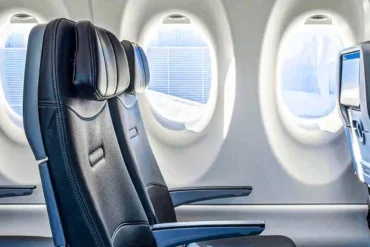
Operating exclusively Airbus aircraft, including the A220 and A320 families, JetBlue provides economy seats with 32 inches or more of pitch and widths approaching 18 inches.
The carrier’s all-economy Airbus A321 configuration offers an impressive 34 inches of pitch, rivaling many international premium economy products from decades past.
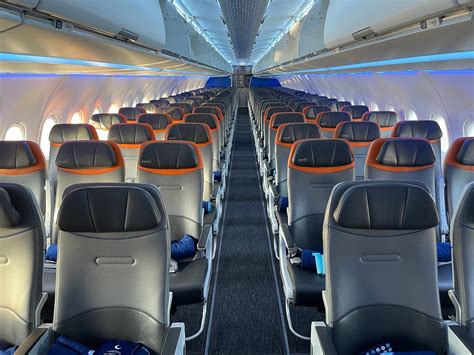
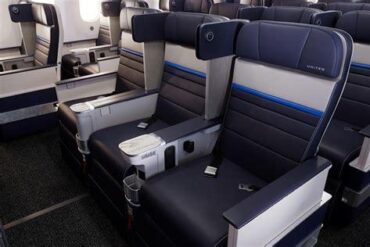
Even standard seating exceeds what many major American competitors provide. While airlines such as United and Delta often offer 30 or 31 inches in standard economy, JetBlue consistently prioritizes passenger comfort.
The Airbus A220’s unique 2-3 seating arrangement also enhances the experience. Fewer middle seats and generous cabin dimensions create a sense of openness rarely found on narrowbody aircraft.
ANA Prioritizes Comfort Over Maximum Capacity
Japanese carrier All Nippon Airways (ANA) has long pursued a philosophy that values passenger comfort over squeezing every available seat into the cabin.
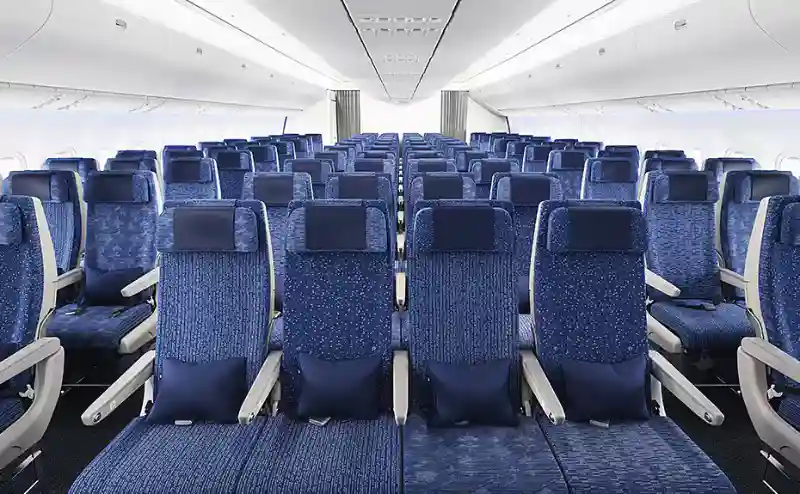
Most international aircraft provide 34 inches of seat pitch, significantly exceeding the industry average. Seat widths vary between 17 and 18 inches depending on aircraft type, but the spacious layouts contribute to a relaxed atmosphere.
One particularly distinctive feature appears aboard the Boeing 777-300ER. Instead of adopting the common 10-abreast arrangement, ANA utilizes a 2-4-3 configuration. With nine seats per row instead of ten, passengers benefit from a noticeably more spacious cabin environment.
Although some international Boeing 787-8 aircraft feature 31 inches of pitch, the majority of ANA’s long-haul fleet prioritizes room and comfort.
This willingness to sacrifice capacity for customer satisfaction has helped ANA maintain its reputation as one of the world’s finest airlines.
Japan Airlines Offers Some of the Widest Economy Seats in the World
Among all airlines, Japan Airlines (JAL) arguably provides the most impressive balance of seat pitch and width.
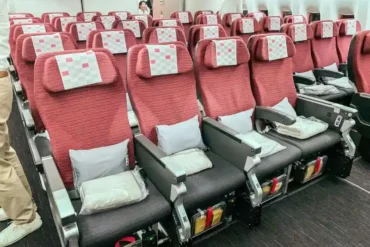
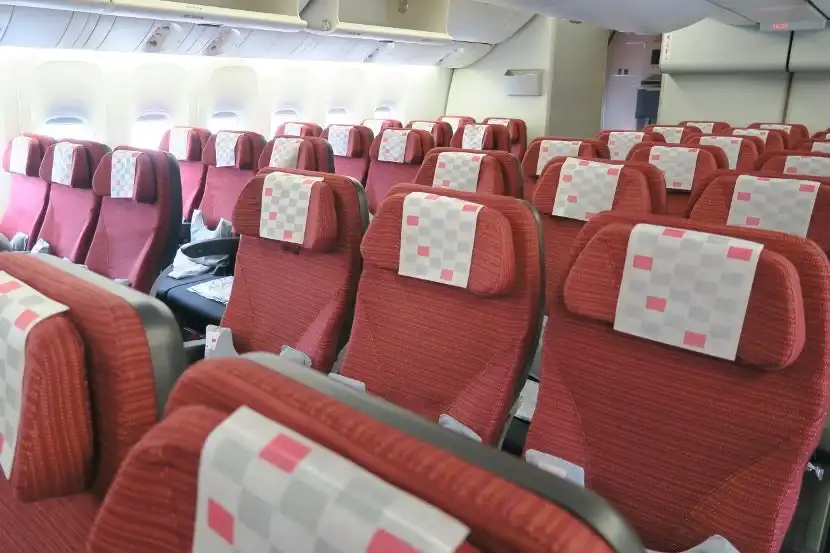
Many long-haul aircraft feature 34 inches of seat pitch combined with seat widths exceeding 18 inches, making them some of the largest economy seats available in commercial aviation.
What truly distinguishes Japan Airlines is its commitment to less dense cabin layouts. On international Boeing 787-8 aircraft, the airline employs an eight-abreast 2-4-2 arrangement instead of the industry-standard nine-abreast configuration.
Similarly, Boeing 777-300ER aircraft feature nine seats per row rather than the common ten-seat layout found on most competitors.
By eliminating a seat and redistributing the space among remaining passengers, JAL creates a noticeably more comfortable environment. The result is wider seats and a less crowded cabin.
Certain Boeing 777 and 787 aircraft offer seats measuring 18.5 inches wide, paired with 34 inches of pitch. Very few airlines can match those dimensions.
For travelers spending ten or more hours in economy class, these additional inches translate into meaningful improvements in comfort and sleep quality.
Other Airlines Delivering Excellent Economy Space
Several other airlines deserve recognition for maintaining above-average seating dimensions.
Qantas consistently provides comfortable long-haul seating and generous pitch across much of its fleet. Turkish Airlines balances competitive layouts with respectable seat dimensions, while Delta Air Lines offers relatively comfortable cabins compared with many North American rivals.
These carriers may not always reach the dimensions achieved by Japan Airlines or ANA, but they remain among the better options available for economy passengers.
Which Airline Has the Most Spacious Economy Seats in 2026?
When measuring overall comfort, two Japanese airlines sit at the top.
Japan Airlines stands out for combining 34 inches of seat pitch with seat widths reaching 18.5 inches, while also adopting less dense cabin configurations that create a more open atmosphere.
ANA follows closely with generous legroom and unique layouts designed around comfort rather than maximum capacity.
Among Middle Eastern carriers, Emirates, Qatar Airways, and Singapore Airlines continue to set premium standards, delivering consistently spacious cabins throughout much of their fleets.
Meanwhile, JetBlue proves that even narrowbody aircraft can offer exceptional passenger comfort.
As airlines increasingly pursue higher seat densities, these carriers demonstrate that passenger experience still matters. For travelers planning long-haul journeys in 2026, choosing one of these airlines can mean the difference between merely enduring a flight and genuinely enjoying it.