Premium Economy has become one of the most important battlegrounds in modern long-haul aviation. As business class fares continue to rise and economy cabins become increasingly dense, travelers are searching for a middle ground that delivers meaningful comfort without the premium price of a lie-flat seat. Few airlines have mastered this balance as successfully as EVA Air, whose premium economy cabin remains one of the most respected products in the world.
The Taiwanese carrier has built its reputation around a simple idea: passengers flying across oceans deserve more than just extra legroom. They want a more refined experience, better food, improved service, and a cabin environment designed specifically for long journeys. EVA Air’s premium economy delivers exactly that, combining thoughtful design with one of the most generous seat pitches available today.
The most impressive feature of this cabin is its remarkable 42-inch seat pitch, a figure that places EVA Air among the leaders in global premium economy. On flights connecting Asia and North America, where journeys can exceed 12 hours, this additional personal space can dramatically change the travel experience. Instead of feeling like an extended economy journey, passengers enjoy a cabin that feels closer to a dedicated premium product.
EVA Air: The Airline That Created Modern Premium Economy
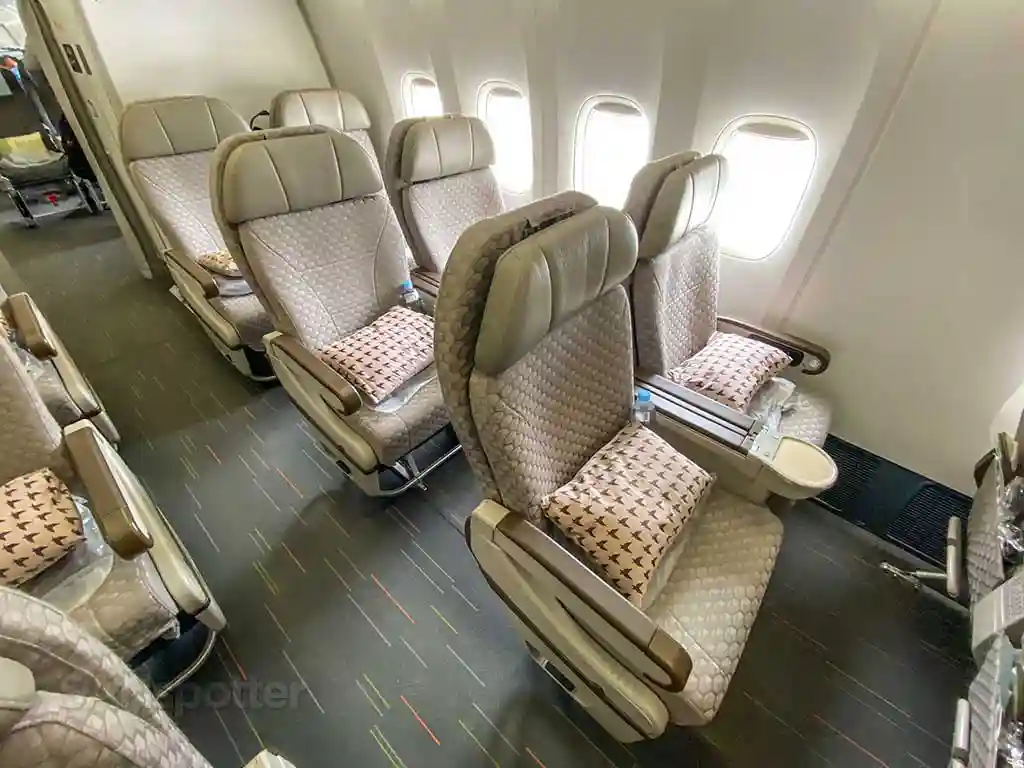
Long before premium economy became a standard feature among international airlines, EVA Air pioneered the concept. The airline introduced its original Evergreen Deluxe Class in 1992, creating one of the first clearly defined intermediate cabins between business class and economy class.
At the time, most airlines offered only three traditional classes: first class, business class, and economy. EVA Air recognized that many travelers wanted greater comfort but did not necessarily need or want to pay for business class. The airline created a new category focused on practical luxury, offering wider seats, more legroom, enhanced meals, and improved service.
The timing of the launch was particularly strategic. EVA Air introduced the product on long-haul routes between Taiwan and North America, including services to major destinations such as Los Angeles and San Francisco. These transpacific flights highlighted the need for additional comfort, especially during journeys lasting more than ten hours.
The original Evergreen Deluxe Class was not simply economy class with a few additional features. EVA Air treated it as a separate travel experience. Passengers received upgraded dining, better seating, and a more personalized service approach. Over the years, the product evolved into today’s premium economy cabin, influencing how airlines around the world designed their own upgraded economy offerings.
The success of EVA Air’s concept eventually encouraged other carriers to introduce similar products. Today, airlines including Japan Airlines, Singapore Airlines, Emirates, Delta Air Lines, United Airlines, and American Airlines all operate premium economy cabins inspired by the same market opportunity that EVA Air identified decades ago.
Inside EVA Air’s 42-Inch Premium Economy Seat
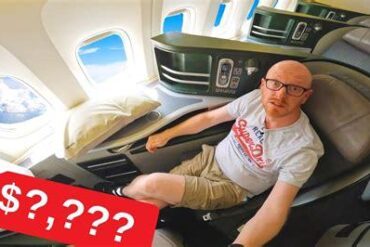
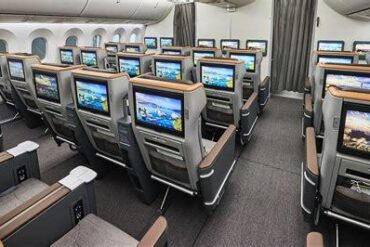
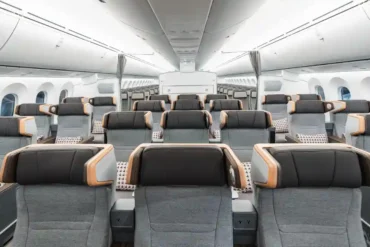
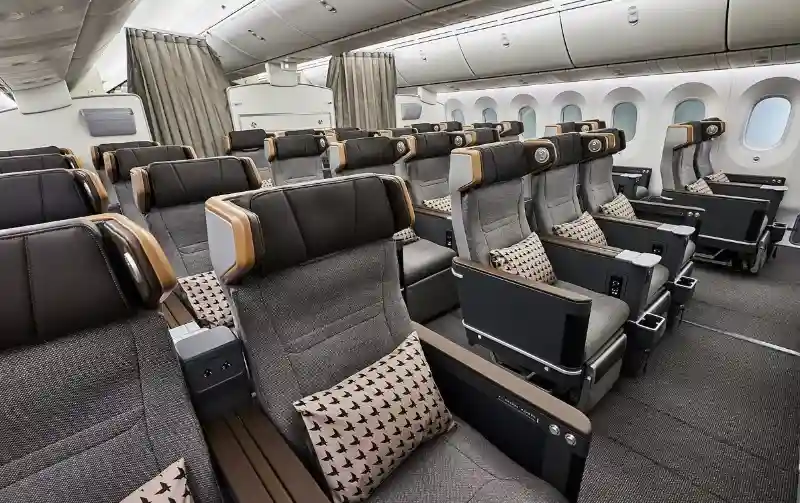
The centerpiece of EVA Air’s premium economy experience is the seat itself. Available on selected long-haul aircraft, including the Boeing 787-9 Dreamliner and Boeing 777-300ER, the cabin provides a spacious environment designed for extended international travel.
The 42-inch pitch immediately stands out compared with standard economy seating, where pitch commonly ranges between 30 and 32 inches. That additional space gives passengers significantly more room to stretch their legs, adjust their seating position, and relax during overnight flights.
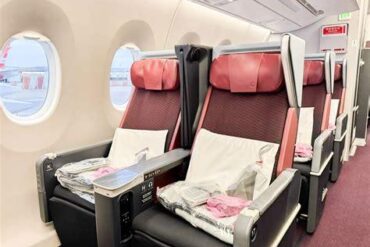
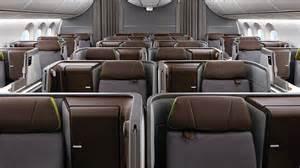
EVA Air uses a 2-3-2 seating configuration in premium economy, a layout that creates a more comfortable and less crowded atmosphere compared with the 3-3-3 or 3-4-3 arrangements often found in economy cabins. The configuration also improves accessibility, allowing more passengers to reach the aisle without disturbing others.
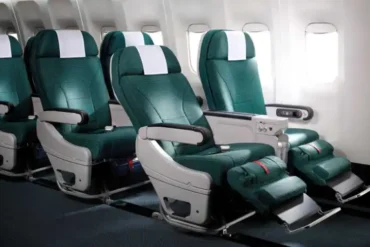
The seats feature generous padding and a fixed-shell design. Unlike traditional reclining seats that move backward into another passenger’s personal space, EVA Air’s design allows passengers to recline while maintaining a consistent level of comfort for everyone in the cabin. This approach is especially valuable on fully booked long-haul flights.
Passengers also receive larger personal entertainment screens, adjustable headrests, footrests, and dedicated storage areas. Power outlets and USB charging ports are available, helping travelers stay connected throughout their journey.
A Premium Economy Experience Beyond Extra Legroom
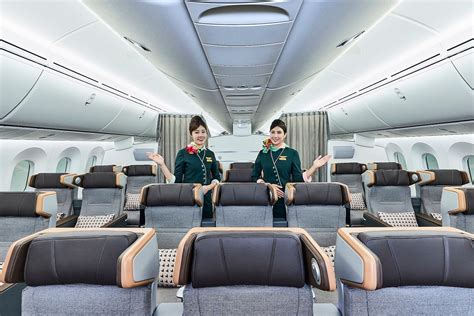
While the 42-inch pitch is the headline feature, EVA Air’s premium economy success comes from the complete experience rather than a single specification. The airline understands that premium travelers evaluate every part of the journey, from boarding to arrival.
Dining is one area where EVA Air creates a clear distinction from economy class. Meals are served with upgraded presentation, proper tableware, and metal cutlery. Passengers can choose from carefully prepared dishes featuring both Taiwanese influences and international flavors.
The beverage selection is also more extensive, adding another premium touch to the experience. The slower, more relaxed service style reflects EVA Air’s broader philosophy of hospitality, where comfort is created through attention to detail rather than excessive luxury.
Inflight entertainment further enhances the journey. Passengers receive access to a wide selection of movies, television programs, and music through larger seatback screens. On long overnight flights, having a comfortable entertainment setup can make a significant difference in how quickly the hours pass.
Wi-Fi availability on equipped aircraft provides another advantage for business travelers and passengers who need to remain connected. Combined with improved workspace and additional room, EVA Air’s premium economy has become an attractive option for corporate travelers whose companies may restrict business class bookings.
Why EVA Air Premium Economy Remains One of the Best in the World
EVA Air’s premium economy cabin continues to receive international recognition because it successfully balances three factors: space, service, and value.
According to the Skytrax World Airline Awards 2025, EVA Air ranked among the world’s top premium economy airlines, finishing fifth in the Best Premium Economy Class category. While carriers such as Virgin Atlantic, Japan Airlines, Emirates, and Singapore Airlines have developed highly competitive offerings, EVA Air remains one of the original innovators in the category.
The airline’s strength comes from consistency. Some airlines offer impressive premium economy seats but struggle with service quality or dining. EVA Air has built a reputation across all cabin classes for reliability, cleanliness, and professional hospitality.
For leisure travelers, the cabin provides a more comfortable way to experience long-distance flights without paying business class prices. For business travelers, it offers enough additional space to work, rest, and arrive feeling less exhausted.
Andrew Su, EVA Air’s North America Head Office Executive Vice President, has emphasized that premium economy appeals to both business and leisure passengers because it provides a higher-quality experience while remaining within a reasonable budget.
That philosophy explains why premium economy has grown rapidly across the aviation industry. Passengers increasingly value personal space and comfort, especially as airlines continue increasing seat density in economy cabins.
Aircraft Featuring EVA Air Premium Economy
EVA Air currently offers its premium economy product primarily on long-haul aircraft. The cabin is available on the airline’s Boeing 777-300ER and Boeing 787-9 Dreamliner fleets, both of which operate many of the carrier’s transpacific routes.
The airline’s Boeing 777-300ER fleet remains an important part of its North American network, while the more modern Boeing 787-9 provides passengers with the benefits of a newer aircraft design, including improved cabin atmosphere and reduced environmental impact.
Interestingly, EVA Air’s Boeing 787-10 aircraft do not currently include premium economy seating. These aircraft are mainly used on regional routes and feature a higher-density configuration focused on short- and medium-haul operations.
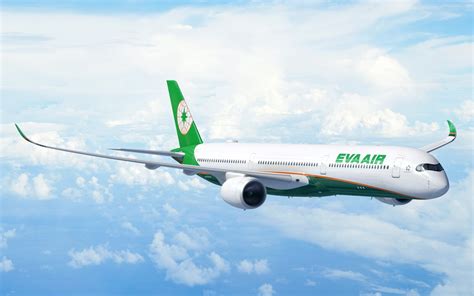
The airline is also expected to introduce premium economy on future Airbus A350-1000 aircraft deliveries, potentially expanding the availability of this highly regarded cabin experience.
The Growing Importance of Premium Economy on Global Routes
Premium economy has transformed from a niche experiment into a major component of airline strategy. Over the last decade, carriers worldwide have recognized that many travelers want better comfort but do not require the full expense of business class.
For airlines, premium economy creates a valuable revenue opportunity. The cabin generates higher yields than economy while using less space than business class, making it an attractive option for long-haul routes.
North American carriers have expanded their premium economy offerings significantly in recent years. American Airlines introduced its premium economy cabin across much of its widebody fleet, United Airlines developed Premium Plus, and Delta Air Lines expanded its Premium Select product.
The popularity of these cabins reflects changing passenger priorities. Travelers are increasingly willing to pay extra for space, especially on flights crossing continents. A wider seat, additional legroom, upgraded meal service, and a quieter cabin environment can dramatically improve the overall journey.
EVA Air’s early investment in premium economy positioned the airline ahead of this trend. By identifying the demand for a comfortable middle option decades before many competitors, the carrier helped reshape the future of international air travel.
A 42-Inch Advantage for Transpacific Travelers
For passengers flying between Asia and North America, EVA Air’s premium economy remains one of the most compelling upgrade options available. The combination of 42-inch seat pitch, thoughtful cabin design, refined dining, and dependable service creates an experience that feels significantly more premium than economy while avoiding business class pricing.
The airline’s success proves that comfort does not always require the highest-priced ticket. Sometimes, the biggest improvement comes from thoughtful design choices that focus on what travelers value most: space, relaxation, and a better journey.
More than three decades after introducing Evergreen Deluxe Class, EVA Air continues to demonstrate why it remains one of the world’s most influential premium economy pioneers. Its 42-inch pitch cabin is not simply a larger seat — it represents a different approach to long-haul travel where comfort and value can exist together.