Long-haul aviation has always been a balancing act between comfort, cost, and cabin space. Airlines historically divided aircraft interiors into strict hierarchies: economy for the masses, business class for corporate travelers, and first class for luxury flyers. For decades, passengers faced an uncomfortable reality—either endure cramped economy seating for hours or pay dramatically higher fares for a premium cabin.
That rigid structure began to change in 1992, when EVA Air, a relatively young Taiwanese airline founded only three years earlier, introduced a cabin that would fundamentally reshape commercial aviation. The airline unveiled a revolutionary concept called Economy Deluxe, a cabin positioned directly between economy and business class on its Boeing 747-400 aircraft. What seemed like a modest seating upgrade quietly introduced a brand-new product category that the world now knows as premium economy.
More than three decades later, premium economy has become one of the most important elements of airline product strategy. Nearly every major long-haul airline offers it. Aircraft manufacturers design cabins around it. Passengers expect it. Yet this entire segment of air travel traces its origins back to a single experimental idea introduced by EVA Air in the early 1990s.
Rethinking The Traditional Airline Cabin Hierarchy
In the late 1980s and early 1990s, airline cabin design followed a simple formula. Economy class maximized seat density to keep ticket prices low. Business class catered primarily to corporate travelers whose companies paid for comfort. First class, once the symbol of glamorous jet travel, served a shrinking group of ultra-premium passengers.
This structure worked reasonably well for short flights, but long-haul travel exposed its weaknesses. Journeys between Asia and North America could last well over ten hours, sometimes stretching to fourteen or more depending on winds and routing. In economy class, passengers faced tight seat pitch, limited personal space, and restricted recline—conditions that made sleep difficult and fatigue inevitable.
EVA Air recognized that many travelers were stuck in the middle of this system. They valued comfort but could not justify the steep cost of business class tickets. Rather than treating this group as an afterthought, the airline began exploring a new cabin concept designed specifically for them.
The result was Economy Deluxe, a deliberately positioned product that offered noticeable improvements in comfort without reaching the price level of premium cabins.
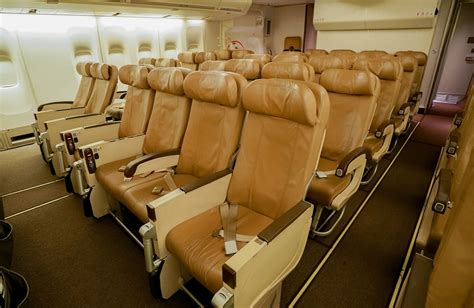
The innovation was subtle but meaningful. Seats were wider, legroom was greater, meal service was upgraded, and passengers enjoyed enhanced entertainment options. Individually, these improvements might have seemed incremental. Together, they created an experience that felt distinctly different from standard economy travel.
The 1992 Launch That Quietly Changed Aviation
When EVA Air introduced Economy Deluxe on its Boeing 747-400 fleet, the airline did something rare in aviation: it created a completely new cabin class rather than simply modifying an existing one.
Instead of placing a few improved seats within the economy section, EVA Air designed a dedicated cabin zone located between economy and business class. This physical separation reinforced the idea that passengers were purchasing a distinct product rather than a minor upgrade.
The concept addressed multiple passenger needs simultaneously.
Comfort was the most obvious improvement. Increased seat pitch—the distance between one seat and the seat in front—gave travelers significantly more legroom, allowing them to stretch out and shift positions during long flights. Wider seats reduced the feeling of confinement common in dense economy layouts.
Service enhancements further differentiated the cabin. Meal presentation improved, cabin crew attention became more personalized, and the overall environment felt calmer and less crowded.
Most importantly, pricing remained accessible. Economy Deluxe tickets cost more than economy fares but were dramatically cheaper than business class. Passengers felt they were paying for tangible improvements rather than luxury status.
That combination of comfort, clarity, and affordability proved extremely powerful.
Solving A Problem Passengers Had Endured For Decades
Airlines often innovate in response to operational efficiency or technological change. The creation of premium economy was different—it solved a human problem.
Long flights impose real physiological stress on the body. Limited legroom restricts circulation, cramped seating affects posture, and lack of sleep can produce fatigue that lingers long after arrival. These issues become more pronounced as flight durations increase.
EVA Air recognized that the discomfort many passengers experienced was not simply an inconvenience. On ultra-long flights, it became a genuine barrier to travel satisfaction.
By increasing seat pitch and seat width, the airline addressed basic ergonomic issues. Better circulation, more freedom of movement, and improved sleeping positions transformed how passengers experienced long journeys.
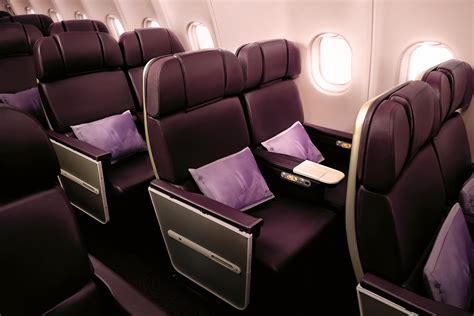
Equally important was the psychological dimension. Passengers seated in premium economy felt that the airline acknowledged their desire for comfort. The cabin became a middle ground between affordability and dignity, offering an environment where travelers could relax without feeling squeezed into the aircraft’s densest section.
In economic terms, the innovation unlocked a new revenue stream. Instead of forcing travelers to choose between cheap discomfort and expensive luxury, airlines could capture incremental willingness to pay—a crucial advantage in a fiercely competitive industry.
When Other Airlines Noticed The Opportunity
Interestingly, EVA Air was not entirely alone in recognizing this market gap. Around the same time, Virgin Atlantic introduced its own upgraded economy product known as Mid Class.
Both airlines had reached similar conclusions: many long-haul passengers were searching for more comfort than economy could offer but had little interest in paying business-class fares.
Despite the shared insight, the execution differed.
EVA Air approached the concept with strong structural clarity. Economy Deluxe had consistent seating, defined cabin boundaries, and a clear pricing structure. Passengers understood exactly what they were purchasing.
Virgin Atlantic’s Mid Class experimented more broadly with service upgrades and airport benefits. While innovative, the concept evolved frequently and took longer to stabilize as a permanent product.
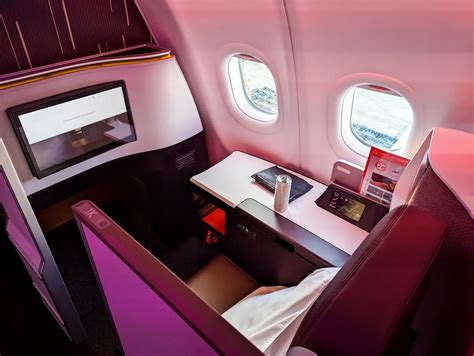
Over time, the industry gravitated toward EVA Air’s approach: a clearly defined seat-based cabin product with dedicated seating and standardized features.
By the early 2000s, airlines across the globe began introducing branded premium economy cabins. British Airways, Qantas, Air New Zealand, and Japan Airlines all launched products that echoed the principles EVA Air had pioneered a decade earlier.
What began as an experiment had quietly become an industry standard.
How Premium Economy Reshaped Aircraft Design
Once premium economy proved commercially viable, its influence spread far beyond passenger comfort. It began altering how aircraft interiors were designed and how airlines planned cabin layouts.
Traditional long-haul aircraft were divided into three primary cabins: first class, business class, and economy. As premium economy gained popularity, airlines inserted a fourth category between economy and business.
This shift forced airlines to rethink seat density, cabin flow, and revenue optimization.
Aircraft manufacturers such as Boeing and Airbus adapted their interior configurations accordingly. Modern widebody aircraft—including the Boeing 787 Dreamliner and Airbus A350—are now frequently delivered with premium economy cabins already integrated into the design.
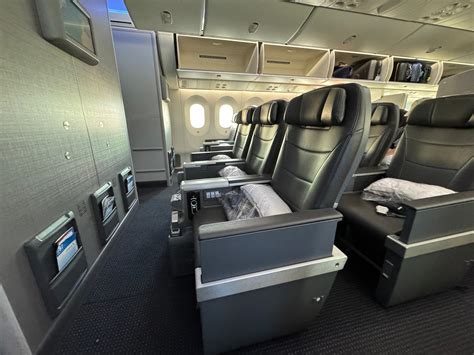
From a financial perspective, the cabin proved extremely valuable. Premium economy seats occupy more space than economy seats but far less than business class suites. The revenue per square meter often exceeds what airlines can generate from additional economy seating.
As a result, premium economy became a strategic tool for maximizing aircraft profitability while simultaneously improving passenger experience.
EVA Air’s Commitment To Continuous Refinement
Innovation rarely succeeds as a one-time event. EVA Air understood that maintaining leadership required continuous improvement.
Over the decades, the airline refined nearly every aspect of its premium economy offering. Seat designs evolved, materials improved, and cabin layouts adapted to new aircraft types.
Passenger feedback played a crucial role. EVA Air studied how travelers used their seats, where they stored personal items, and how they interacted with in-flight entertainment systems.
These insights influenced successive generations of cabin design.
The airline also invested heavily in service elements. Premium economy passengers received enhanced meal presentation, improved tableware, upgraded amenity kits, and attentive cabin service. The goal was to ensure the experience felt clearly superior to economy while remaining distinct from business class.
Consistency became another defining strength. Regardless of route or aircraft type, travelers generally encountered a similar premium economy experience with EVA Air. In an industry where product variations can undermine brand trust, that reliability built strong loyalty among frequent flyers.
The Fourth-Generation Premium Economy Cabin
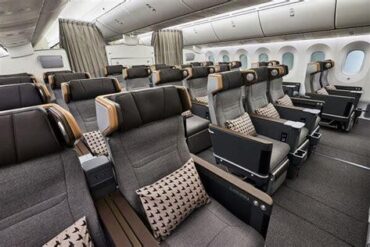
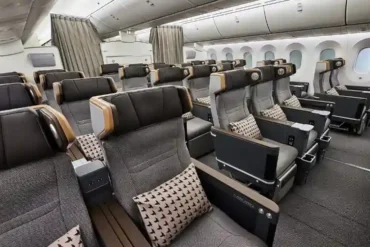
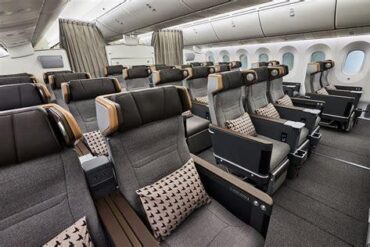
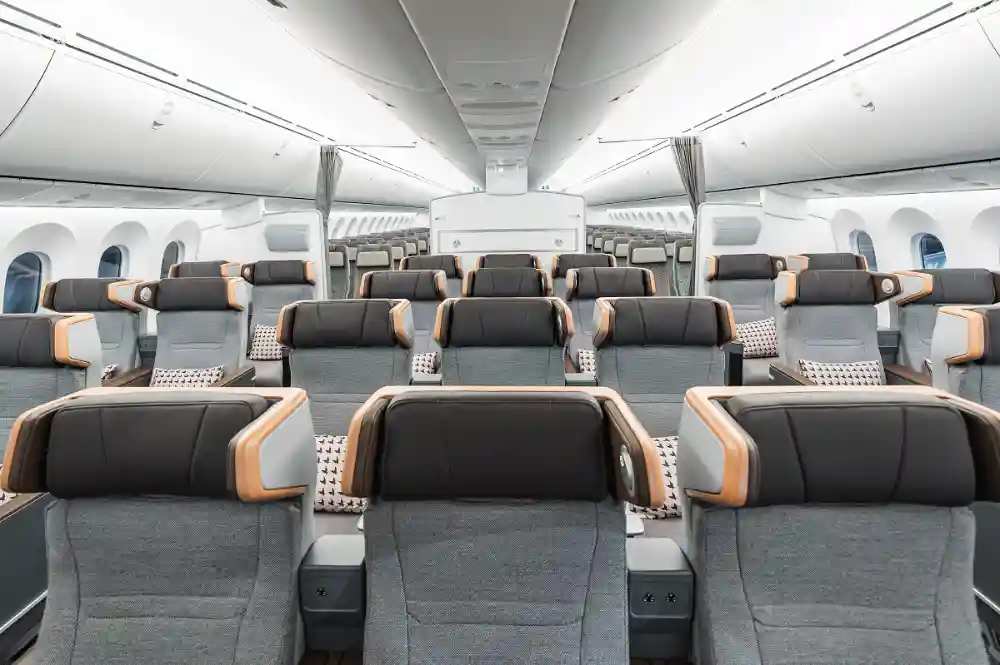
By the mid-2020s, EVA Air introduced its fourth-generation premium economy cabin, debuting on the Boeing 787-9 Dreamliner.
This latest iteration reflects more than thirty years of refinement.
One of its most notable innovations is the fixed-shell recline mechanism. Instead of leaning backward into the passenger behind, the seat slides forward within its shell. This design prevents the common frustration of losing knee space when the seat ahead reclines.
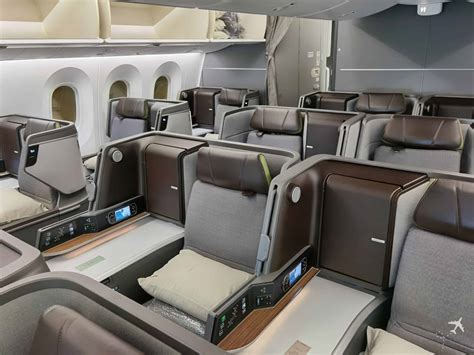
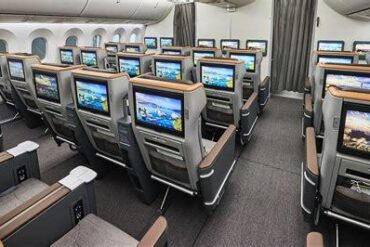
The cabin offers approximately 42 inches of seat pitch, far exceeding typical economy seating. Large high-definition entertainment screens, integrated privacy wings, and thoughtfully designed storage areas create an environment tailored for modern travelers.
Technology integration has also become essential. Universal power outlets, multiple USB charging ports, and intuitive seat controls accommodate passengers who work, stream media, or use multiple devices during flight.
These features demonstrate how premium economy has evolved from a simple comfort upgrade into a carefully engineered travel environment designed for the realities of contemporary long-haul journeys.
The Global Legacy Of Premium Economy
Today, premium economy is no longer an experimental concept. It has become a fundamental pillar of airline strategy.
Aircraft cabin planning, ticket pricing models, and revenue forecasts all assume that a significant portion of passengers will choose a product that sits between economy and business class.
This structural transformation did not happen overnight. It developed gradually as airlines observed the strong demand created by EVA Air’s original concept.
The impact extends beyond revenue. Premium economy has also reshaped passenger expectations. Travelers now view comfort as something that should increase progressively across cabin classes, rather than jumping abruptly from cramped economy seating to expensive business suites.
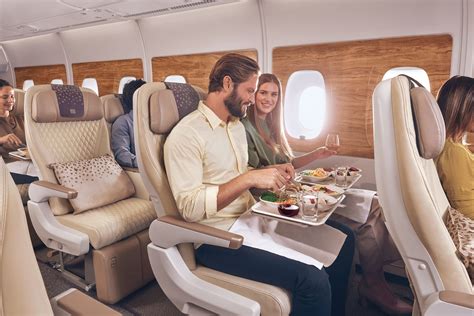
For airlines, the cabin smooths the pricing ladder. Instead of forcing customers into massive fare increases, premium economy captures passengers willing to pay slightly more for better comfort. This approach improves profitability while preserving accessibility for cost-conscious travelers.
In essence, premium economy acts as a bridge—connecting affordability with comfort in a way that traditional cabin structures never managed.
A Quiet Innovation That Changed The Industry
Some revolutions arrive with spectacle. Others reshape entire industries quietly, almost invisibly.
EVA Air’s introduction of Economy Deluxe in 1992 belongs firmly in the second category. There were no dramatic announcements of a new travel era, no sweeping redesign of aircraft architecture overnight. Instead, a thoughtful improvement to passenger comfort gradually spread across the global aviation landscape.
Three decades later, the results are unmistakable.
Premium economy cabins now span fleets across Europe, Asia, the Americas, and Oceania. Aircraft manufacturers design seating systems specifically for them. Passengers consider them a normal part of long-haul travel.
What began as a bold experiment by a young Taiwanese airline ultimately became one of the most influential product innovations in modern aviation.
The lesson lurking beneath this story carries a bit of scientific elegance: sometimes the biggest industry shifts don’t come from radical technology but from a simple insight into human needs. EVA Air looked at a long flight, noticed millions of travelers stuck between discomfort and extravagance, and built a bridge between the two.
Airlines followed. Passengers embraced it. And the cabin that once seemed unconventional now feels as natural as the wings on the aircraft carrying it across the sky.