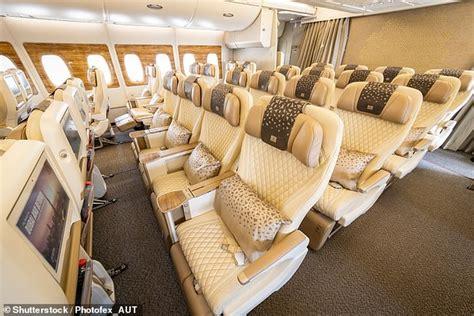
The story of Premium Economy is not a tale of flashy luxury or sudden revolution. It is a quieter, more interesting story about noticing a human problem inside a metal tube crossing oceans at nearly the speed of sound. For decades, long-haul cabins were split by a brutal binary. Up front sat a small group enjoying space, privacy, and sleep. Behind them stretched a sea of cramped rows where comfort was rationed and time felt heavier with every hour aloft. The space between these worlds existed in passenger desire long before it existed in cabin design. Airlines eventually learned that discomfort is not just a nuisance; it is a business opportunity wearing a neck pillow.
Long flights change how people value space. Ten or twelve hours compressed into a narrow seat reshapes priorities. Legroom becomes dignity. Recline becomes survival. A slightly wider seat becomes the difference between arriving ready for a meeting and arriving ready for a nap on the airport floor. As globalization thickened air routes between Asia, North America, and Europe, the pressure inside economy cabins grew. People wanted relief, but many could not justify business class fares that often multiplied ticket prices by three or four. The missing middle was not theoretical. It was economic gravity waiting to be discovered.
Airlines today treat Premium Economy as a structural pillar of their long-haul strategy. Entire cabin layouts are now engineered around this middle tier because it extracts more revenue per square foot without cannibalizing business class in destructive ways. The brilliance of the product is not that it offers luxury. The brilliance is that it sells sanity at scale. Wider seats, deeper recline, better food, quieter zones, and a sense of separation from the economy crowd do not merely feel nicer. They convert physical comfort into measurable yield. This alchemy is now standard practice. It was not always so.
The idea did not drift into existence through committee meetings and PowerPoint decks. It arrived because one airline noticed a structural blind spot in how airplanes were sold to humans. That airline was EVA Air, a relatively young carrier in the early 1990s that looked at its long-haul passengers and saw not just ticket classes, but bodies that needed room to exist for half a day at a time.
The Airline That Introduced Premium Economy to the World
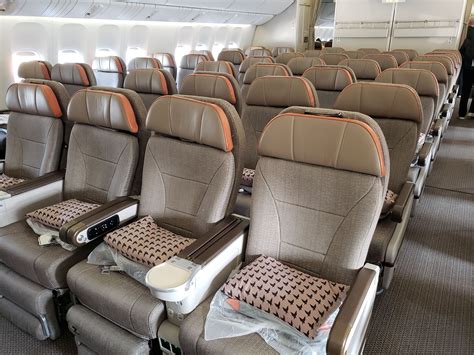
When EVA Air launched its Economy Deluxe Class in 1992, the aviation industry was still married to a simple hierarchy: economy for the masses, business for the few, first class for the mythical creatures who treated airplanes like offices with wings. EVA Air broke this geometry. The airline formally created a dedicated intermediate cabin on its Boeing 747 fleet, not as an afterthought, but as a designed product with its own space, seat geometry, and service identity. This was not an exit-row economy seat with a nicer smile from the crew. It was a deliberate rethinking of what the middle of the aircraft could be.
The Boeing 747 was a perfect laboratory for this experiment. Its sheer size allowed EVA Air to carve out a distinct zone without destabilizing the entire revenue structure of the plane. In this new cabin, seats were wider, pitch was increased, and the emotional temperature changed. Passengers were no longer pressed into a mass. They were acknowledged as individuals who had paid for breathing room. The service reinforced the difference. Meals were upgraded, amenities felt intentional rather than apologetic, and the cabin environment communicated separation from the dense economy rows behind. The message was subtle but powerful. This is not economy with mercy. This is a different contract between airline and passenger.
This move mattered because it reframed how airlines thought about comfort. Comfort stopped being a luxury reserved for the front of the plane. It became a scalable product. EVA Air did not invent the human desire for more space. It invented the commercial grammar to sell that desire to millions of people who could not or would not buy business class. The success of Economy Deluxe was not theoretical. It filled seats. It generated revenue. It proved that discomfort had been underpriced for decades.
EVA Air’s Long-Haul Vision and the Birth of a Middle Cabin
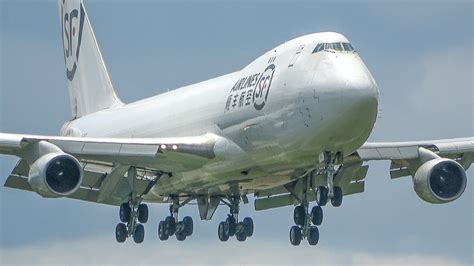
Founded in 1989 as part of Taiwan’s Evergreen Group, EVA Air grew up thinking globally from the beginning. Its core routes crossed the Pacific, linking Taipei with cities like Los Angeles, San Francisco, Vancouver, and later European hubs. These are flights that test the limits of human patience. Twelve hours in the air exposes every design flaw in a seat. EVA Air understood that service quality on long-haul routes is not decoration. It is infrastructure. Comfort determines how passengers remember the airline, and memory determines repeat business.
Rather than chase only the prestige of premium cabins, EVA Air looked at the dense middle of the aircraft and saw latent value. This was not charity. It was strategic empathy. Most passengers live in this zone. Improve their experience and you do not just earn goodwill. You unlock pricing power. The airline’s culture of product experimentation made it unusually willing to tamper with cabin orthodoxy. While other carriers focused on polishing first and business class for elite travelers, EVA Air engineered dignity into the bulk of its passenger experience.
The decision to formalize Premium Economy was also a quiet philosophical move. It acknowledged that travel is not binary. People occupy gradients of need, budget, and tolerance for discomfort. By offering a middle option, EVA Air aligned cabin design with how humans actually make trade-offs. This alignment between psychology and hardware is why the product stuck.
How Premium Economy Reshaped Airline Economics
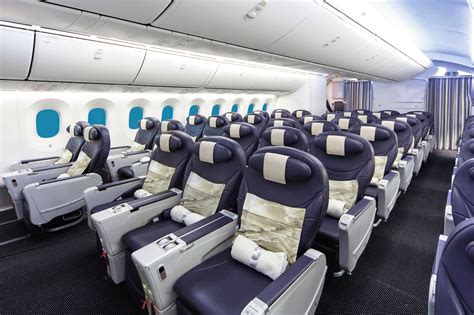
Once Premium Economy proved commercially viable, it began to reshape how airlines thought about aircraft interiors. The old model packed as many economy seats as possible behind a small premium zone. The new model introduced a middle cabin that paid better than economy while consuming less space than business class. This is catnip to revenue managers. The math is seductive. A slightly larger seat that commands a meaningful fare premium produces higher yield per square foot than squeezing one more economy row into the cabin. Over thousands of flights, that difference compounds into strategic advantage.
Passenger behavior accelerated this shift. As corporate travel budgets tightened and leisure travel surged, the buyer profile of premium cabins changed. More people were paying for their own tickets. They wanted comfort, but they also wanted to feel rational about the purchase. Premium Economy is the rational indulgence of long-haul travel. It is the seat class people choose when they want to arrive functional without feeling irresponsible. Airlines leaned into this psychology by improving the product’s soft touches. Better food, priority boarding, quieter cabins, and upgraded entertainment screens turned the cabin into a coherent experience rather than a simple seat upgrade.
The post-pandemic travel environment sharpened these dynamics. Business class demand became less predictable. Premium Economy filled the gap with a customer base that was less dependent on corporate policy and more driven by personal valuation of comfort. Aircraft retrofits followed the money. Cabins were rebalanced. Premium Economy grew from an experiment into a structural layer of the aircraft.
The Modern Expression of EVA Air’s Premium Economy Vision
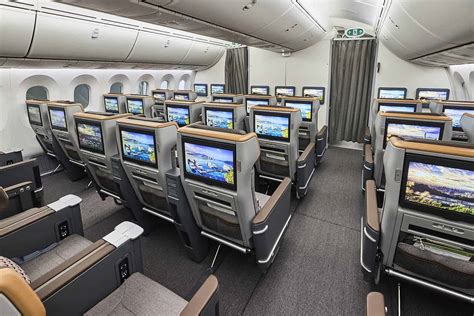
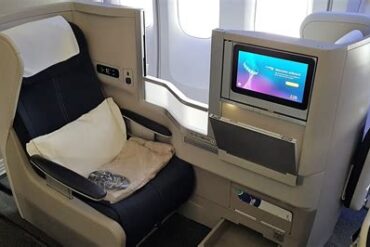
EVA Air did not freeze its innovation in the 1990s. The airline’s latest Premium Economy cabins on the Boeing 787 Dreamliner show how far the concept has matured. Seat pitch around 42 inches creates legroom that feels generous rather than grudging. Recline is engineered for actual rest, not theatrical movement that steals space from the passenger behind. Footrests support sleeping postures. Privacy head dividers acknowledge that long-haul fatigue is as much social as it is physical. Storage space is designed for the small rituals of modern travel, the phone, the tablet, the book you swear you will read.
Entertainment screens in this cabin are large enough to matter. A 15.6-inch high-definition display changes how time passes. On long flights, entertainment is not distraction. It is pacing. A better screen makes the journey feel segmented into digestible episodes rather than one long ache. EVA Air’s attention to these details shows an understanding of time perception, not just seat geometry. The airline continues to treat Premium Economy as a first-class citizen in design thinking, not as a revenue hack bolted onto the cabin map.
Virgin Atlantic and the Global Popularization of Premium Economy
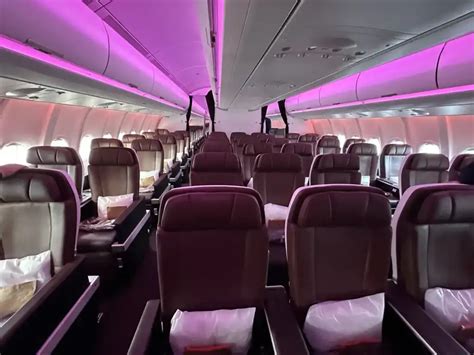
Around the same historical moment, Virgin Atlantic introduced its own middle cabin concept, initially branded as Mid Class and later popularized as Premium Economy. While EVA Air formalized the category with a dedicated cabin on the Boeing 747, Virgin Atlantic gave the idea cultural oxygen. Its transatlantic routes connected business travelers who were increasingly constrained by corporate budgets but still expected a functional workspace and physical comfort. Virgin’s product blended seat improvements with ground and onboard perks that made the cabin feel like a club rather than a compromise.
The debate over who arrived first misses the larger point. Innovation often emerges when multiple minds respond to the same pressure. Long-haul discomfort had become an economic inefficiency. EVA Air solved it structurally. Virgin Atlantic sold it narratively. Together, they seeded a global category that airlines across continents would refine and standardize. Today, the phrase Premium Economy feels inevitable, as if it were always part of aviation’s vocabulary. It was not. It was invented because someone noticed a gap between human bodies and aluminum tubes.
Why Premium Economy Endures as a Product Category
Premium Economy endures because it aligns with how people actually experience long-distance travel. Humans are adaptable, but adaptation has limits. Ten hours in a tight seat taxes joints, circulation, mood, and patience. Offering a middle tier that meaningfully improves those variables without demanding elite-level spending is not just clever marketing. It is humane design. Airlines that treat this cabin as a serious product rather than a margin experiment tend to build stronger loyalty among travelers who fly long-haul a few times a year. These passengers are not chasing champagne. They are chasing arrival without resentment.
The endurance of Premium Economy also reflects a broader truth about transportation design. Progress often happens not by perfecting the extreme ends of experience, but by improving the middle where most people live. EVA Air’s original insight was not that luxury sells. Luxury always sells. The insight was that comfort scales. Once that door opened, the industry walked through it with enthusiasm.
The Quiet Revolution That Changed How We Sit in the Sky
The introduction of Premium Economy did not make headlines in the way new aircraft types or supersonic dreams do. Its revolution was anatomical. Knees gained space. Backs gained mercy. Time gained texture. EVA Air’s decision in 1992 to carve out a middle cabin reshaped how airlines think about value, space, and human tolerance for confinement. It also reshaped how passengers think about what they deserve from a long flight. The product’s global adoption is proof that the idea tapped into something durable about human comfort and economic reasonableness.
In the strange floating cities we call aircraft, small design decisions ripple outward into culture and commerce. A few inches of legroom can change how a journey is remembered. A slightly wider seat can turn dread into tolerable boredom, and tolerable boredom into something almost pleasant. The world did not need a new cabin class. It needed someone to notice that the middle of the plane had been ignored for too long.