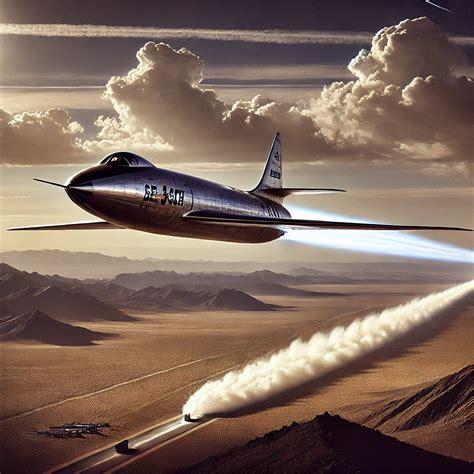
For centuries, humanity dreamed of flying faster than sound itself. Pilots once described the sound barrier as an invisible wall in the sky — a violent aerodynamic threshold where aircraft lost stability, controls stiffened, and engines struggled against brutal shockwaves. Breaking through it was not simply a technological milestone; it was an act of engineering defiance.
Today, supersonic flight remains one of aviation’s most elite achievements. While countless fighter jets have exceeded Mach 1, only a select group of aircraft became icons because of how they transformed commercial travel, strategic warfare, reconnaissance, and aerospace research. Some carried passengers across oceans at twice the speed of sound. Others flew so high and fast that missiles could barely reach them. One even touched the edge of space while traveling at hypersonic velocity.
These aircraft did far more than break records. They reshaped military doctrine, geopolitical competition, and humanity’s understanding of high-speed flight.
Douglas DC-8: The Passenger Jet That Accidentally Entered Supersonic History
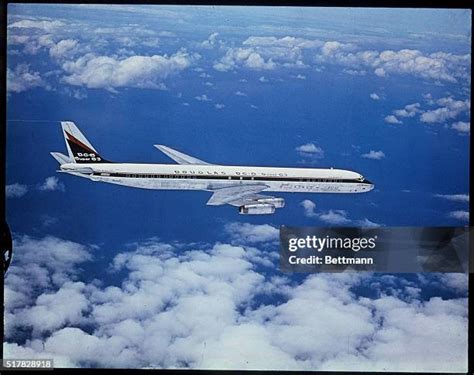
The Douglas DC-8 was never designed to become a supersonic aircraft. Introduced during the golden age of jet travel in the late 1950s, the four-engine narrowbody airliner competed directly against the Boeing 707 and quickly became one of the most recognizable commercial aircraft of its era. Yet despite its conventional design, the DC-8 achieved something no passenger jet had ever done before.
In August 1961, a specially prepared DC-8-43 entered aviation history during a controlled dive test. Engineers wanted to gather aerodynamic data on a new wing leading-edge design, and the aircraft was intentionally pushed beyond its normal operating envelope. During the descent, the aircraft accelerated to Mach 1.012, officially becoming the first commercial airliner to break the sound barrier.
The achievement lasted only 16 seconds, but it demonstrated an important truth about high-speed aerodynamics: many subsonic aircraft could exceed Mach 1 under specific conditions, especially during steep dives. The event also shattered public assumptions that passenger aircraft were fundamentally incapable of supersonic performance.
Pilots involved in the test later described the experience as remarkably stable, an impressive feat considering the limited understanding of transonic airflow at the time. The aircraft eventually entered regular airline service with Canadian Pacific Air Lines, carrying passengers normally for decades after its historic flight.
Unlike dedicated supersonic aircraft, the DC-8 cruised at approximately Mach 0.82 during commercial operations. Still, its brief supersonic sprint secured its place in aerospace history.
Rockwell B-1B Lancer: America’s Last Supersonic Strategic Bomber
During the Cold War, speed was considered the ultimate survival tool for strategic bombers. Military planners believed aircraft flying faster and higher than enemy interceptors could penetrate Soviet airspace and deliver nuclear weapons before defenses reacted effectively.
This philosophy eventually produced the Rockwell B-1 program.
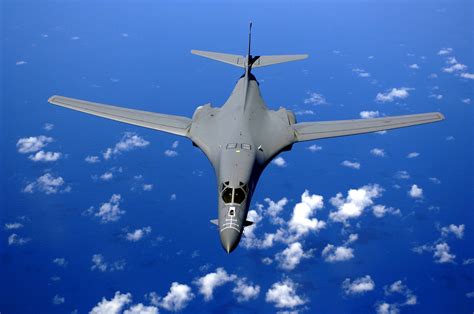
The original B-1A prototype was designed as an extraordinarily fast bomber capable of reaching Mach 2.0. It featured variable-sweep wings, advanced avionics, and low-altitude penetration capability. However, rapid advances in Soviet radar technology and surface-to-air missile systems forced the United States Air Force to rethink the aircraft’s mission.
The result was the redesigned B-1B Lancer.
Rather than maximizing raw speed, engineers focused on reducing radar visibility while maintaining supersonic capability. The B-1B’s top speed dropped to Mach 1.25, but its survivability improved dramatically. The aircraft became optimized for terrain-following flight at low altitude, using speed and electronic warfare systems to evade detection.
The B-1B remains one of the most visually intimidating aircraft ever built. Its sleek fuselage, massive engine intakes, and variable-geometry wings give it an unmistakable predatory appearance. Even decades after entering service, the bomber still represents a central component of America’s long-range strike capability.
Modern missions rarely require the aircraft to operate at maximum speed. Instead, the Lancer typically carries large payloads of precision-guided conventional weapons while operating at subsonic speeds. Nevertheless, its ability to exceed Mach 1 ensures it remains among the world’s rare operational supersonic bombers.
Concorde: The Supersonic Airliner That Defined Luxury Aviation
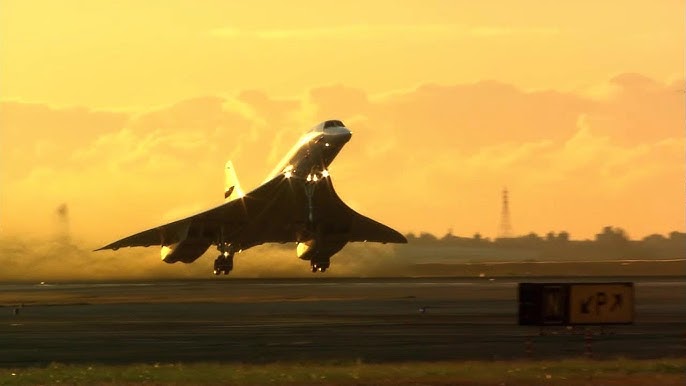
No aircraft symbolizes supersonic travel more completely than Concorde.
Developed jointly by Britain and France during the 1960s, Concorde was more than an airliner. It was a political statement, an engineering masterpiece, and a declaration that Europe intended to remain a global aerospace power during an era dominated by the United States and the Soviet Union.
The aircraft’s design remains astonishing even by modern standards. Its slender delta wing minimized drag at high speeds, while the iconic drooping nose improved pilot visibility during takeoff and landing. Four afterburning Rolls-Royce/Snecma Olympus engines propelled the aircraft to a cruising speed of Mach 2.04, allowing passengers to cross the Atlantic in roughly three and a half hours.
At cruising altitude, Concorde flew at approximately 60,000 feet, high enough for passengers to see the curvature of the Earth and the darkening sky above the atmosphere. The aircraft also experienced measurable thermal expansion during flight because friction heated the fuselage significantly at supersonic speeds.
Inside the cabin, Concorde offered an entirely different travel experience from modern commercial aviation. Passengers included celebrities, diplomats, financiers, and royalty. Flying aboard Concorde became a symbol of prestige and exclusivity.
Despite its glamour, the aircraft struggled commercially. High fuel consumption, sonic boom restrictions, limited seating capacity, and expensive maintenance made profitability extremely difficult. Only 14 passenger-carrying Concordes entered operational service.
Yet commercially successful or not, Concorde achieved something far more enduring: it proved that routine supersonic passenger travel was possible.
Tupolev Tu-160: Russia’s Massive Mach 2 Nuclear Bomber
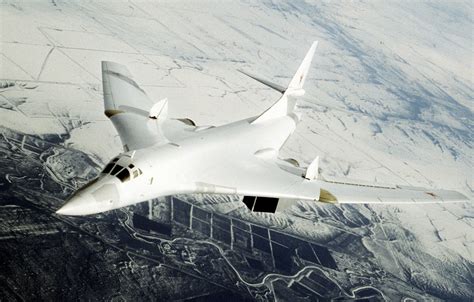
The Tupolev Tu-160, known by NATO as the “Blackjack,” remains the largest and heaviest supersonic bomber ever constructed. Developed during the final decades of the Soviet Union, the aircraft embodied Soviet military thinking at its most ambitious and intimidating.
With its enormous variable-sweep wings and four powerful Kuznetsov afterburning turbofan engines, the Tu-160 could reach Mach 2.05 while carrying nuclear or conventional cruise missiles across intercontinental distances. The aircraft was intended to overwhelm enemy defenses through speed, range, and payload capacity.
The collapse of the Soviet Union dramatically disrupted production. Many completed aircraft ended up in newly independent Ukraine, while Russia inherited only part of the fleet. Political negotiations later transferred several bombers back to Russia in exchange for debt settlements and energy agreements.
Today, the Tu-160 serves primarily as a strategic missile platform rather than a penetrating bomber. Modern air defense systems make high-speed deep penetration missions extraordinarily dangerous, even for supersonic aircraft. Instead, Tu-160 crews typically launch long-range stand-off cruise missiles from well outside heavily defended airspace.
Even so, the aircraft remains a powerful symbol of Russian aerospace engineering. The Tu-160’s combination of speed, range, and payload capacity has encouraged Russia to restart limited production decades after the original program slowed.
The aircraft’s white anti-flash paint scheme, immense size, and thunderous engines make it one of the most imposing bombers still flying anywhere in the world.
Tupolev Tu-22M Backfire: The Carrier Killer Built For Cold War Naval Warfare
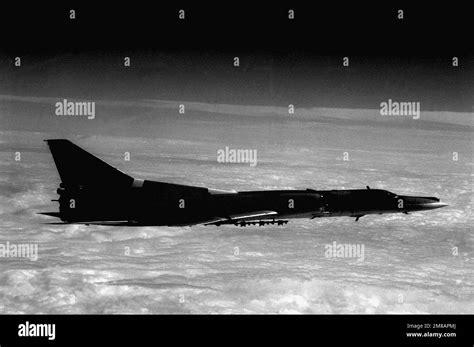
The Tupolev Tu-22M “Backfire” emerged from one of the Cold War’s most dangerous strategic realities: the Soviet Union needed a credible method to threaten American aircraft carrier groups.
Aircraft carriers represented floating military fortresses protected by layers of fighter aircraft, radar systems, and missile defenses. Penetrating those defenses required exceptional speed and long-range strike capability. The Tu-22M was built specifically for that mission.
Capable of reaching Mach 1.88, the aircraft combined variable-sweep wings with long operational range and heavy anti-ship missile payloads. Soviet planners envisioned coordinated attacks in which multiple Backfires launched massive salvos of supersonic cruise missiles against carrier formations.
The threat posed by the Tu-22M heavily influenced American naval aviation strategy. The United States Navy developed aircraft such as the Grumman F-14 Tomcat partly to intercept Backfires before they could launch their missiles.
Although often categorized as a strategic bomber, the Tu-22M functioned more accurately as a maritime strike aircraft optimized for naval warfare. Over time, however, its role expanded into conventional bombing and long-range strike missions.
Modern Russian operations rarely exploit the aircraft’s full supersonic performance. Like the Tu-160, the Backfire now primarily conducts stand-off attacks using long-range munitions. Aging airframes and operational losses have also reduced fleet numbers significantly.
Still, few aircraft capture Cold War naval paranoia more effectively than the Tu-22M.
Tupolev Tu-144: The Soviet Supersonic Dream That Collapsed
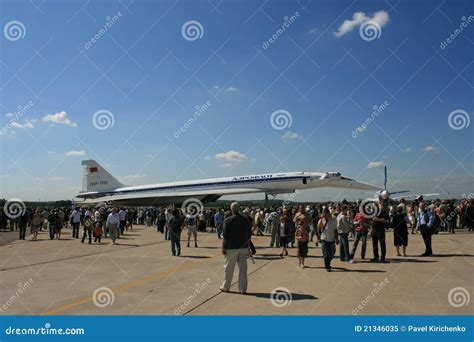
The Tupolev Tu-144 is often remembered as “Concordski,” a nickname reflecting both its resemblance to Concorde and the skepticism surrounding the Soviet program. Yet the aircraft deserves recognition as one of the most daring aerospace projects ever attempted by the USSR.
Remarkably, the Tu-144 actually flew before Concorde. Soviet engineers rushed development aggressively in an effort to claim technological prestige during the Cold War space and aviation race. Unfortunately, that urgency created severe operational problems.
The aircraft achieved a maximum speed of Mach 2.15, slightly faster than Concorde. On paper, it appeared enormously impressive. In practice, however, reliability issues plagued the program from the beginning.
One of the most devastating moments came during the 1973 Paris Air Show, when a Tu-144 crashed dramatically in front of international spectators. The disaster damaged the aircraft’s reputation permanently and exposed the intense political pressure driving the project.
Passengers who later flew aboard the aircraft described the cabin as exceptionally loud and uncomfortable. Fuel efficiency was poor, engine reliability remained problematic, and maintenance demands were enormous. Only one regular passenger route ever operated: Moscow to Alma-Ata in present-day Kazakhstan.
Following another serious accident, the Soviet government quickly withdrew the aircraft from passenger service after just 102 commercial flights.
Ironically, the Tu-144 found new life years later through cooperation with NASA. Modified examples equipped with Western technology became flying laboratories for future supersonic research programs during the 1990s.
Its commercial career may have failed, but the Tu-144 remains one of aviation’s boldest and most fascinating technological experiments.
Lockheed SR-71 Blackbird: The Spy Plane That Could Outrun Missiles
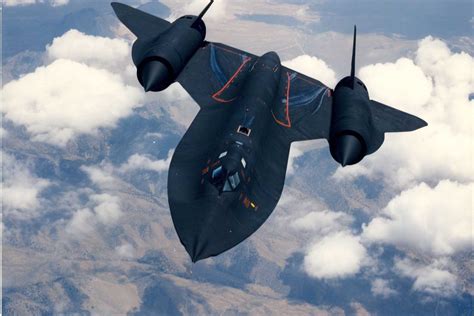
Few aircraft inspire as much awe as the Lockheed SR-71 Blackbird.
Developed by Lockheed’s legendary Skunk Works division during the height of the Cold War, the SR-71 was designed for one purpose: penetrating hostile airspace so quickly and so high that enemy defenses could not stop it.
The aircraft emerged after the Soviet Union demonstrated that the earlier U-2 spy plane was vulnerable to surface-to-air missiles. American intelligence agencies needed something radically faster.
What they received bordered on science fiction.
The SR-71 cruised comfortably above 80,000 feet while sustaining speeds exceeding Mach 3.3. At those velocities, aerodynamic heating became so intense that portions of the aircraft’s titanium skin expanded several inches during flight. Fuel leaked from the aircraft while parked on the ground because the fuselage only sealed properly after heating at high speed.
Its Pratt & Whitney J58 engines remain engineering marvels even today. At extreme velocity, much of the propulsion effectively came from the aircraft functioning like a ramjet rather than a conventional turbojet.
The Blackbird’s operational philosophy was brutally simple. If threatened by missiles, pilots accelerated. In most cases, the aircraft could literally outrun incoming threats.
Despite its extraordinary performance, the SR-71 proved enormously expensive to operate. The end of the Cold War, combined with advancements in satellite reconnaissance, eventually reduced the need for manned strategic reconnaissance aircraft.
The SR-71 officially retired in the late 1990s, but its legend only grew stronger afterward. Decades later, it still feels like a machine from the future accidentally delivered to the past.
North American X-15: The First Hypersonic Aircraft In History
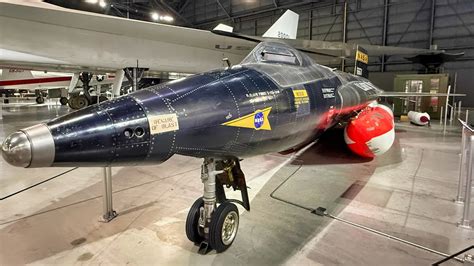
If the SR-71 represented the edge of atmospheric flight, the North American X-15 pushed beyond it entirely.
Developed jointly by NASA, the US Air Force, and the US Navy, the X-15 was less a traditional airplane and more a manned hypersonic research rocket with wings attached. Built during the early space race, the aircraft became one of the most important experimental aerospace vehicles ever created.
Unlike conventional aircraft, the X-15 could not take off under its own power. A modified B-52 bomber carried it to high altitude before release. Once dropped, the rocket engine ignited and accelerated the aircraft to astonishing speeds.
On October 3, 1967, pilot William J. Knight pushed the X-15 to Mach 6.7, making it the fastest manned aircraft ever flown. At those speeds, the aircraft traveled more than 4,500 miles per hour.
The X-15 also reached altitudes above 100,000 feet, with several pilots technically crossing into space according to certain definitions of astronaut qualification. Among those pilots was Neil Armstrong, years before his Apollo 11 moon landing.
Flying the X-15 demanded unimaginable precision. Aerodynamic controls became less effective at extreme altitude, forcing pilots to rely partially on reaction-control thrusters similar to spacecraft systems. The aircraft essentially bridged the gap between aviation and astronautics.
Many technologies later used in the Space Shuttle and modern spacecraft originated from X-15 research data. High-temperature materials, hypersonic aerodynamics, reentry physics, and pilot survival systems all benefited from the program.
Even nearly six decades later, no operational manned aircraft has surpassed the X-15’s hypersonic record. Its achievements remain one of aerospace engineering’s greatest triumphs — proof that humanity could not only break the sound barrier, but utterly dominate it.