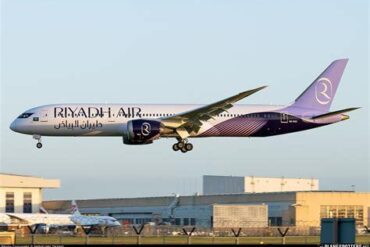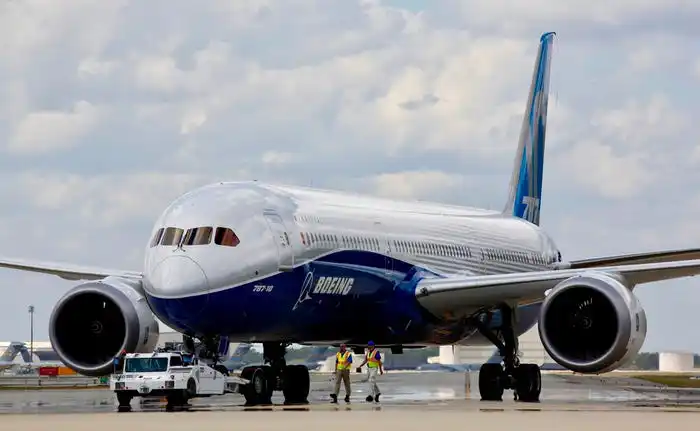
The Boeing 787 Dreamliner has become the most successful widebody airliner ever built, with thousands of orders and a production line that has never stopped evolving. Yet the aircraft leaving Everett and North Charleston today are fundamentally different machines from the first airframes that rolled out of the factory between 2009 and 2011. The first Dreamliners carried roughly 22,000 pounds (9,979 kilograms) more structural weight than their design targets, and that excess mass was not the result of a single miscalculation. It was the price of pioneering an entirely new way to build commercial aircraft while writing the certification rulebook for composite widebodies in real time. Understanding exactly where that weight came from, how Boeing removed it, and what it cost the airlines that took delivery of those early airframes reveals one of the most instructive engineering stories in modern aviation.
Boeing launched the 787 as the first clean-sheet commercial airliner design in decades, and it packed the aircraft with technologies that had never before been combined on a passenger jet. The airframe was built primarily from carbon-fiber reinforced polymer (CFRP) instead of aluminum. The aircraft abandoned traditional pneumatic bleed air in favor of a more electric architecture that generated electricity for air conditioning, wing anti-ice, and cabin pressurization. It flew with a lower cabin altitude and higher humidity, and it promised twenty percent better fuel efficiency than the 767 it replaced. Every one of those promises was real, but each one also introduced a new engineering problem that had to be solved under intense commercial pressure, and most of those solutions arrived carrying extra pounds.
The root cause of the early weight problem was schedule. Boeing was determined to beat a next-generation Airbus competitor to market, so it began building airplanes before engineers had finished the design. This accelerated approach meant that design changes, structural reinforcements, and subsystem fixes had to be retrofitted into airframes that were already partially assembled. When ground testing later exposed unexpected structural weaknesses, the fixes could not be cleanly folded into a mature design. Instead they were bolted, cut, and patched onto aircraft that were already largely built, and every one of those patches added permanent dead weight that no amount of later refinement could remove from those specific airframes.
The Side-Of-Body Delamination That Added Thousands Of Pounds
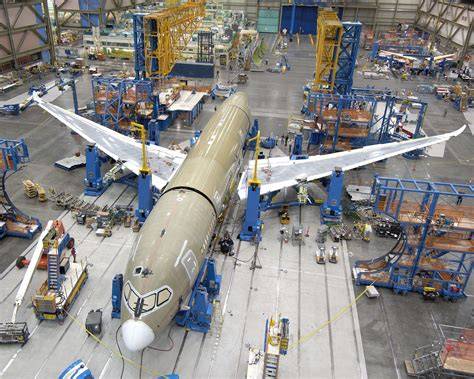
The most significant single source of excess weight emerged during ground testing in 2009, when engineers bent a 787 wing upward to simulate the loads it would experience in flight. The test revealed far greater stress than expected in the side-of-body structure where the wing attaches to the fuselage. The problem was delamination of the carbon-fiber plies, in which the individual layers of composite fabric physically separate from one another under high tension and compression. In the early 787s, this separation caused the split layers to splay outward in a failure mode that engineers visually described as “flowering.” The most severe manifestation occurred at the side-of-body joint, where the upper wing skin meets the center fuselage section.
During the critical May 2009 limit-load wing-bend test, the massive upward deflection of the wings concentrated unexpected local shear stress at the squared-off ends of seventeen stringers running along the fuselage. The compression forces cracked the layered plies at those stringer ends and caused them to delaminate. Because the test airframes were already fully built, Boeing could not simply redesign the joint and restart production. To satisfy Federal Aviation Administration (FAA) certification requirements, engineers devised a retrofit that required workers to manually cut U-shaped stress-relief notches into the end of every stringer and bolt them down using dense titanium reinforcement brackets and dual-sided metallic fittings. Those heavy metal patches, applied across 34 separate stringer locations, instantly saddled the early fleet with thousands of pounds of permanent structural weight.
The episode exposed a deeper truth about composite airframes that Boeing had to learn in public. Before the 787, commercial aircraft were predominantly aluminum structures, and aluminum is predictable. It dents, bends, and shows visible signs of fatigue long before it fails. Composites behave differently: they can hide internal damage beneath an intact outer skin, which made regulators cautious. Because there was no historical fleet data for an all-composite widebody passenger jet, the FAA required Boeing to demonstrate an ultimate load safety margin of 150 percent, meaning the structure had to withstand one and a half times the absolute maximum load it could ever encounter in service. To guarantee that margin, the initial design overcompensated by laying down excessively thick and heavy composite plies across the entire fuselage, and those conservative margins translated directly into weight.
Why Tens Of Thousands Of Small Parts Broke The Weight Budget
Weight creep on the 787 was not confined to dramatic structural failures. A surprisingly large share of the excess mass came from the accumulation of small secondary components that early weight estimates failed to account for properly: wiring harnesses, brackets, hydraulic hose clamps, fasteners, and the countless minor fittings that hold a modern airliner together. Individually these items weigh almost nothing. Multiplied across an entire widebody fuselage, with thousands of meters of wiring and tens of thousands of fasteners, they added up to a substantial and largely invisible penalty. This is a classic problem in any clean-sheet aircraft program, but it was amplified on the 787 because so much of the architecture was new, meaning there were no established component baselines to draw from.
The aircraft’s revolutionary subsystem architecture compounded the issue. Boeing eliminated traditional pneumatic bleed-air systems, which on conventional jets tap high-pressure hot air directly from the engines to run air conditioning packs, power wing anti-ice, and drive pneumatic pumps. In their place, the 787 became a More Electric Aircraft (MEA), replacing much of that plumbing and many hydraulic systems with electrically driven equipment. The design dramatically reduced thermodynamic efficiency losses and optimized engine fuel burn, which is why the architecture is now praised as one of the Dreamliner’s finest features. But the initial execution of the all-electric concept was considerably heavier than projected, and that weight arrived in several concentrated blocks.
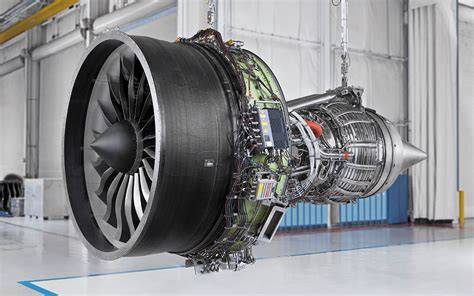
To generate enough electricity to run the cabin environmental control systems and wing anti-ice, Boeing mounted four 250 kVA Variable Frequency Starter Generators (VFSGs) on the engines. To keep the massive motor control units and electrical liquid pumps from overheating, the company installed a dedicated, independent Power Electronics Cooling System (PECS) with heavy liquid-cooling loops, specialized heat exchangers, coolant pumps, and reservoirs. Instead of using hot engine bleed air to pressurize the cabin, the 787 relies on four large, electrically driven Cabin Air Compressors (CACs). Combined with heavy-gauge copper wiring, massive power distribution panels, solid-state power controllers, and the structural reinforcement needed to carry and cool nearly 1.5 megawatts of electricity through a composite hull, the electrical system added thousands of pounds, and the PECS hardware offset much of what removing the pneumatic plumbing had saved.
The Terrible Teens That Airlines Refused
The cumulative effect of these compromises produced the airframes that came to be known as the “terrible teens.” The first and second Dreamliners built, ZA001 and ZA002, flew as prototypes, but the aircraft that followed into the early production block were heavy enough that airlines refused many of them. The prototype itself emerged nearly 22,000 pounds heavier than its design target. Some of these jets sat in Washington state for years awaiting buyers. Bernstein Research estimated that early 787s could arrive up to eight percent overweight, which translated into a loss of 10 to 15 percent of range. Boeing admitted the problem early and publicly, confirming that its first airplanes were heavy and promising customers the payload they had contracted for.
The weight problem had a direct commercial price. Boeing struggled to find buyers for eleven of its earliest Dreamliners, valued at roughly $1.1 billion, after two airlines dropped their orders. The unfinished aircraft sat at Paine Field in Everett, originally intended for Lion Air, RwandAir, and Transaero. Buyers finally emerged in 2015, when Boeing found takers for ten of the jets. Ethiopian Airlines entered advanced talks for eight aircraft and Air Austral, based on Reunion Island, ordered two. Both carriers accepted a shortened range in exchange for a lower price, which was the only way the economics of those airframes could be made to work.
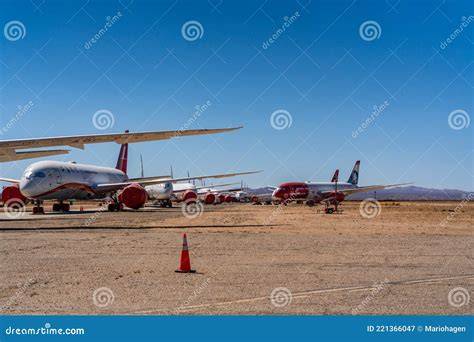
Not every early jet found a home. The most acute case was N947BA, the seventeenth 787 built, which was originally meant for Royal Air Maroc. The airline declined it because of manufacturing issues, and the luxury travel firm Crystal Luxury Air later planned to convert it into a private world-tour aircraft, a plan that collapsed after the COVID-19 pandemic. The jet had been ferried to Victorville, California, in 2017 and stayed there for years, accumulating a flying total of only about 13 hours across its entire life. Its low hours at least made it valuable in pieces. It was eventually dismantled in Roswell, New Mexico, the first teardown of a new, unused 787 anywhere in the world, and its engines and components were returned to service on other Dreamliners. A sister ship, VP-CSC, also built for Royal Air Maroc, last flew in 2017 and sits at Moses Lake Airport in Washington state awaiting the same fate or a buyer.
How Boeing Shed The Weight Through Structural Maturity
The resolution of the weight crisis was gradual rather than dramatic. Only after years of real-world flight-test data had been collected could Boeing safely thin the composite layers and permanently eliminate the heavy titanium brackets on later line numbers. The company worked methodically through the production sequence, and the fleet’s weight problem was substantially resolved starting with the 20th example. Each successive block of aircraft benefited from refinements made possible by the data gathered from those already flying. The CAC assemblies, which had been over-engineered, heavy, and prone to drawing staggering amounts of localized current in early line numbers, were redesigned. Suppliers worked hand in hand with Boeing over the following decade to refine every major system, and the electrical architecture eventually realized the weight-saving potential that had been promised from the beginning.
That persistence paid off commercially. The 787 became the best-selling widebody in aviation history, accumulating 2,489 orders and 1,311 deliveries, with a healthy backlog of 1,178 unfilled aircraft. The program’s stable widebody production became critical as Boeing navigated severe corporate crises elsewhere, including the catastrophic 737 MAX groundings that paralyzed narrowbody handovers and billions of dollars in losses from fixed-price defense contracts like the KC-46 tanker. While the 777X program slipped repeatedly through certification delays, the Dreamliner line provided vital operational cash flow. The aircraft’s swift market penetration arguably forced Airbus to scrap its modest derivative of the A330 and invest billions in the clean-sheet A350 XWB, a decision that reshaped the widebody market and sparked a seventeen-year trade dispute at the World Trade Organization over government subsidies.
The 787’s story is ultimately a lesson in the cost of first-mover innovation. The technologies that make today’s Dreamliner such a capable and efficient aircraft, from composite airframes to more-electric subsystems, were proven at the expense of the early airframes and the airlines that accepted them at a discount. The 22,000-pound gap between the first jets and the ones built now is not a footnote about a flawed airplane. It is a permanent record of the engineering debt that pioneering work incurs, and of the decade-long process of paying it down one line number at a time. Every 787 flying today carries the accumulated knowledge of those heavy, unloved early teens, which is precisely why so few of them ever had the chance to fly at all.