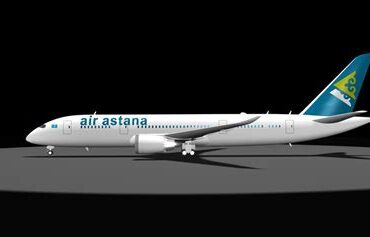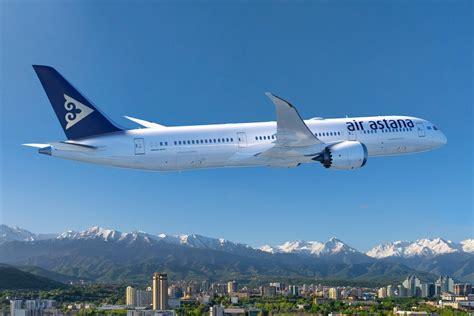
Air Astana’s ambitious expansion into long-haul aviation should have been a straightforward story of growth powered by one of the most advanced aircraft in commercial service. Instead, it has become a case study in how geopolitical realities can quietly derail even the most carefully planned aviation strategies. The airline’s newly ordered Boeing 787-9 Dreamliners—aircraft specifically designed to connect distant cities efficiently—are facing a barrier that has nothing to do with engineering, demand, or profitability.
At the center of the issue lies a paradox: an aircraft built to shrink the world is being constrained by political borders that have effectively expanded it. While the Dreamliner’s range opens doors to routes once considered unviable, those doors can slam shut when airspace access becomes restricted. For Air Astana, the United States represents a logical and lucrative destination. Yet the path there is no longer as simple as drawing a great circle line across a map.
The airline’s leadership has been candid about the challenge. Despite the excitement surrounding the arrival of the first Boeing 787s, expected to enter service imminently, the inability to access key overflight corridors means that direct flights to the US remain out of reach—for now. This is not a matter of fleet readiness or market demand, but rather a consequence of international sanctions and restricted airspace.
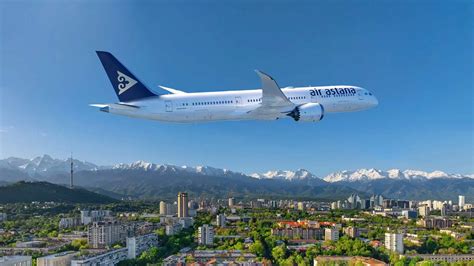
Sanctions And Airspace Closures: The Invisible Barrier
The most significant obstacle blocking Air Astana’s Dreamliners from flying directly to the United States is the continued closure of Russian airspace to certain carriers. In normal circumstances, flights from Central Asia to North America would traverse Russian territory, taking advantage of the shortest and most fuel-efficient routing.
However, sanctions have rendered these routes inaccessible, forcing airlines to consider alternative paths that are longer, more complex, and often economically unviable. For Air Astana, this restriction fundamentally alters the operational equation. Even with the impressive range of the Boeing 787-9, detouring around Russian airspace adds substantial distance, increasing fuel burn, crew requirements, and overall costs.
This is not a marginal inconvenience—it is a structural limitation. The Dreamliner’s capabilities are optimized for efficiency, but efficiency erodes quickly when geopolitical detours stretch routes beyond their optimal range profiles. As a result, what should be a flagship long-haul connection becomes a logistical puzzle with no immediate solution.
The Strategic Importance Of The Boeing 787 Order
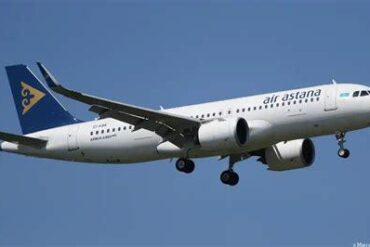
Air Astana’s order for up to 15 Boeing 787-9 aircraft marks a transformative moment in the airline’s history. It is the largest aircraft acquisition the carrier has ever undertaken, signaling a clear intention to evolve from a regional player into a serious contender in long-haul international aviation.
The structure of the order—comprising firm purchases, options, and purchase rights—reflects both ambition and caution. In addition, the inclusion of leased aircraft means the airline could eventually operate up to 18 Dreamliners. This would represent a dramatic shift from its current widebody fleet, which consists of just three aging Boeing 767-300ERs.
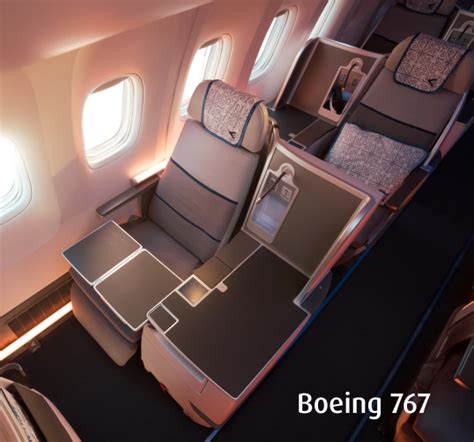
Those existing aircraft have served reliably on routes to destinations such as Dubai, Malé, Phuket, and Seoul. Yet they lack the range, efficiency, and passenger appeal needed to compete on ultra-long-haul routes. The Boeing 787 changes that equation entirely, offering lower operating costs, extended range, and a significantly enhanced onboard experience.
Why The United States Matters For Air Astana
Expanding into the US market is not merely an aspirational goal—it is a strategic necessity. The United States represents one of the largest and most lucrative aviation markets in the world, with strong demand for both business and leisure travel. For a carrier like Air Astana, establishing direct links would unlock new revenue streams and elevate its global profile.
Moreover, Kazakhstan’s geographic position makes it a natural transit hub between Asia and Europe. Adding North America to that network would transform the airline into a true intercontinental connector, capable of competing with established global carriers.
Yet without access to the most direct flight paths, the economics become far less attractive. Longer routes mean higher ticket prices or reduced margins, both of which undermine competitiveness. In a market where passengers have numerous options, even small disadvantages can have outsized impacts.
Operational Realities: Training Before Expansion
Before any long-haul ambitions can be realized, Air Astana must first integrate the Boeing 787 into its operations. This involves extensive pilot training, cabin crew familiarization, and technical adjustments. The airline plans to deploy the aircraft on shorter routes initially, a common industry practice that allows crews to gain experience while minimizing risk.
This phased approach ensures a smooth entry into service, but it also highlights the contrast between operational readiness and geopolitical limitation. The aircraft will be fully capable of flying to the US long before the political conditions allow it.
A Step Change In Passenger Experience
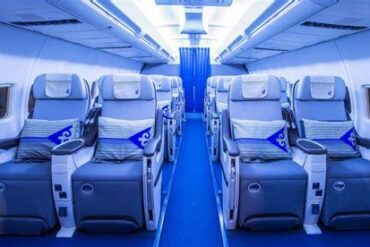
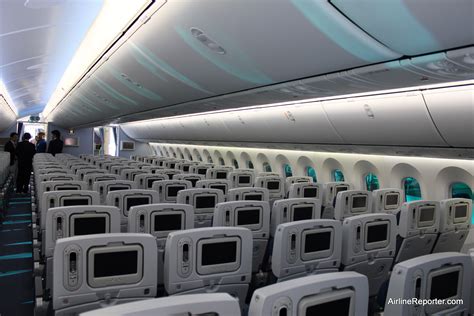
While geopolitics may be limiting route expansion, the arrival of the Boeing 787 will still deliver a significant upgrade for passengers. The Dreamliner is renowned for its larger windows, improved cabin pressure, higher humidity levels, and quieter engines, all of which contribute to a more comfortable journey.
Air Astana’s current Boeing 767 cabins, though functional, reflect an earlier era of aviation design. The transition to the 787 will introduce modern seating configurations, enhanced in-flight entertainment, and a more refined overall product. This is not just an incremental improvement—it is a comprehensive redefinition of the airline’s brand experience.
The Broader Industry Context
Air Astana is not alone in facing these challenges. Airlines around the world have had to adapt to shifting geopolitical landscapes, rerouting flights and recalibrating strategies in response to airspace restrictions. The situation underscores a broader truth: aviation is uniquely vulnerable to political disruption, even in an era of advanced technology and global connectivity.
For aircraft like the Boeing 787, which were designed to maximize flexibility and open new routes, these constraints represent a fundamental contradiction. The technology exists to connect virtually any two points on the globe, yet access to the skies remains subject to forces far beyond the control of airlines or manufacturers.
What Needs To Change For US Flights To Launch
For Air Astana to begin direct flights to the United States, the current restrictions on Russian airspace would need to be lifted or eased. Alternatively, advancements in aircraft performance or changes in operational strategy could make longer alternative routes viable, though these solutions are less immediate.
Until then, the airline faces a waiting game. Its Dreamliners will enter service, passengers will enjoy a superior travel experience, and new routes will likely be added—but the most strategically significant expansion remains on hold.
Conclusion: A Modern Fleet Held Back By Old Conflicts
Air Astana’s Boeing 787 Dreamliners symbolize the future of aviation: efficient, long-range, and passenger-focused. Yet their inability to serve US routes highlights how legacy geopolitical tensions continue to shape modern air travel in profound ways.
The situation is a reminder that progress in aviation is not determined solely by technology or market demand. Sometimes, the biggest barriers are invisible, drawn not on engineering blueprints but on political maps. Until those lines shift, even the most advanced aircraft in the world may find their potential grounded.