The idea of a modern airliner flying “the long way around” sounds inefficient in an era built around speed, fuel optimization, and precision scheduling. Yet that is exactly what is happening across the global aviation industry. Flights that once crossed Siberia directly now arc over the Arctic, Central Asia, or even North America. Journeys that should logically follow the shortest geographic path instead bend thousands of miles off course. Passengers stare at in-flight maps wondering why their aircraft appears to be avoiding entire continents.
The answer lies in a complicated intersection of atmospheric science, geopolitics, airline economics, and global conflict. Airlines are no longer planning routes based solely on distance. They are navigating around closed airspace, war zones, missile risks, jet streams, congestion bottlenecks, and soaring fuel prices. Every deviation adds operational complexity, while every additional hour in the air creates massive costs that eventually ripple through ticket prices.
The modern airline route network has become a living reflection of global instability. What passengers experience as a slightly longer flight is often the visible result of sanctions, military conflicts, diplomatic breakdowns, and strategic airspace control.
For airlines, flying the long way round is no longer an occasional inconvenience. It has become one of the defining operational realities of long-haul aviation in the 2020s.
Why Airlines Rarely Fly Straight Lines
Many travelers assume aircraft simply follow a straight path between two cities. In reality, long-haul flights have always relied on dynamic routing systems designed to maximize efficiency rather than minimize geographic distance.
The shortest route between two points on Earth is known as the great circle route. Because the Earth is spherical, these paths often appear curved on conventional maps. Flights between Asia and North America frequently arc toward the Arctic, while Europe-to-Asia routes historically crossed Siberia because it offered the most direct corridor.
However, airlines do not blindly follow great circle paths. Flight dispatchers constantly analyze weather systems, wind speeds, turbulence zones, military restrictions, volcanic activity, and fuel efficiency models before approving a route.
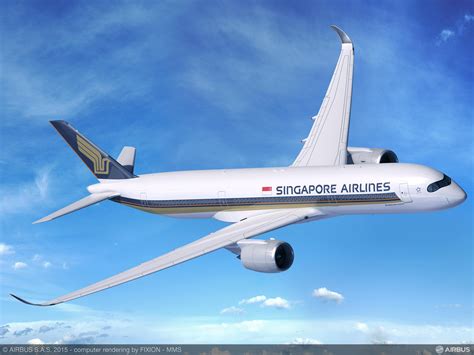
A perfect example is the nonstop service between Singapore and New York JFK. On paper, the aircraft could theoretically fly almost directly over the North Pole. Instead, the eastbound and westbound flights frequently take dramatically different paths depending on atmospheric conditions.
The eastbound service may travel across the Pacific Ocean and Canada, while the return journey often routes across the Atlantic, Europe, the Middle East, and South Asia. Although these paths appear longer, they can actually reduce total flight time by exploiting favorable upper-atmosphere winds.
This counterintuitive strategy demonstrates how aviation efficiency is measured not simply in miles traveled, but in time saved and fuel burned.
The Jet Stream: Invisible Highways In The Sky
At the heart of many routing decisions is one of aviation’s most powerful natural forces: the jet stream.
Jet streams are narrow bands of extremely fast-moving air located high in the atmosphere, usually near cruising altitude for long-haul aircraft. These air currents can exceed 110 miles per hour and generally flow from west to east.
For eastbound flights, the jet stream acts like a giant conveyor belt. Aircraft riding these winds can significantly reduce flight times and fuel consumption. For westbound flights, however, the same winds become a punishing obstacle that increases fuel burn and extends airborne time.
This is why flights between North America and Europe often show different routings depending on direction. Eastbound overnight services from New York to London may aggressively seek stronger jet stream assistance, while westbound daytime flights avoid the strongest headwinds whenever possible.
On ultra-long-haul sectors, these decisions become even more critical. Saving even 30 minutes on a 16-hour flight can translate into substantial fuel savings, reduced crew costs, and improved aircraft utilization.
Jet stream routing also explains some of the world’s strangest flight paths. Flights from Tokyo to Europe may sometimes travel eastward across the Pacific Ocean, continue over North America, then cross the Atlantic before reaching Europe. While geographically absurd at first glance, these routes can become operationally attractive when atmospheric conditions align correctly.
In commercial aviation, wind direction can matter more than raw distance.
How Russian Airspace Once Revolutionized Europe-Asia Travel
For decades after the collapse of the Soviet Union, Russian airspace transformed long-haul aviation economics between Europe and Asia.
When Russia opened Siberian corridors to international airlines, carriers suddenly gained access to highly efficient direct routes connecting major European hubs with East Asia. Flights that once required lengthy detours or technical fuel stops became economically viable nonstop services.
This fundamentally reshaped airline strategy.
Carriers such as Finnair built entire business models around the geographic advantage created by Russian overflight access. Helsinki became one of the fastest gateways between Europe and Asia because flights could efficiently traverse Siberia on nearly straight-line routes.
The opening of Russian airspace dramatically reduced operating costs, shortened block times, and improved aircraft productivity. Airlines could schedule tighter rotations, reduce crew expenses, and carry more cargo profitably.
But these privileges came at a price. Russia charged substantial overflight fees, and access was tightly controlled through bilateral agreements. Not every airline enjoyed equal routing rights, giving some carriers structural advantages over competitors.
For years, however, the system worked. Passengers benefited from shorter flights, airlines expanded route networks, and Europe-Asia connectivity reached unprecedented levels.
Then the geopolitical landscape changed overnight.
The Closure Of Russian Airspace After The Ukraine War
The 2022 invasion of Ukraine triggered one of the most significant disruptions in modern aviation history.
Western sanctions against Russia prompted Moscow to retaliate by closing its airspace to airlines from numerous countries. European, American, Canadian, and several Asian carriers suddenly lost access to the most efficient Europe-Asia corridors.
The impact was immediate and severe.
Flights that once crossed Siberia directly were forced to reroute either north of Russia over the Arctic or south through Central Asia and the Middle East. These diversions added hours to some journeys while sharply increasing fuel consumption.
For airlines operating thin-margin long-haul services, the additional costs became enormous. Fuel expenses surged, crew scheduling became more complicated, and aircraft spent longer periods airborne instead of generating additional revenue on other routes.
Some carriers temporarily suspended routes entirely because they no longer made economic sense under the new restrictions.
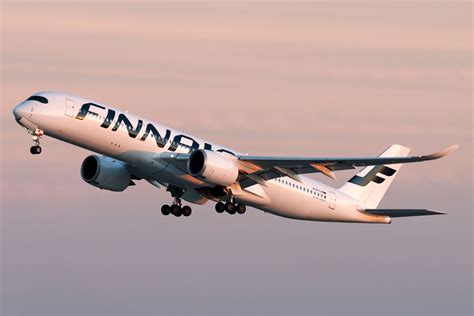
Among the hardest-hit airlines was Finnair. The Finnish carrier had spent years positioning Helsinki as the fastest bridge between Europe and Asia. Once Russian airspace closed, that strategic advantage largely disappeared.
Flights from Helsinki to Tokyo, Seoul, and Shanghai suddenly became dramatically longer. Finnair increasingly relied on polar routings, sending aircraft north over the Arctic Circle before descending into Asia. While technically effective, these routes significantly increased operating costs.
The airline responded by restructuring its network, reducing dependence on Asia, and even leasing aircraft to other carriers to offset financial pressure.
For passengers, the consequences became visible through longer flight durations and rising fares. Flights from Western Europe to Japan now regularly exceed 13 hours, even on modern aircraft optimized for ultra-long-haul efficiency.
Why Some Flights Now Circle The Globe
One of the most fascinating developments in post-2022 aviation has been the emergence of globe-spanning “reverse” routings.
Instead of traveling west from Japan to Europe across Asia, some flights now head east over the Pacific Ocean, cross North America, continue over the Atlantic, and finally arrive in Europe.
The strategy sounds almost irrational until atmospheric conditions are considered.
Strong jet stream assistance over the Pacific and Atlantic can offset much of the added geographic distance. Combined with restricted Siberian access, the eastward routing occasionally becomes more time-efficient than flying westward through crowded southern corridors.
These unusual paths reveal how modern flight planning has become a balancing act between geopolitics and meteorology.
Airlines are effectively solving giant moving equations every day, weighing wind patterns, fuel costs, restricted zones, congestion risks, and operational reliability.
The result is a world where the “shortest” route increasingly depends on political maps as much as physical geography.
Middle East Conflicts Are Creating New Bottlenecks
Russian airspace restrictions are only part of the problem. Instability across the Middle East has introduced another layer of complexity for global airlines.
Flights between Europe and South Asia, Southeast Asia, and Oceania traditionally relied on routes crossing or bordering Middle Eastern airspace. But ongoing regional conflicts and security concerns have forced many carriers to alter these flight paths.
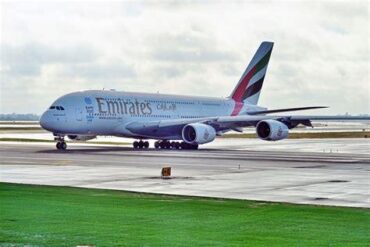
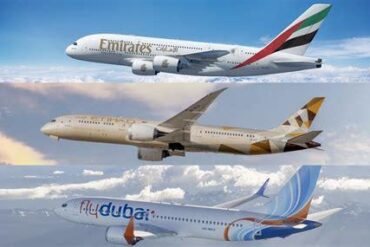
Major airlines including Emirates, Etihad Airways, and Qatar Airways have faced operational disruptions, while foreign airlines repeatedly adjust schedules to account for regional instability.
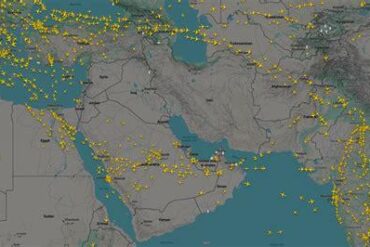
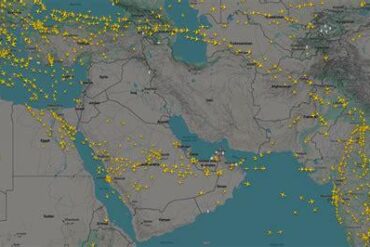
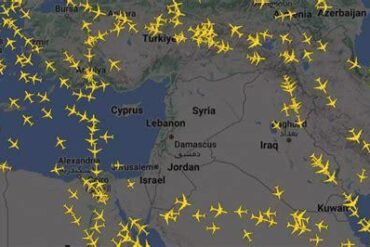
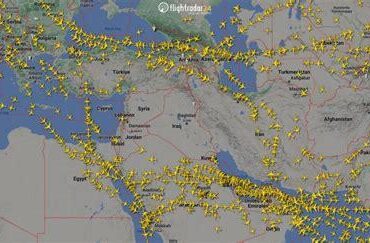
As more aircraft avoid conflict zones, traffic becomes concentrated into narrower corridors over Türkiye, Armenia, Azerbaijan, and Turkmenistan. These alternative pathways are becoming increasingly congested as airlines funnel thousands of long-haul flights through limited safe airspace.
The congestion itself creates additional inefficiencies. Aircraft may face altitude restrictions, rerouting delays, or air traffic sequencing slowdowns that further extend flight times.
Even ultra-long-haul services such as nonstop flights between Australia and Europe are affected. Routes that once enjoyed broader flexibility now compete for access through crowded transit corridors.
The operational pressure on global air traffic systems continues to intensify as geopolitical instability fragments previously open skies.
Pakistan’s Airspace Closure And Air India’s Growing Challenge
Another major disruption emerged when Pakistan restricted access to Indian airlines following heightened military tensions.
Air India, which had previously enjoyed a competitive advantage through access to Russian airspace, suddenly faced new complications on flights to North America.
Services from India to cities such as New York, Newark, Chicago, and Toronto increasingly required technical stops in Europe because Pakistani airspace closures prevented optimal routing.
The consequences extended far beyond scheduling inconvenience.
Every additional stop increases fuel costs, airport charges, crew expenses, and aircraft utilization inefficiencies. Even when passengers remain onboard during technical refueling stops, the operational economics deteriorate rapidly.
At the same time, Air India’s previous advantage over North American carriers narrowed significantly. Earlier, the airline could leverage Russian airspace to offer shorter itineraries to the United States and Canada. Once Pakistan’s restrictions complicated westbound departures, much of that advantage disappeared.
Passengers ultimately absorbed the impact through higher fares and longer travel times.
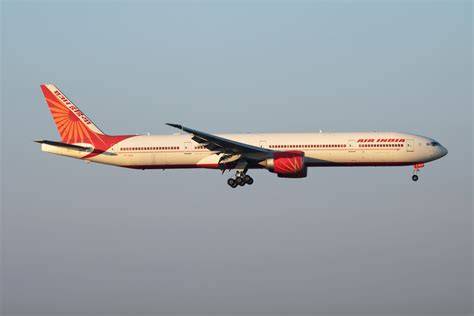
The broader lesson is becoming increasingly clear: modern airline competition is now heavily shaped by geopolitical access rather than purely fleet quality or service standards.
Who Ultimately Pays For These Longer Routes?
Airlines publicly emphasize safety, operational reliability, and geopolitical compliance when discussing rerouted flights. But behind every diversion lies a brutal economic reality.
Longer routes cost vastly more money.
Additional airborne time means increased fuel burn, which remains one of the airline industry’s largest expenses. Longer flights also require expanded crew duty management, higher maintenance exposure, increased navigation charges, and reduced aircraft productivity.
A widebody jet flying two extra hours per sector may lose the ability to operate an additional daily rotation elsewhere in the network. That lost utilization translates directly into reduced profitability.
Cargo operations are also affected. Longer flights may require payload restrictions, forcing airlines to carry fewer freight shipments or passenger bags to remain within operational weight limits.
Despite these rising costs, airlines rarely price tickets strictly according to route economics. Instead, the industry adjusts pricing according to market conditions and competitive dynamics.
However, when nearly every carrier faces the same operational challenges simultaneously, higher fares become easier to sustain industry-wide.
Passengers therefore absorb much of the financial burden indirectly. Ticket prices rise, route availability shrinks, and nonstop services become harder to maintain economically.
In many cases, travelers are paying more for flights that are actually slower than they were several years ago.
The Future Of Long-Haul Aviation In An Era Of Fragmented Skies
The aviation industry was built around the assumption that globalization would continue opening borders and expanding access. For decades, airlines optimized networks around increasingly liberalized airspace agreements and predictable international cooperation.
That assumption is now under strain.
Airspace closures, geopolitical rivalries, military conflicts, and regional instability are reshaping how airlines design global networks. Route planning has evolved from a relatively technical exercise into a strategic geopolitical challenge.
At the same time, airlines are deploying increasingly capable aircraft designed specifically for ultra-long-haul flexibility. Modern jets such as the Airbus A350 and Boeing 787 allow carriers to bypass traditional hubs and adapt to changing airspace realities more effectively than older aircraft generations.
Yet even the most advanced airliner cannot eliminate the costs of geopolitical fragmentation.
The modern passenger experience increasingly reflects this reality. Flights take longer. Ticket prices climb higher. Routing maps look stranger. Technical stops reappear on routes once considered routine.
The world’s skies are becoming more politically divided, and airlines are being forced to navigate an increasingly complicated global landscape one rerouted flight at a time.