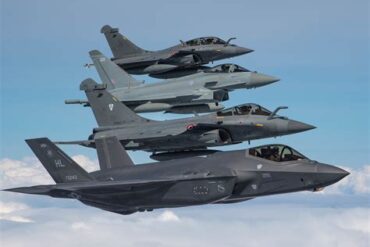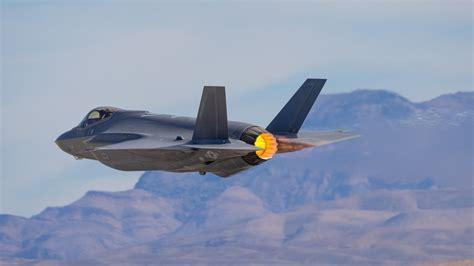
The F-35 Lightning II is not merely a fighter jet; it is a symbol of American technological dominance, military diplomacy, and strategic control. Produced by Lockheed Martin in collaboration with key partners like BAE Systems and Northrop Grumman, the F-35 is the most advanced 5th-generation multirole stealth fighter ever created. Yet, contrary to popular belief, the United States does not seek to sell the F-35 to every willing buyer. Behind the sleek airframe lies a web of security concerns, geopolitical calculations, and policy frameworks that have led to a decisive blacklist of countries.
Why the United States Restricts F-35 Exports
The U.S. government’s approach to selling the F-35 is rooted in two foundational principles: protecting sensitive military technology and preserving Israel’s qualitative military edge (QME). These dual mandates have significantly shaped which nations are deemed trustworthy enough to operate the F-35.
Firstly, the F-35 is a flying supercomputer, equipped with radar-absorbent materials, cutting-edge sensor fusion, electronic warfare capabilities, and integrated logistics systems. The fear is that adversarial access—either through Chinese telecommunications infrastructure or Russian missile systems—could compromise the aircraft’s stealth and data security.
Secondly, under the 2014 U.S.-Israel Strategic Partnership Act, Washington must ensure Israel retains technological superiority in the Middle East. This has led to blocked sales in the region, even to longtime U.S. partners.
The Case of Turkey: From Partner to Pariah
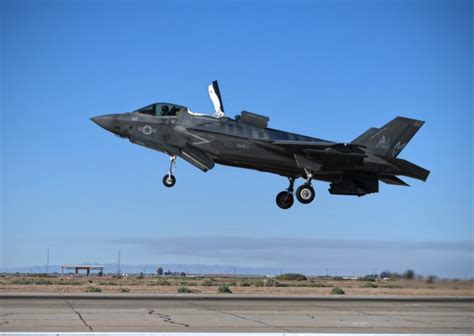
Perhaps the most prominent example of a nation being denied the F-35 is Turkey, a NATO member and original development partner. Turkey had invested $1.4 billion into the program and was slated to receive 100 F-35A jets. Turkish pilots had even begun training on U.S. soil. However, in 2019, the U.S. removed Turkey from the program after it purchased the Russian S-400 missile defense system. This decision was based on concerns that the S-400 could gather data on the F-35 and relay it to Moscow.
Despite multiple Turkish attempts to return to the program—including offers to decommission or isolate the S-400—Washington has not relented. In the interim, Turkey has explored alternatives, such as acquiring Eurofighter Typhoons, advancing its domestic TAI Kaan stealth fighter, and procuring upgraded F-16 Block 70s.
Middle Eastern Nations Denied Access
The United Arab Emirates, Saudi Arabia, Qatar, and Egypt have all shown interest in acquiring the F-35. However, each has faced U.S. opposition, largely driven by the twin concerns of technology leaks and Middle Eastern military balance.
During the Trump administration, tentative deals were made to sell 50 F-35s to the UAE and 20 to Egypt. But these agreements collapsed due to the presence of Huawei 5G infrastructure in both nations and fears they might dilute Israel’s qualitative military edge.
- UAE: Despite having deep economic and military ties with the U.S., the presence of Chinese technology like Huawei 5G triggered national security alarms.
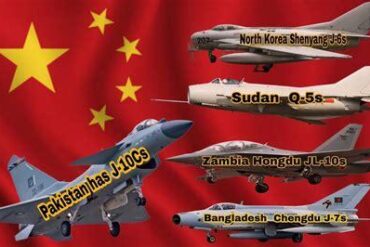
- Egypt: Washington’s hesitation stems from Egypt’s regional positioning and growing defense ties with China, including reported orders for Chengdu J-10C fighters.
- Saudi Arabia and Qatar: Both nations have expressed clear interest in the F-35 but have been rejected, ostensibly to uphold Israel’s QME. In 2025, Saudi Arabia announced a staggering $142 billion in U.S. arms deals, notably excluding the F-35.
Asian Allies and Adversaries: Selective Trust
In Asia, the F-35 has been sold to Japan, South Korea, and Australia—trusted U.S. allies with established defense frameworks. However, other regional players have not been as fortunate.
- Thailand, a major non-NATO ally, has been denied access to the F-35. U.S. officials reportedly cited concerns over Thailand’s warming relations with China, especially under military-backed governments.
- Taiwan, long regarded as a flashpoint between the U.S. and China, has sought the F-35 for decades. Yet, Washington has consistently denied the request due to the risk of Chinese espionage and the fear of triggering a more aggressive response from Beijing. The island is instead receiving heavily upgraded F-16V (Block 70) variants.
- Indonesia, after dropping a plan to purchase Russian Su-35s under U.S. pressure, turned to the F-35. However, the U.S. rejected the request in 2020, citing long wait times and cost. In reality, concerns over Indonesia’s ties with China, as evidenced by Huawei infrastructure and Russian weaponry, likely played a decisive role.
Nations Under Watch: The Dynamic Export Landscape
While several nations are currently blacklisted, the list is not static. Geopolitical shifts and diplomatic overtures could lead to reversals in the future.
- India, despite operating Russian S-400s and various foreign systems, has seen increasing military cooperation with the U.S. Recent statements from U.S. officials suggest that India may become a future F-35 candidate, depending on strategic alignment.
- Morocco, largely removed from regional conflicts and maintaining close ties with Washington, is reportedly close to finalizing a deal to purchase F-35s. This would mark a rare case of a North African nation gaining access.
Lessons from History: Fighter Jet Exports Gone Wrong
The cautionary tales shaping U.S. policy are grounded in history. During the Cold War, the U.S. sold F-14 Tomcats to Iran, only to see the Islamic Revolution sever ties and turn those fighters against U.S. interests. In the 1980s, F-16s were sold to Venezuela, a move that later backfired when the country threatened to sell them to China.
Such precedents explain why the U.S. has imposed extreme end-user conditions on the F-35. Export versions must remain unaltered, with software updates controlled exclusively by the U.S. military. Only Israel has been granted limited permission to customize the F-35 with indigenous systems and weapons.
Israel’s Unique Privilege
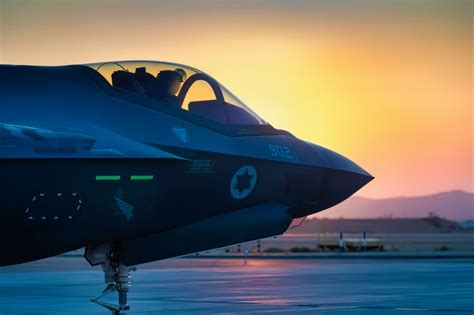
The Israeli Air Force (IAF) operates the F-35I “Adir”, a modified version of the F-35A tailored for its operational needs. It remains the only foreign user allowed to make deep modifications to the jet’s systems, including sensor packages and weapon integration.
This special arrangement is part of Washington’s broader policy to ensure Israel’s absolute aerial dominance in a volatile region. Israeli F-35s have already been used in combat, striking targets in Syria, Lebanon, and Iran with impunity.
To ensure exclusivity, Israeli pilots with dual citizenships are barred from flying the F-35. Washington keeps tight control over mission data, logistics software (ALIS/ODIN), and maintenance cycles.
The Broader Export Landscape: Historical and Current Practices
The F-35 is not the first aircraft subjected to strict U.S. export controls. The F-22 Raptor, perhaps the most capable air superiority fighter to date, was permanently banned from export by Congress in 1998. Even NATO allies like Japan and the UK were denied access.
During the Cold War, F-15 Eagle exports were limited to select allies, including Israel, Japan, and Australia. For a time, the U.S. even hesitated to sell the more ubiquitous F-16 to Latin American nations.
These restrictions highlight a consistent theme: the U.S. only exports advanced aircraft when strategic alignment, trust, and technical safeguards are assured.
A Strategic Tool in U.S. Foreign Policy
The F-35 is far more than an aircraft—it is a strategic lever in the balance of global power. The U.S. uses the jet’s exclusivity as a bargaining chip in broader diplomatic negotiations. By offering the F-35, Washington rewards allies for compliance, alignment, and strategic cooperation.
Conversely, denying access serves as a clear signal of distrust or disapproval. The list of rebuffed countries—Turkey, UAE, Egypt, Taiwan, Saudi Arabia, Indonesia, Thailand, and Qatar—underscores the complex calculus behind each sale.
Conclusion: Power, Policy, and Precision
The F-35 represents the cutting edge of modern warfare, and with that comes unparalleled responsibility in its distribution. The United States will continue to restrict access to the F-35 based on national security concerns, regional stability, and geopolitical dynamics. Each decision is guided not by profit margins, but by the enduring principles of technological safeguarding and strategic superiority.
As the world continues to evolve, so too will the map of F-35 export approvals and rejections. For now, the aircraft remains the United States’ most closely guarded military asset, entrusted only to a select few.