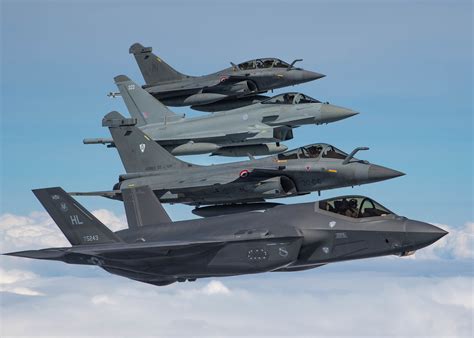
In a world where military power is often measured by sheer scale, the global conversation usually fixates on the United States, China, and Russia. Their defense budgets are colossal, their air fleets immense, and their geopolitical reach undeniable. Yet scale can be deceptive. When fighter jets are measured per capita, a very different hierarchy emerges—one that rewards strategic urgency, geography, and hard-edged threat perception over raw national size.
The past year alone underscored why air power remains the sharpest tool in modern warfare. From Eastern Europe to the Middle East and across the Indo-Pacific, conflicts repeatedly demonstrated that the side controlling the skies controls the tempo of war. Air superiority shortens campaigns, limits casualties, and reshapes political outcomes before ground forces fully engage.
This is where population-adjusted analysis becomes revealing. Large nations must spread their air assets across vast territories and massive populations. Smaller states, especially those living under constant strategic pressure, concentrate resources with almost surgical intensity. The result is an air power density that quietly eclipses that of global giants.
Why Per Capita Air Power Tells a Deeper Strategic Story
Fighter jets per capita function much like GDP per capita in economics. Absolute numbers show capacity, but ratios reveal priorities. A country fielding hundreds of advanced jets for a relatively small population signals something profound: defense is not just a budget line, it is a national obsession.
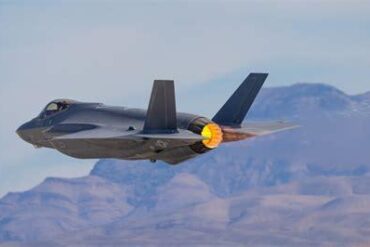
The United States operates nearly 2,800 combat aircraft, including around 650 fifth-generation fighters such as the F-35 and F-22. China follows with close to 2,000 fighters, and Russia maintains roughly 1,600, including its emerging Su-57 fleet. These numbers are staggering—until population is factored in. Spread across hundreds of millions of citizens and enormous landmasses, even these fleets thin out.
Smaller nations lack that luxury. They cannot trade space for time. Their defense doctrine prioritizes immediate air dominance, rapid response, and deterrence through visible strength. This strategic compression explains why four relatively small countries now dominate the global rankings for fighter jets per capita.
Israel: The Unchallenged Leader in Air Power Density
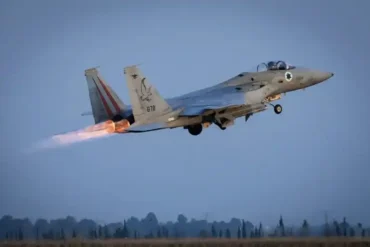
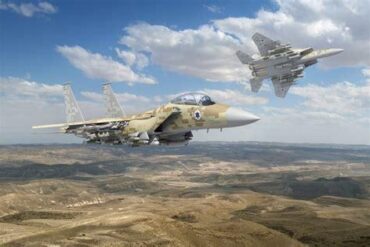
Israel sits alone at the top of the table. With a population of roughly 10 million and a combat fleet estimated between 340 and 400 fighter jets, Israel maintains approximately one fighter aircraft for every 25,000 to 30,000 people. No other nation comes close.
This density is paired with exceptional quality. Israel’s fleet includes F-35I Adir stealth fighters, extensively modified to meet unique operational requirements, alongside large numbers of F-16s and F-15 variants, including the long-range F-15I “Ra’am.” These aircraft are not symbolic assets; they are flown, tested, and refined in real combat conditions.
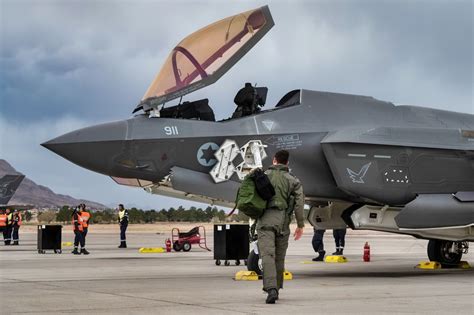
Israel’s air dominance is not accidental. Surrounded by adversaries and lacking strategic depth, it relies on overwhelming air superiority to neutralize threats before they reach its borders. This approach has repeatedly proven decisive, particularly since the October 2023 Hamas attack, after which Israeli air operations demonstrated speed, precision, and escalation control unmatched in the region.
Underlying this dominance is the Qualitative Military Edge (QME) doctrine, a long-standing U.S. policy commitment ensuring Israel retains technological superiority over potential regional adversaries. Codified into American law in 2008, QME shapes arms transfers and reinforces Israel’s already formidable per-capita air power advantage.
Greece: Air Superiority as Strategic Equalizer
Greece ranks second, and its position is rooted in history rather than ambition. With a population of about 10.4 million and nearly 230 combat aircraft, Greece maintains one of the densest air forces in Europe. This concentration reflects decades of strategic tension with Turkey, particularly following the division of Cyprus in 1974.
Athens has long accepted that it cannot match Ankara in population or overall military size. Instead, it pursued air superiority as a counterbalance. The result is a highly diverse and modern fleet, including large numbers of F-16s, many upgraded to the advanced Viper configuration, alongside Rafale fighters and upgraded Mirage aircraft.
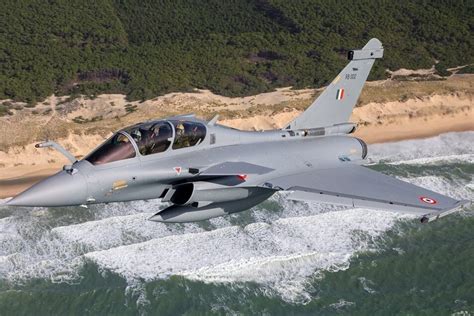
Greece’s pending acquisition of F-35 fighters further strengthens its per-capita advantage, embedding stealth capabilities into an already dense force structure. For Greece, air power is less about projection and more about denial—ensuring no adversary can operate freely over contested airspace.
Singapore: Precision Air Power for a City-State
Singapore’s inclusion may surprise casual observers, but its logic is unmistakable. With a population of roughly six million, the city-state fields about 100 advanced combat aircraft, including F-15SGs and F-16s, yielding roughly one fighter per 60,000 people.
Space constraints shape Singapore’s defense philosophy. There is no hinterland to absorb strikes, no room for prolonged mobilization. The Republic of Singapore Air Force is designed for immediate, decisive response, emphasizing training, readiness, and technological edge over numerical mass.
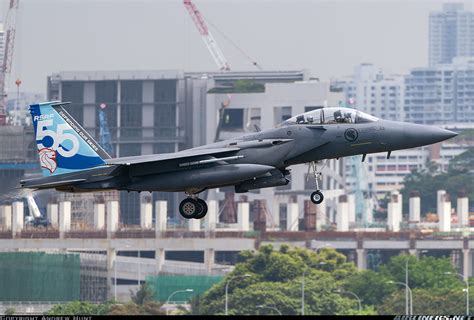
Singapore’s confirmed acquisition of F-35 fighters, with deliveries beginning imminently, reflects long-term planning rather than reaction. By integrating stealth aircraft into a compact, elite force, Singapore ensures its air power remains credible despite regional military expansion around it.
Taiwan: Dense Air Power Under Growing Pressure
Taiwan ranks fourth, maintaining over 300 fighter jets for a population of approximately 23.9 million, translating to about one fighter per 80,000 people. Like Greece, Taiwan understood early that it could not compete symmetrically with its larger adversary. Air power became its strategic cornerstone.
The island operates a mixed fleet of upgraded F-16V fighters, Mirage 2000-5s, and indigenous F-CK-1 Ching-kuo aircraft. These platforms are optimized for rapid interception and layered defense rather than long-range projection.
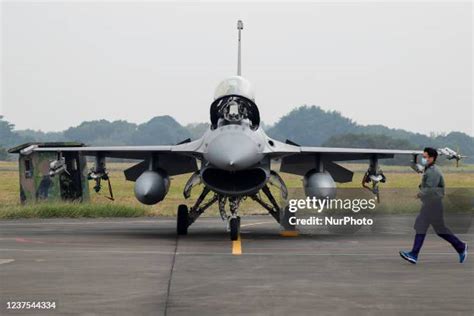
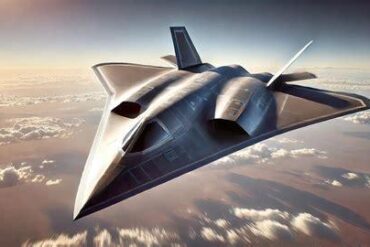
Yet Taiwan’s per-capita advantage faces erosion. China now fields more than 300 stealth fighters and is actively testing sixth-generation aircraft, gradually narrowing the qualitative gap. Density alone is no longer sufficient; survivability, networking, and next-generation capabilities are becoming decisive.
Why Superpowers Lag in Per Capita Rankings
The contrast is stark. The United States, despite possessing the world’s largest and most advanced air force, averages one fighter jet per 135,000 people. China’s ratio is even lower, approaching one fighter per million citizens. These figures do not imply weakness. They reflect different strategic realities.
Large nations defend vast territories, rely on layered deterrence, and project power globally. Smaller states defend survival itself. For them, air power density is not optional; it is existential.
Ultimately, fighter jets per capita expose a quiet truth of modern geopolitics. Threat perception, not national size, determines air power intensity. The countries topping this table did not chase prestige. They responded to geography, history, and relentless strategic pressure—and built air forces dense enough to ensure the sky never belongs to someone else.