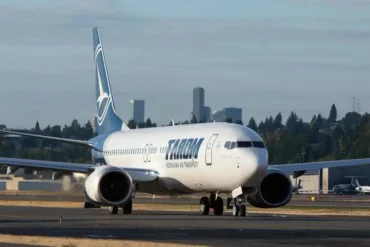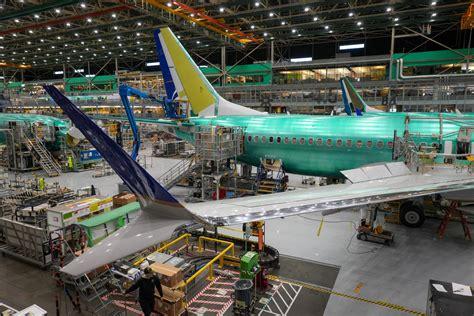
Boeing has crossed a major milestone in its long and difficult recovery campaign, with the aerospace giant now cleared to move Boeing 737 MAX production toward 47 aircraft per month. The announcement, made by Boeing CEO Kelly Ortberg during the Bernstein Strategic Decisions Conference in New York, signals growing confidence from regulators and the aviation industry that the manufacturer is finally regaining control of its troubled narrowbody program.
The approval comes after more than two years of intense scrutiny, operational restructuring, and manufacturing reforms following the Alaska Airlines door-plug blowout in January 2024. That incident reopened deep concerns about Boeing’s production quality and triggered a strict Federal Aviation Administration production cap that slowed the company’s recovery just as global airline demand surged.
For Boeing, the move from 42 to 47 aircraft per month is not merely an operational adjustment. It represents a critical financial, industrial, and reputational turning point for the company’s commercial aviation business.
The 737 MAX remains Boeing’s most important commercial aircraft family by volume. Airlines across the world depend on the aircraft for short- and medium-haul growth, fleet modernization, and fuel-efficiency improvements. Increasing production capacity is therefore essential not only for Boeing’s revenue recovery but also for airlines waiting years for delayed aircraft deliveries.
After years of setbacks, the company is now cautiously attempting to prove it can scale production without repeating the quality-control failures that damaged its reputation worldwide.
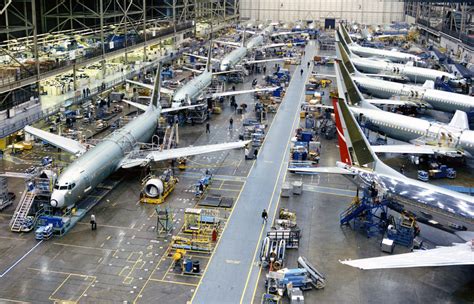
Boeing’s Production Increase Marks A Crucial Recovery Phase
Speaking at the conference, Ortberg confirmed that Boeing had successfully completed the FAA’s “capstone review” required for the next production increase. The review effectively validated Boeing’s manufacturing improvements and operational readiness to expand output beyond the previous threshold.
Ortberg emphasized that the transition would not happen instantly. Boeing intends to increase production gradually while stabilizing the manufacturing system to ensure consistency and regulatory compliance.
The measured tone reflects how carefully Boeing must now operate under the FAA’s watch. The regulator has made clear that production growth will only continue if Boeing demonstrates sustained manufacturing discipline and quality assurance improvements.
Even so, the significance of the new target cannot be understated. Increasing production from 42 to 47 aircraft monthly adds roughly 60 additional aircraft annually. Based on average narrowbody pricing and delivery economics, analysts estimate the increase could generate as much as $5 billion in additional annual revenue.
That additional cash flow matters enormously for Boeing, which continues rebuilding financially after years of losses tied to the 737 MAX grounding crisis, pandemic disruptions, supply-chain instability, and certification delays.
The company’s commercial aircraft division has been under intense pressure to restore profitability while simultaneously rebuilding trust among regulators, airlines, investors, and passengers.
The FAA Production Cap Changed Boeing’s Entire Strategy
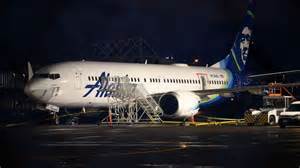
The roots of Boeing’s current production restrictions trace back to the Alaska Airlines Boeing 737 MAX 9 accident in January 2024. Shortly after takeoff from Portland International Airport, a door plug detached from the aircraft mid-flight, creating a terrifying decompression incident that immediately reignited scrutiny of Boeing’s manufacturing systems.
Investigations quickly exposed troubling concerns regarding production oversight and assembly procedures. In response, the FAA imposed a hard production cap of 38 aircraft per month while launching comprehensive audits of Boeing’s facilities and supplier operations.
The cap effectively froze Boeing’s ambitions at a time when airlines desperately needed more aircraft. It also intensified competitive pressure from Airbus, whose A320neo family continued dominating large sections of the single-aisle market.
Rather than aggressively pursuing higher output, Boeing was forced into a slower strategy focused on stabilization, process improvement, supplier management, and internal quality reforms.
The company spent much of 2024 and early 2025 rebuilding confidence with regulators. That included implementing stricter inspection systems, improving assembly documentation, increasing employee training, and tightening oversight of supplier Spirit AeroSystems.
The effort gradually produced results. Boeing eventually demonstrated enough operational stability for regulators to approve an increase from 38 to 42 aircraft per month in late 2025. The latest clearance to move toward 47 now represents the strongest indication yet that the FAA believes Boeing’s recovery efforts are gaining traction.
Why The 47-Per-Month Target Matters Beyond Headlines
At first glance, a jump from 42 to 47 aircraft monthly may appear modest. Inside the aerospace industry, however, even small production increases carry enormous implications.
Commercial aircraft manufacturing is among the most complex industrial operations in the world. A single narrowbody jet involves millions of individual parts sourced globally from hundreds of suppliers. Increasing production rates therefore requires synchronized improvements across logistics, workforce management, certification oversight, assembly sequencing, and supplier reliability.
For Boeing, reaching 47 aircraft monthly is about demonstrating sustainable industrial competence.
The company currently holds a massive 737 MAX backlog stretching years into the future. Airlines remain eager for fuel-efficient narrowbody aircraft as travel demand continues rising globally. Delivery slots are now among the most valuable assets in commercial aviation.
By increasing production, Boeing gains the ability to reduce delivery delays and open additional near-term aircraft availability. That strengthens the manufacturer’s position against Airbus, whose own production system remains constrained by supply-chain limitations and overwhelming order demand.
Ortberg also revealed Boeing’s longer-term ambitions extend beyond 47 aircraft monthly. The manufacturer hopes to reach 52 aircraft per month in early 2027 before eventually targeting 63 aircraft monthly in later years.
Achieving those numbers would place Boeing much closer to the aggressive production levels seen before the MAX crisis transformed the company.
Still, Boeing leadership acknowledges significant work remains ahead. Industry observers are watching closely to determine whether the company can maintain quality standards while increasing production speed.
Everett’s New North Line Could Reshape 737 Manufacturing
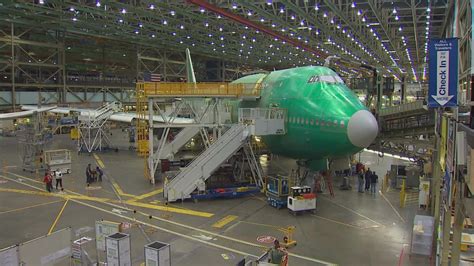
A major part of Boeing’s future production strategy centers on Everett, Washington, where the company is preparing to open a fourth 737 production line known as the “North Line.”
Historically, Boeing’s 737 production has been concentrated in Renton, Washington. Expanding assembly operations into Everett marks a significant shift for the company’s single-aisle manufacturing structure.
The new line is expected to focus heavily on production of the Boeing 737 MAX 10, the largest and commercially most strategic member of the MAX family.
The MAX 10 represents Boeing’s closest competitor to Airbus’ highly successful A321neo. Airlines increasingly favor larger narrowbody aircraft capable of carrying more passengers on high-demand routes while maintaining lower operating costs.
This segment has become one of the most important battlegrounds in global aviation.
Ryanair alone has ordered 150 MAX 10 aircraft with options for another 150. Major US carriers including United Airlines, Delta Air Lines, and Alaska Airlines also hold substantial orders for the type.
The Everett expansion therefore carries strategic significance beyond simple capacity growth. It is central to Boeing’s effort to strengthen competitiveness in the high-capacity narrowbody market.
Certification Of The MAX 7 And MAX 10 Adds New Pressure
Boeing’s production ramp-up becomes even more important because two critical 737 MAX variants remain uncertified: the MAX 7 and MAX 10.
The company expects both aircraft to receive certification during the second half of 2026, with initial deliveries anticipated in 2027.
The MAX 7 holds particular importance for Southwest Airlines, which controls roughly 90% of the aircraft’s order backlog. Southwest has structured significant portions of its future fleet planning around the smaller MAX variant and expects certification later this year.
Meanwhile, the MAX 10 may prove even more commercially critical. The aircraft is designed to challenge Airbus dominance in the upper end of the narrowbody market, where the A321neo has enjoyed exceptional success.
Certification delays have already frustrated several major airline customers awaiting deliveries. Once certification arrives, Boeing will face immediate pressure to produce and deliver these aircraft at scale.
That makes the move toward 47 aircraft monthly increasingly essential. Boeing must not only stabilize existing production but also prepare for higher demand generated by the full MAX family lineup.
Boeing Still Faces Significant Delivery Challenges
Despite the positive momentum, Boeing’s actual delivery performance shows the company still has substantial ground to cover.
During the first four months of 2026, Boeing delivered 147 737 MAX aircraft, averaging roughly 37 aircraft monthly. While production and deliveries do not perfectly align, the figures demonstrate Boeing has not yet consistently achieved even its previously approved production ceiling.
Monthly delivery fluctuations also reveal the fragility of the current system. Boeing delivered 43 aircraft in February 2026 but only 33 in March and 34 in April.
Those inconsistencies reflect ongoing supply-chain constraints, production balancing challenges, and delivery scheduling complexities that continue affecting the aerospace sector globally.
Nevertheless, industry sentiment surrounding Boeing appears noticeably more optimistic than it was a year ago.
The company has regained some momentum in deliveries, improved operational transparency with regulators, and recently outperformed Airbus in quarterly aircraft deliveries for the first time since the MAX crisis began.
For airlines awaiting desperately needed fleet expansion, Boeing’s progress toward 47 aircraft per month offers cautious reassurance that delivery timelines may finally begin improving.
For Boeing itself, the milestone represents something even more valuable: evidence that one of the most turbulent chapters in the manufacturer’s modern history may finally be moving toward stabilization rather than crisis.