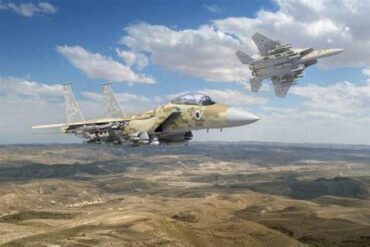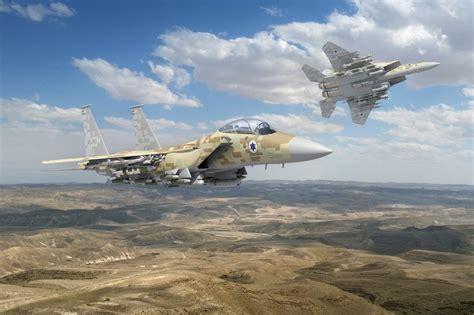
The United States has formalized a transformative military aviation deal with Israel, cementing a long-term defense partnership through the production and delivery of 25 cutting-edge F-15IA fighter jets. The program, confirmed via a U.S. Department of War contract notice dated December 29, 2025, signals a major leap in Israel’s strategic airpower capabilities, underpinned by a $8.58 billion agreement with Boeing.
Boeing’s Multi-Billion Dollar Contract for Israeli Air Power
The deal, awarded to Boeing’s St. Louis facility, is structured as a hybrid undefinitized contract action, blending cost-plus-fixed-fee, firm-fixed-price, and fixed-price-incentive elements. This arrangement allows immediate engineering and early production activities to commence even as final pricing and scope are finalized. The program spans a full decade, with completion targeted by December 31, 2035.
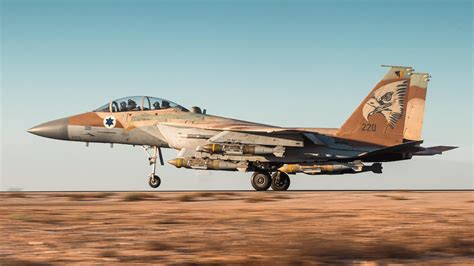
While the initial tranche covers 25 F-15IA aircraft, the contract includes an option for 25 additional units, potentially raising the total fleet to 50. Funding of $840 million from Foreign Military Sales (FMS) sources has already been obligated. The decision to proceed with the F-15IA builds on previous announcements, including a 2024 DSCA notification to Congress of potential sales involving new aircraft, mid-life upgrades to Israel’s current F-15I fleet, engines, radars, secure communications, and comprehensive mission support systems.
Israel’s Next-Generation Heavy Fighter: The F-15IA Configuration
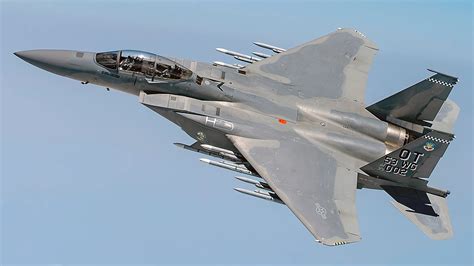
The F-15IA (Israel Advanced) is a bespoke configuration developed within Boeing’s Advanced Eagle series. It emphasizes payload capacity, range, and multi-role mission versatility in contested airspace. The suite of systems includes the:
- AN/APG-82(V)1 AESA radar for enhanced tracking and targeting
- F110-GE-129 engines, delivering greater thrust and reliability
- Advanced Display Core Processor II, acting as the aircraft’s mission computing backbone
- Embedded GPS/INS with M-code, ensuring resilient and secure navigation
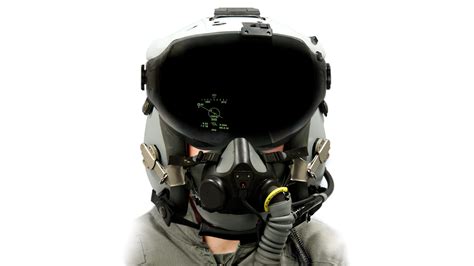
- Joint Helmet Mounted Cueing System, facilitating intuitive targeting and situational awareness
These elements create a platform capable of sustaining high-tempo operations, reliable in both air superiority and deep-strike roles, while ensuring survivability and communications integrity in complex environments.
Firepower and Endurance: A Lethal Package
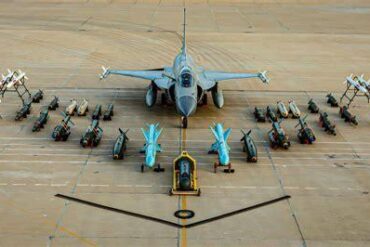
The F-15IA is built for maximum lethality and operational endurance. It can carry:
- Up to 12 AMRAAM air-to-air missiles using LAU-128 launchers
- A full complement of air-to-ground precision-guided munitions
- The M61A1 Vulcan cannon for close-in combat scenarios
This immense weapons carriage enables the aircraft to switch seamlessly between air-to-air dominance and standoff precision strike roles. It offers unmatched operational flexibility for long-range interdiction, time-sensitive targeting, and escort missions where endurance and layered defense are critical.
Navigation at Night and in Adverse Conditions
A critical enhancement is the inclusion of the AN/AAQ-13 LANTIRN navigation pod, enabling the F-15IA to fly at low altitude, high speed, and in poor visibility conditions, including at night. Its terrain-following radar and infrared capabilities allow pilots to maintain terrain clearance and navigate safely during complex missions, greatly improving the reliability of time-on-target execution.
Operational and Strategic Impact for the Region
The scope and horizon of this deal reflect more than a fleet upgrade—it is a strategic recalibration of Israel’s aerial warfare doctrine. With a potential inventory of 50 advanced heavy fighters, the Israeli Air Force (IAF) gains an instrument for regional deterrence, sustained air dominance, and massed effects delivery.
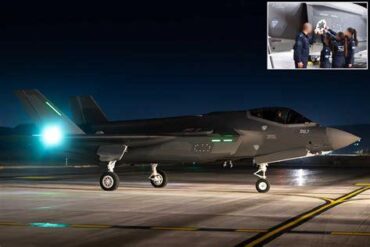
These fighters are positioned to complement stealth assets such as the F-35I “Adir” by providing volume, persistence, and firepower, especially in roles like:
- Escorting stealth assets on deep strike missions
- Controlling contested airspace with enduring presence
- Conducting maritime and infrastructure defense patrols
- Delivering repeated stand-off strike payloads with precision and flexibility
This enables Israel to deploy its most stealthy and sensitive platforms for high-value penetration and reconnaissance, while relying on the F-15IA for sustained and broad-spectrum dominance.
Contract Mechanisms and Integration Timelines
The use of an undefinitized contract facilitates early action on critical long-lead components and systems integration, allowing Israel and Boeing to avoid delays. Though earlier estimates projected deliveries might begin in 2029, recent assessments suggest a 2031 delivery timeline, reflecting the complexity of integration and production scheduling.
This multi-year approach ensures that the final aircraft will not simply be a new airframe, but an integrated, adaptable, and future-proof system, optimized for Israel’s evolving strategic needs.

U.S.-Israel Defense Partnership: Deepening Ties Through Technology
Beyond the aircraft themselves, the deal strengthens U.S.-Israel defense cooperation. It anchors Israel’s fighter modernization to American aerospace supply chains and support infrastructure, ensuring interoperability and continued political-military alignment through the 2030s.
It also sustains thousands of high-skill manufacturing jobs in Missouri and across the Boeing network, while reaffirming the Foreign Military Sales program as a vehicle for strategic influence.
Regional Reactions and Future Implications
The emergence of a new Israeli heavy fighter cohort is likely to ripple across Middle Eastern military planning. Neighboring nations will reassess air defense postures, dispersal strategies, and infrastructure hardening, knowing that Israel will soon field a force capable of prolonged operations with high-volume weapons loads.
The F-15IA’s range and payload enable it to strike deep targets while maintaining air dominance, a factor that could influence the strategic calculus of adversaries and allies alike. As deliveries approach, exercises, basing upgrades, and joint U.S.-Israel training initiatives are expected to accompany the physical arrival of the jets.
Conclusion: Israel’s Airpower Enters a New Era
The December 2025 announcement marks a pivotal moment in Israel’s long-term airpower strategy. The F-15IA acquisition reflects a vision of integrated, resilient, and high-capacity strike and defense capability designed to endure into the 2040s. With a combination of cutting-edge avionics, dense weapons integration, and interoperability with U.S. platforms, the program positions the Israeli Air Force to face both current and emergent threats with confidence and flexibility.
As the first jets begin to take shape in Boeing’s factories, the broader contours of Israel’s regional posture are already shifting, underlined by a clear message: air dominance remains a cornerstone of Israeli national defense.