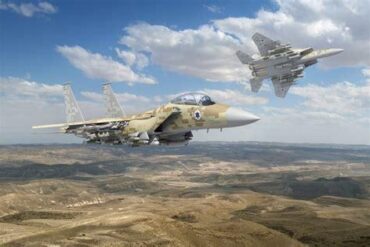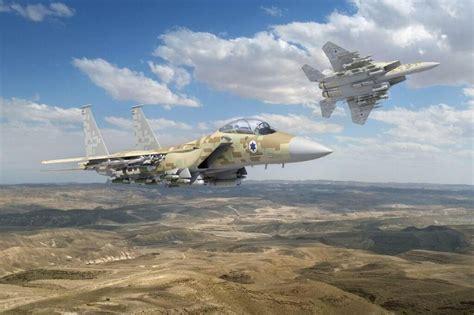
Boeing’s fighter jet production facility in St. Louis, Missouri, long considered the backbone of the company’s tactical aircraft operations, has received a critical extension to its future with the award of a monumental $8.6 billion contract from the U.S. Department of Defense. This Foreign Military Sales (FMS) contract for 25 F-15IA fighter jets—with an option for 25 more—marks a pivotal moment not only for Boeing but also for the broader U.S. defense industrial base.
Strategic Value of the F-15IA Contract
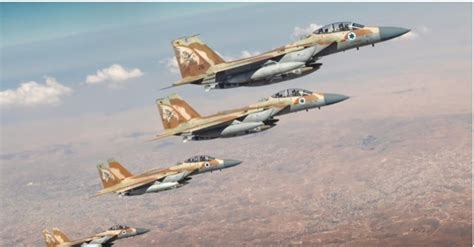
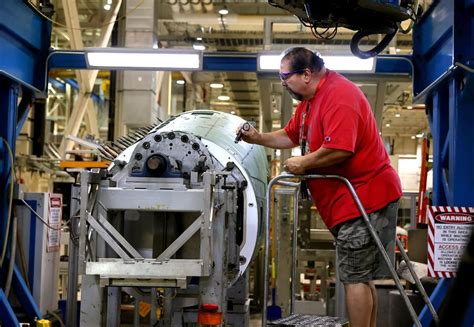
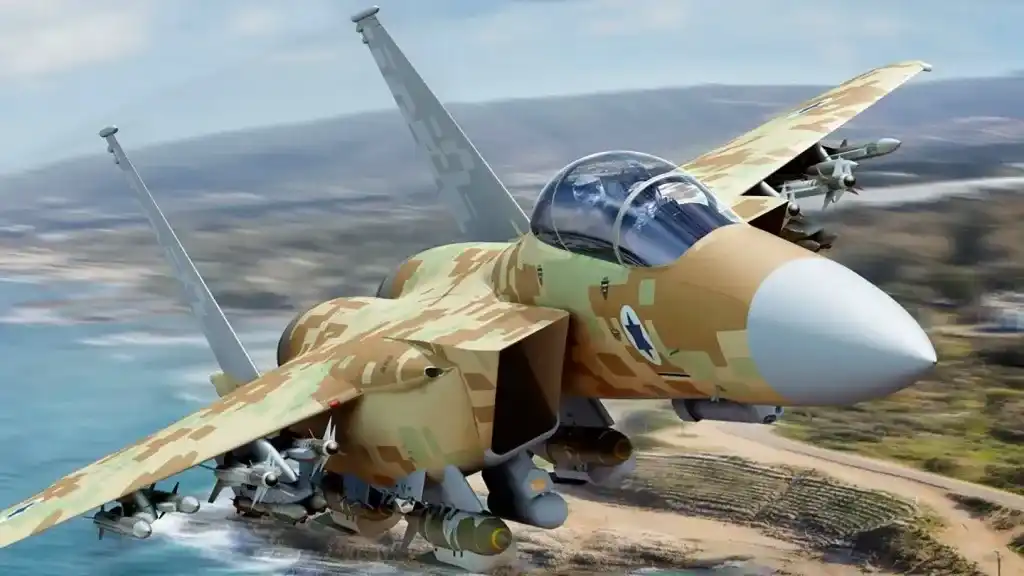
The F-15IA—Israel Advanced—is a uniquely tailored variant of the F-15EX, customized specifically to suit Israel’s combat and regional defense needs. Unlike standard U.S. Air Force configurations, the F-15IA integrates state-of-the-art radar systems, advanced electronic warfare suites, and a tailored avionics suite that reflects Israel’s operational doctrine and threat assessments. Production, testing, and final delivery will all be conducted at Boeing’s St. Louis site, keeping assembly lines hot and safeguarding thousands of aerospace jobs.
With fluctuating domestic F-15EX orders over recent years, this international deal is more than a transactional sale. It serves as an industrial insurance policy, ensuring that Boeing retains its high-value workforce and technical know-how, while also shoring up the intricate supplier networks that depend on steady production rhythms. By securing the future of the F-15 line through 2035 and potentially beyond, the F-15IA contract reaffirms Boeing’s relevance in the ever-competitive global fighter aircraft market.
Economic Lifeline for Missouri’s Aerospace Sector
For Missouri, the contract represents an economic injection into one of its most critical high-tech industries. Boeing’s St. Louis plant is the last major U.S. facility capable of manufacturing fourth-generation-plus fighters at scale. The continuation of the F-15 program supports thousands of skilled jobs—from avionics engineers and composite material technicians to flight test crews—and bolsters the regional economy with billions in downstream effects.
Additionally, by leveraging the Foreign Military Sales structure, the U.S. government can underwrite domestic industrial capacity without solely depending on U.S. Air Force procurement. This model spreads production costs across allies, while maintaining production lines that can be ramped up swiftly in the event of national emergencies or sudden military requirements.
Sustaining the F-15 Line: International Sales as Strategic Leverage
The F-15 platform, once considered a legacy airframe, has seen a renaissance in recent years. While stealth fighters such as the F-35 dominate headlines, the F-15’s ability to carry large payloads, fly extended distances, and integrate with modern network-centric warfare environments ensures its continued relevance. The F-15EX, and by extension the F-15IA, offers a cost-effective, heavily armed platform that complements fifth-generation jets rather than competes with them.
This adaptability has made the F-15 a staple of U.S. and allied airpower since the 1970s. Over the past five years, Boeing has delivered approximately a dozen updated F-15s annually, and the Israeli contract ensures that rate can be sustained or even increased. The consistency not only preserves U.S. defense capabilities but also positions Boeing competitively for future foreign sales to potential customers in Asia, the Middle East, and Eastern Europe.
Geopolitical Context and Strategic Implications
The timing and structure of the F-15IA deal underscore its geopolitical weight. Israel’s regional security concerns remain acute, with growing threats from state and non-state actors. The F-15IA will enhance the Israeli Air Force’s deep strike capabilities, allowing it to penetrate heavily defended areas and deliver precision strikes at scale.
For the United States, the deal strengthens a key military alliance, projects American aerospace leadership, and creates a robust template for security diplomacy. By enabling allies to field cutting-edge systems interoperable with U.S. forces, the Pentagon indirectly enhances regional stability and furthers its strategic interests without deploying additional American personnel or hardware.
Technology Transfer and Future Integration
One underreported benefit of such contracts is the technology transfer feedback loop. Lessons learned during the development and fielding of foreign variants often circle back into U.S. programs. As Boeing and the Israeli Ministry of Defense collaborate on the F-15IA’s enhanced systems—particularly in avionics and electronic warfare—these innovations may inform future U.S. Air Force upgrades to the F-15EX fleet. This mutually beneficial cycle supports iterative modernization while keeping R&D expenditures shared across borders.
Furthermore, the F-15IA’s emphasis on survivability in electronic warfare-heavy environments could shape doctrinal shifts in U.S. Air Force operational planning, especially in peer-adversary scenarios involving anti-access/area denial (A2/AD) zones.
The Long View: Toward 2040 and Beyond
While the current contract ensures production into 2035, the optional second tranche of 25 aircraft could push operations well into the late 2030s. In this scenario, St. Louis becomes a centerpiece of U.S. airpower infrastructure—not only manufacturing legacy fighters but also potentially supporting next-generation systems through shared facilities, workforce cross-training, and digital engineering integration.
The key to maintaining this trajectory lies in a diversified and agile order book. Boeing must continue leveraging its global relationships, highlighting the multi-role versatility, low lifecycle costs, and proven combat track record of the F-15 platform to entice more international partners.
Should the second tranche be exercised and additional buyers emerge, the F-15 production line could remain active through 2040, an extraordinary milestone for a design that first flew in 1972. Far from being obsolete, the F-15IA—and the broader EX family—represents a masterclass in continuous upgrade philosophy, demonstrating that legacy airframes can still deliver modern lethality when backed by cutting-edge technology.
Conclusion: Industrial Policy Meets Strategic Deterrence
The F-15IA deal is more than a commercial win for Boeing; it is a strategic framework that combines industrial policy, defense readiness, international diplomacy, and regional security. By anchoring fighter jet production in St. Louis for at least another decade, this contract sustains critical aerospace capacity and maintains the United States’ edge in global defense markets.
As geopolitical fault lines continue to shift and defense alliances recalibrate, deals like this ensure that the U.S. retains not only military superiority but also the economic and industrial depth to back it up. Whether the F-15IA line stays open until 2040 will depend on execution, geopolitical stability, and Boeing’s ability to market the aircraft to new customers. For now, the jet roars on—and with it, the heart of America’s fighter manufacturing legacy.