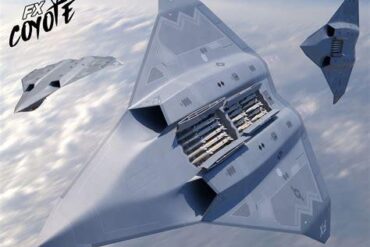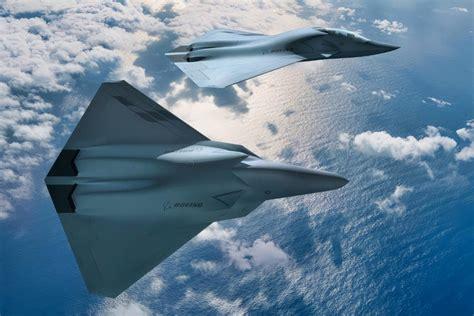
The United States is entering a decisive period in airpower strategy as delays to its flagship sixth-generation fighter programs—the Boeing F-47 and the U.S. Navy’s F/A-XX—threaten to leave a capability gap stretching well into the mid-2030s. What was once envisioned as a seamless transition to next-generation dominance is now evolving into a prolonged reliance on legacy platforms, raising urgent questions about readiness, cost, and strategic deterrence in an increasingly contested global environment.
The Pentagon had initially targeted initial operational capability before 2030, aligning with a broader push to outpace near-peer competitors in stealth, sensor fusion, and autonomous integration. That timeline has now slipped significantly. Congressional voices, including Representative Rob Wittman, have confirmed that both aircraft are unlikely to be operational until at least the mid-2030s, creating a structural gap that cannot be easily bridged by incremental upgrades alone.
This delay is not merely a scheduling inconvenience—it reshapes the entire lifecycle planning of U.S. tactical aviation. The Air Force and Navy must now recalibrate force structure assumptions, stretching platforms originally designed for shorter service spans into extended operational roles under increasingly demanding conditions.
The Strategic Weight of the Sixth-Generation Transition
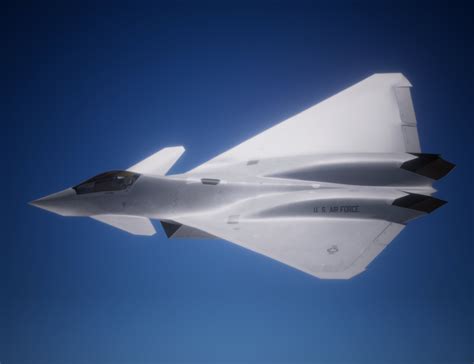
At the core of this issue lies the transformative ambition behind sixth-generation air combat systems. The F-47, selected in 2025 under a massive $20 billion contract, is intended to replace the F-22 Raptor, long regarded as the apex of air superiority. Meanwhile, the F/A-XX is designed to redefine carrier-based aviation, integrating advanced networking, unmanned teaming, and next-level survivability.
Yet ambition comes at a cost. These platforms are not incremental upgrades—they represent a fundamental shift in how air warfare is conducted. The integration of artificial intelligence, modular open systems architecture, and next-generation propulsion introduces layers of complexity that extend development timelines. Unlike previous programs, the emphasis is not only on performance but also on long-term adaptability and sovereign control over technology.
This shift reflects lessons learned from the F-35 Lightning II, where the Pentagon’s limited access to technical data created dependencies on contractors, inflating sustainment costs and slowing upgrades. In contrast, the F-47 program emphasizes government-led engineering control, a move designed to ensure flexibility but one that inevitably slows early-stage progress.
Industrial Bottlenecks and Program Overload
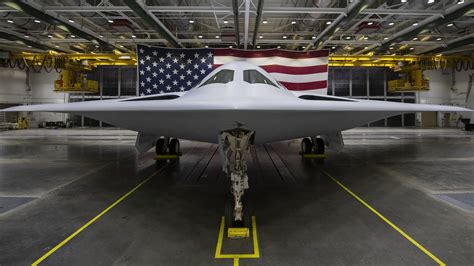
Beyond technical hurdles, the U.S. defense industrial base is under unprecedented strain. Simultaneous high-priority programs—most notably the B-21 Raider stealth bomber—are consuming resources, engineering talent, and production capacity. This concurrency effect creates bottlenecks that ripple across multiple programs, delaying milestones and increasing risk.
The F/A-XX program illustrates this clearly. The Navy has yet to finalize its contractor selection between Boeing and Northrop Grumman, leaving the program in a state of strategic limbo. Without a definitive industrial lead, timelines continue to drift, compounding uncertainty and complicating long-term procurement planning.
Extending the Life of Aging Airframes
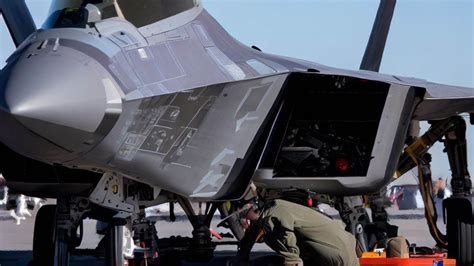
With next-generation solutions delayed, the burden shifts to legacy platforms. The F-22 Raptor, originally slated for retirement beginning in 2030, will now remain in service far longer than anticipated. This is a costly proposition. Operating expenses hover around $80,000 per flight hour, and each aircraft carries a total program cost nearing $350 million. Sustaining such a fleet requires extensive investment in maintenance, structural upgrades, and avionics modernization.
The Navy faces a parallel challenge with the F/A-18 Super Hornet. Its Service Life Modification (SLM) program is being expanded to push the aircraft beyond 10,000 flight hours, exceeding its original design limits by more than 40%. While technically feasible, such extensions introduce risks related to airframe fatigue, mission readiness, and escalating maintenance demands.
These stopgap measures are not without consequence. Extending aging fleets diverts funding from future capabilities, creating a cyclical strain where resources are split between sustaining the past and building the future.
The Emerging ‘Fighter Gap’ and Its Strategic Risks
The term “fighter gap” is no longer theoretical—it is becoming an operational reality. As adversaries accelerate their own fifth- and sixth-generation developments, the United States risks entering a period where its qualitative edge narrows. While platforms like the F-35 continue to provide multirole flexibility, they were never intended to fully replace the air superiority dominance of the F-22 or the future capabilities of sixth-generation systems.
This gap is not defined solely by aircraft numbers but by capability mismatches. Advanced adversary air defenses, electronic warfare systems, and long-range sensors demand platforms specifically designed to operate in contested environments. Legacy fighters, even with upgrades, face inherent limitations in stealth, processing power, and survivability.
A Costly Bridge to the Future
Bridging this gap will require billions in additional spending, careful force management, and a willingness to accept calculated risk. The Pentagon must balance immediate readiness with long-term modernization, ensuring that today’s operational demands do not undermine tomorrow’s technological superiority.
The delays of the F-47 and F/A-XX underscore a broader truth about modern defense acquisition: complexity and control come at the price of speed. By prioritizing sovereignty over technology and adaptability over rapid deployment, the United States is making a deliberate, if costly, strategic choice.
The coming decade will test whether that choice pays off—or whether the fighter gap becomes a defining vulnerability in an era of intensifying global competition.