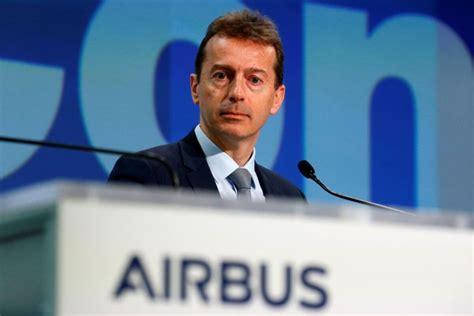
Airbus has delivered a blunt internal message to its workforce and, by extension, to Europe’s industrial policymakers. The escalating US-China trade war is no longer a distant geopolitical abstraction but a direct operational threat that is already disrupting aircraft production, delaying deliveries, and straining cash flow. According to an internal memo seen by Reuters, Airbus CEO Guillaume Faury described 2026 as a year of unprecedented crisis, calling on employees to embrace solidarity while sharply accelerating the company’s push for self-reliance.
The warning lands at a moment when Airbus is attempting to stabilize one of the most complex supply chains in global manufacturing. With final-assembly lines spread across Europe, China, and the United States, and with critical components sourced from hundreds of suppliers, even small trade disruptions now ripple through the system with outsized consequences. Faury’s message signals that Airbus no longer views these disruptions as temporary shocks but as a structural feature of the aerospace landscape.
At the heart of the problem is Airbus’s dependence on cross-border flows of highly regulated technology. Even aircraft assembled outside the United States rely heavily on US-controlled avionics, engines, and software, making them vulnerable when Washington tightens export licensing or freezes shipments. In today’s climate, a single blocked subcomponent can halt the delivery of an entire jet, turning political decisions into factory slowdowns.
Geopolitics Moves From Policy Rooms to Factory Floors
Faury’s memo draws a straight line between global politics and daily factory reality. He described an industrial environment “sown with difficulties,” intensified by the confrontation between Washington and Beijing. American protectionist measures, combined with temporary export freezes affecting engines and other key systems bound for China, have already slowed Airbus programs and complicated production planning.
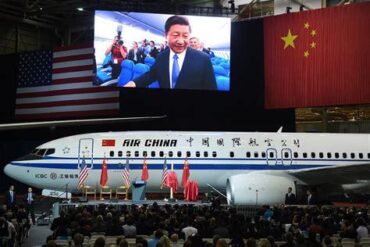
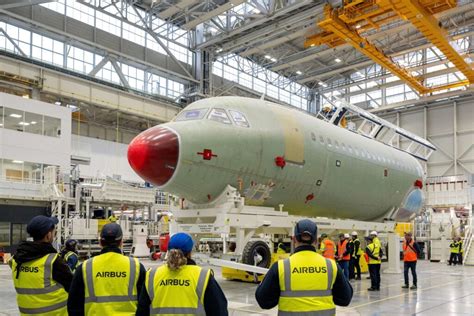
The challenge is especially acute because Airbus assembles aircraft in China. These final-assembly lines depend on a steady inflow of parts approved under multiple export regimes. Any pause in approvals can quickly strand partially completed aircraft, tying up capital and workforce capacity. Beijing, meanwhile, retains its own levers of retaliation, including restrictions on the export of critical raw materials such as rare earth elements, which are essential for modern aerospace electronics.
This two-sided exposure leaves Airbus navigating a narrow corridor of neutrality. The company must maintain access to both markets while avoiding actions that could turn aircraft supply into a bargaining chip. That balancing act grows more expensive as trade tensions harden into long-term policy.
Supply Chain Stress Tests Airbus’s Industrial Model
Beyond geopolitics, Airbus is grappling with execution issues that amplify external shocks. Recent quality problems, including flawed fuselage panels and a software recall, forced the company to trim delivery targets and rework production schedules. Persistent late engine deliveries from Pratt & Whitney and CFM International remain a critical bottleneck, compounding the effects of trade friction.
Despite these setbacks, Airbus delivered 793 aircraft in 2025, up from 766 the previous year. The improvement, while notable, masks deeper fragility. Deliveries were heavily backloaded, meaning many aircraft were handed over late in the year as engines finally arrived. This pattern strains working capital and reduces financial flexibility precisely when Airbus needs to invest in future programs.
China’s Growth Potential Meets Political Risk
The timing of the trade war could hardly be worse for Airbus’s long-term strategy. China remains one of the world’s fastest-growing single-aisle aircraft markets, and Airbus is expanding capacity at its Tianjin facility to capture that demand. At the same time, the company is keenly aware that prolonged trade conflict could accelerate the rise of local rival COMAC, especially if Western aircraft become politically sensitive imports.
Airbus’s leadership understands that neutrality is not passive. Maintaining it requires redundant suppliers, flexible production footprints, and higher inventory buffers, all of which increase costs. These expenses are the hidden price of staying operational in a fragmented global economy.
Financial Consequences of a Fragmented Trade System
Trade friction hits Airbus’s finances in three critical areas: delivery timing, unit costs, and long-term investment capacity. Aircraft sales are only fully realized when jets are delivered, so any delay directly affects cash inflow. Management has acknowledged that engine delays and export controls have already pushed deliveries later, inflating inventory and tying up capital.
Airbus’s 2025 results showed negative free cash flow before customer payments, underscoring how sensitive the business is to delivery schedules. New export-control shocks, especially those involving US-linked engines and avionics, risk forcing repeated re-planning across global assembly lines. Each adjustment carries real costs, from overtime labor to expedited logistics.
Self-Reliance as Strategy, Not Slogan
Faury’s call for self-reliance is not a retreat from globalization but a recalibration. Airbus is signaling that future competitiveness depends on greater control over critical technologies, deeper European industrial cooperation, and supply chains designed to withstand political pressure. Funding the next generation of narrowbody aircraft will require margins protected from geopolitical volatility.
The message is clear. In a world where trade policy can change overnight, resilience is becoming as valuable as efficiency. Airbus is betting that a more self-reliant industrial model will allow it to keep building aircraft, delivering on time, and investing for the future, even as the world’s two largest economies remain locked in a damaging standoff.