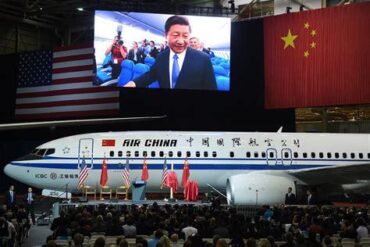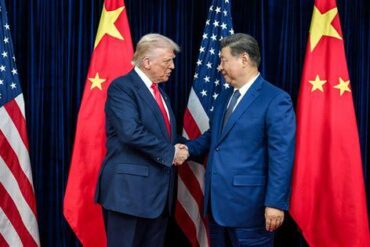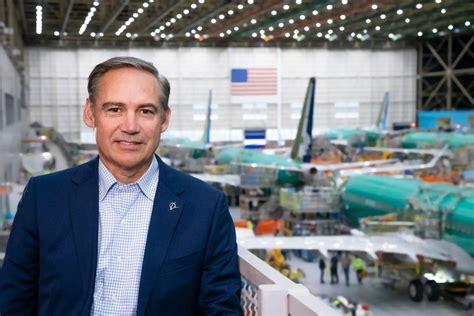
China and Boeing may be approaching one of the most consequential commercial aviation agreements of the decade, with industry insiders pointing toward a potential order involving as many as 500 aircraft during President Donald Trump’s upcoming diplomatic visit to Beijing. The talks, expected to involve Boeing CEO Kelly Ortberg alongside senior American officials, could dramatically reshape the balance of power inside the global aerospace market while signaling a thaw in long-strained US-China industrial relations.
The proposed agreement arrives at a critical moment for Boeing. After years of reputational damage tied to the 737 MAX crisis, production instability, and deteriorating trade relations between Washington and Beijing, the American aerospace giant is searching for a defining recovery moment. A large-scale Chinese order would not only boost Boeing’s order books but also restore confidence in one of the company’s most strategically important international markets.
Chinese airlines are simultaneously facing enormous fleet expansion requirements. Domestic air travel demand across China continues to surge, while international long-haul routes are rapidly returning after years of pandemic-era restrictions and geopolitical disruptions. Analysts believe the timing has created a rare opening where both political and commercial incentives align.
By all indications, this summit could become far more than a diplomatic photo opportunity. It may evolve into a landmark aviation agreement capable of influencing aircraft manufacturing, airline competition, supply chains, and geopolitical trade strategy for years to come.
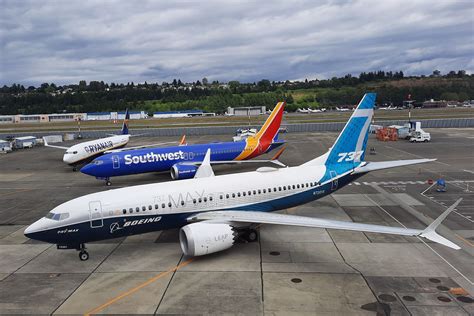
Boeing’s Return to China Gains Momentum
For Boeing, China has always represented far more than another export destination. Before trade tensions intensified and the 737 MAX grounding shook global aviation, Chinese carriers accounted for roughly one-quarter of Boeing’s annual 737 deliveries. The market was central to Boeing’s long-term production planning and future growth forecasts.
That relationship deteriorated rapidly after 2018.
China became the first country to ground the 737 MAX following the fatal Lion Air and Ethiopian Airlines crashes. Chinese regulators also took significantly longer than their Western counterparts to fully clear the aircraft’s return to service. At the same time, escalating tariff disputes between the United States and China complicated aerospace transactions, delayed deliveries, and created uncertainty for airlines considering future Boeing purchases.
During those years of turbulence, Airbus aggressively expanded its Chinese footprint. European manufacturers strengthened industrial partnerships, increased local assembly operations, and captured major airline contracts that once might have naturally gone to Boeing.
Now, however, Boeing appears positioned for a dramatic re-entry into the Chinese market.
Sources close to the negotiations indicate the possible package would include a broad mix of aircraft types, centered heavily around the 737 MAX 8 and MAX 10. These variants are considered ideal for China’s densely populated domestic travel corridors connecting cities such as Shanghai, Guangzhou, Shenzhen, Chengdu, and Beijing.
The agreement could also include long-haul aircraft like the 787 Dreamliner and potentially the delayed but highly anticipated 777X, supporting international expansion plans among China’s largest state-backed carriers.
Why China Still Matters More Than Any Other Aviation Market
China’s importance to Boeing cannot be overstated. Industry forecasts consistently project China will become the world’s largest aviation market within the next two decades, surpassing even the United States in passenger traffic growth.
That projected expansion creates enormous demand for new aircraft.
Chinese airlines are expected to require thousands of additional narrowbody and widebody jets as rising incomes, urbanization, and international travel demand continue transforming the country’s aviation sector. Even conservative estimates suggest China will remain the single most valuable battleground for global aircraft manufacturers throughout the 2030s.
Boeing understands that missing out on China’s next growth cycle would carry devastating long-term consequences.
The company already operates a 737 completion and delivery center in Zhoushan, reflecting years of industrial cooperation with Chinese partners. Maintaining those relationships is strategically essential, especially as Boeing works to stabilize production after repeated manufacturing disruptions and supplier bottlenecks.
A deal approaching 500 aircraft would therefore represent more than a temporary sales victory. It would provide Boeing with visibility into future production demand, improve confidence among suppliers, and strengthen the manufacturer’s position against both Airbus and China’s domestic aerospace ambitions.
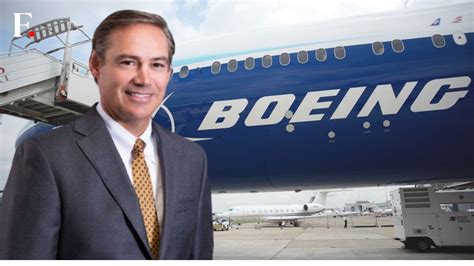
Trump’s China Visit Adds Political Weight to Aircraft Negotiations
Large aircraft orders are rarely just commercial transactions. In many cases, they function as diplomatic tools.
That reality is particularly true in US-China relations, where aviation agreements have historically accompanied major state visits and trade negotiations. Commercial aircraft purchases create manufacturing jobs, support export figures, and provide both governments with highly visible evidence of economic cooperation.
President Trump’s upcoming China summit appears likely to follow that same pattern.
Reports surrounding the visit suggest discussions will extend beyond aviation into areas including semiconductor restrictions, tariffs, rare earth mineral access, industrial investment, and advanced manufacturing cooperation. Within that broader framework, Boeing occupies a uniquely symbolic role as America’s largest exporter by dollar value.
Kelly Ortberg’s participation in the delegation underscores Boeing’s strategic importance to the administration’s trade objectives.
Earlier this year, Ortberg openly acknowledged Boeing’s reliance on political support in securing renewed Chinese business. His comments reflected a reality well understood throughout the aerospace industry: aircraft orders involving China often depend as much on diplomacy as on airline economics.
If finalized during or shortly after the summit, the Boeing agreement would likely be framed as a breakthrough example of renewed economic engagement between the world’s two largest economies.
The 737 MAX Faces Its Most Important Market Test Yet
Even though the potential deal spans multiple aircraft programs, the centerpiece would almost certainly remain the 737 MAX family.
That carries enormous symbolic importance.
The MAX crisis became one of the darkest periods in Boeing’s modern history, triggering global scrutiny over safety oversight, engineering practices, and regulatory relationships. China’s early grounding of the aircraft amplified the international fallout and contributed to years of strained relations between Boeing and Chinese authorities.
A major Chinese MAX order would therefore send a powerful message to global markets.
It would signal not only restored confidence in the aircraft itself but also renewed trust between Boeing and China’s aviation regulators. For Boeing executives attempting to rebuild credibility, few developments could carry greater strategic value.
The MAX remains essential to Boeing’s future profitability. Narrowbody aircraft generate the bulk of commercial aviation sales worldwide, and China’s domestic route structure is ideally suited for high-frequency single-aisle operations.
The MAX 8, in particular, offers airlines fuel efficiency improvements that are increasingly critical as carriers attempt to balance operating costs with environmental pressure and rising passenger demand.
COMAC Still Looms Over Boeing’s Long-Term Strategy
Despite optimism surrounding the negotiations, Boeing’s position in China remains far from secure.
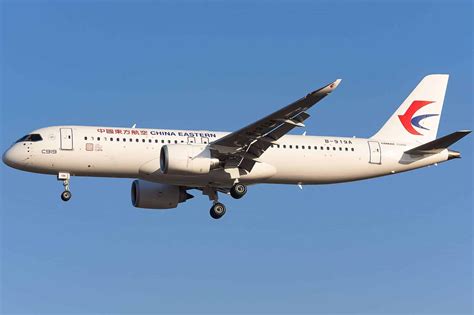
Beijing continues prioritizing the growth of COMAC, China’s state-backed aircraft manufacturer. Its C919 narrowbody jet directly competes with both the Boeing 737 MAX and Airbus A320neo families.
Although COMAC currently lacks the global scale, production capacity, and international certification reach of its Western rivals, Chinese authorities increasingly encourage domestic airlines to support homegrown aerospace manufacturing.
That political backing creates long-term challenges for Boeing.
The C919 may not immediately threaten Boeing on a global scale, but within China itself, the aircraft represents a strategic national priority. Every order secured by COMAC reduces future dependence on foreign manufacturers while helping China develop a fully independent aerospace ecosystem.
Still, the transition will take years.
Chinese airlines continue requiring massive numbers of aircraft beyond what COMAC can currently produce, leaving substantial room for Boeing and Airbus to compete for future contracts. The sheer scale of Chinese aviation growth means multiple manufacturers can succeed simultaneously, at least in the near term.
A Defining Moment for Boeing’s Recovery
For Boeing, the proposed China deal could become the company’s most important commercial breakthrough since the onset of the MAX crisis.
The manufacturer has spent years confronting regulatory scrutiny, production delays, labor challenges, and mounting competitive pressure from Airbus. Investor confidence has repeatedly fluctuated as Boeing struggled to stabilize operations and restore manufacturing consistency.
Securing a blockbuster Chinese order would immediately strengthen Boeing’s recovery narrative.
Beyond the financial value, the agreement would demonstrate that Boeing remains capable of competing at the highest level inside the world’s most strategically important aviation market. It would also reinforce America’s broader industrial influence at a time when geopolitical rivalry increasingly intersects with global manufacturing and technology leadership.
Whether the final number reaches 500 aircraft or settles lower, the negotiations already carry historic significance.
The outcome could reshape aviation trade relations, alter competitive dynamics across Asia-Pacific markets, and redefine Boeing’s trajectory for the next decade.