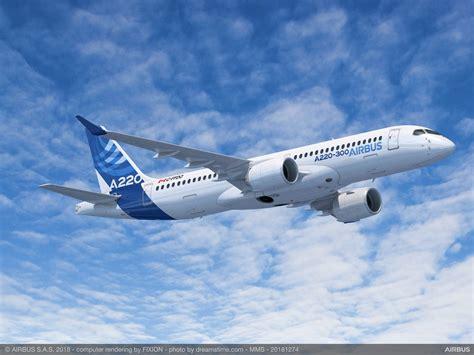
AirAsia is reportedly on the verge of finalizing a massive order for 100 Airbus A220 aircraft, a strategic move that could redefine the airline’s operational scope and market presence. Citing unnamed industry sources, Reuters reports that the announcement could be made as early as the 2025 Paris Air Show, scheduled to take place in Le Bourget from June 16 to 22. If confirmed, the deal would not only mark a significant investment but also introduce a new aircraft type to AirAsia’s all-Airbus fleet.
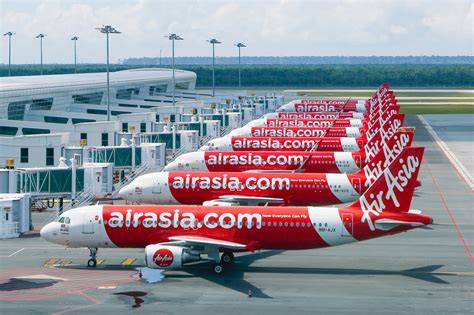
A Bold Departure from the Existing Fleet Structure
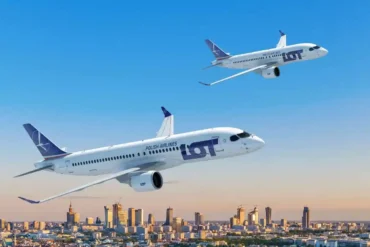
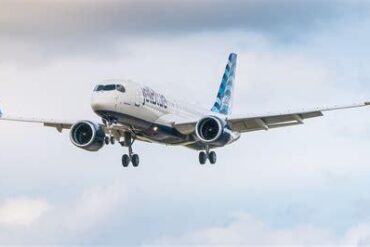
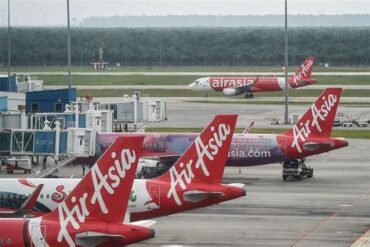
Currently, AirAsia operates a homogeneous fleet consisting primarily of Airbus A320 and A321 models, including both the ceo and neo variants. Its long-haul subsidiary, AirAsia X, relies on the larger A330 aircraft. The proposed introduction of the A220, a smaller and highly efficient aircraft, signifies a notable diversification of the fleet. The A220 typically seats between 100 to 150 passengers, depending on the configuration, making it the smallest jet in AirAsia’s inventory if the deal goes through.
The inclusion of the A220 represents a strategic recalibration at a time when most low-cost carriers (LCCs) are gravitating toward larger aircraft to maximize passenger capacity and reduce per-seat costs. AirAsia’s choice to go smaller, not bigger, runs counter to this prevailing industry trend.
Operational Strategy: Serving Smaller Markets with High Frequency
Industry observers suggest that AirAsia’s acquisition of the A220 could be aimed at enhancing its regional connectivity across Asia, enabling it to penetrate underserved or smaller markets where demand does not justify the use of larger jets. Such a move would extend AirAsia’s network reach to secondary cities and emerging travel hubs, enhancing its position as a major player in the intra-Asia travel market.
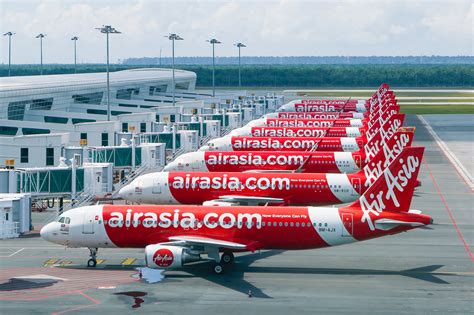
At an event held in January 2024 at AirAsia’s Kuala Lumpur headquarters, Tony Fernandes, CEO of Capital A—the parent company of AirAsia—outlined a vision of a deeply interconnected Asian network, feeding passengers into multiple long-haul hubs. The A220, with its ability to operate efficiently on short- to medium-haul routes with lower operating costs and superior fuel efficiency, is tailor-made for such a regional strategy.
The A220 Advantage: Performance, Efficiency, and Passenger Experience
The Airbus A220 has carved out a unique niche in the market, often lauded for its fuel efficiency, modern avionics, and superior passenger comfort. Its advanced Pratt & Whitney PW1500G geared turbofan engines allow the aircraft to consume up to 20% less fuel per seat than older generation aircraft in the same class. The A220’s cabin is also considered one of the quietest and most spacious among single-aisle aircraft, offering wider seats, larger windows, and better overhead storage space.
From an airline’s perspective, the A220 provides a highly flexible operating model, capable of performing both low-frequency long-range and high-frequency short-haul flights. For a carrier like AirAsia that thrives on operational efficiency and tight turnaround times, the A220 could be a game-changer.
Market Implications: A Vote of Confidence in Post-Crisis AirAsia
This potential mega-order comes on the heels of a turbulent financial chapter for the airline group. The COVID-19 pandemic severely impacted AirAsia’s finances, forcing it into a deep restructuring phase. During this time, its parent company Capital A underwent major changes, including corporate reorganization, debt restructuring, and divestment of non-core aviation assets. At one point, AirAsia was closely scrutinized by Malaysian financial regulators and was listed as a Practice Note 17 (PN17) company, indicating financial distress.

However, AirAsia’s resilience has been notable. Under Fernandes’ leadership, Capital A decided to restructure its aviation businesses, eventually folding them into AirAsia X to create a more streamlined and resilient airline group. Placing an order of this magnitude would symbolize more than just fleet expansion—it would represent a clear vote of confidence in the company’s turnaround strategy and long-term prospects.
A Strategic Playbook Amid Industry Transformation
This move also highlights AirAsia’s strategic agility in responding to changing market dynamics and traveler behavior. As consumer preferences evolve and the demand for point-to-point regional travel grows, especially in post-pandemic Asia, having a diverse fleet that includes right-sized aircraft like the A220 becomes a key competitive differentiator.
With the A220’s superior economics on thinner routes, AirAsia could launch services to previously unviable destinations, create more flight frequency options, and reduce dependency on high-volume routes, thereby spreading its operational risk. This level of adaptability is increasingly seen as crucial for survival and success in the highly competitive Asian aviation market.
Industry Context: The LCC Sector and the Shift to Smaller Jets
Interestingly, AirAsia’s apparent move toward acquiring the A220 also raises questions about the future of low-cost carrier strategies globally. While most LCCs—like Ryanair with the Boeing 737 MAX 8-200 or IndiGo with the A321XLR—continue to upsize their fleets, AirAsia’s deviation could spark industry-wide reconsideration of the one-size-fits-all growth model.
By choosing to invest in smaller, more nimble aircraft, AirAsia may be charting a new course for low-cost operations, one that is hyper-localized and route-sensitive. In regions like Southeast Asia, where airport infrastructure can vary dramatically, the A220’s ability to land on shorter runways could unlock new tourism and economic corridors.
Potential Challenges and Considerations
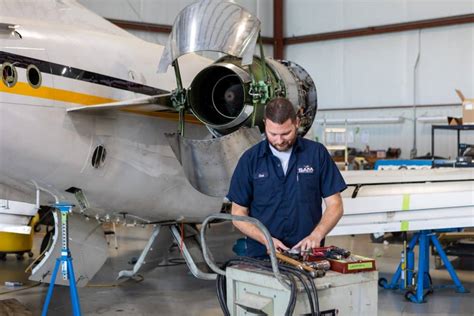
However, such a shift does not come without its share of challenges. The introduction of a new aircraft type into a previously homogenous fleet implies added complexity in terms of maintenance, pilot training, spare parts logistics, and operational planning. Fleet commonality has long been a key component of AirAsia’s cost discipline, and integrating a new type like the A220 will require significant planning and investment.
Still, the operational savings and revenue potential offered by the A220 may very well outweigh the initial transition costs. Moreover, Airbus has demonstrated strong support structures and global parts availability for the A220 program, originally launched as the Bombardier CSeries, which has gradually gained momentum among legacy carriers and regional airlines alike.
What’s Next: Eyes on the Paris Air Show
All eyes are now on the Paris Air Show 2025, where the potential order may be officially confirmed. Such a high-profile announcement would not only send ripples through the commercial aviation industry but could also trigger a new wave of regional aircraft orders in Asia.
For Airbus, the deal would be a significant endorsement of the A220 program, especially from a high-profile, high-volume operator like AirAsia. For AirAsia, it would be a bold statement of revival, expansion, and a strategic pivot toward a more flexible, future-ready network.
In a world where travel demand is resurging but consumer preferences are shifting rapidly, agility and scale must coexist. With the A220 potentially in its arsenal, AirAsia could position itself as a pioneer of the next phase of low-cost aviation in Asia, reshaping regional travel with precision, efficiency, and renewed ambition.