India is on the brink of finalizing a landmark $8 billion submarine deal with Germany, aimed at bolstering its conventional naval capabilities through Project-75(I). This ambitious agreement signals a turning point in India’s maritime strategy, industrial localization efforts, and geopolitical alignment in a rapidly evolving Indo-Pacific theater.
Strategic Partnership: India and Germany Set the Stage for Naval Transformation
In a pivotal move toward defense modernization, India and Germany are edging closer to a multi-billion-dollar submarine manufacturing pact that includes the joint construction of six air-independent propulsion (AIP) submarines in India. Expected to be formalized during German Chancellor Friedrich Merz’s visit to India on January 12–13, 2026, the agreement represents a tectonic shift in India’s approach to defense acquisitions—from overseas purchases to localized, co-developed platforms with full technology transfer.
This deal could become India’s most significant defense-industrial venture to date, uniting Germany’s Thyssenkrupp Marine Systems (TKMS) and India’s Mazagon Dock Shipbuilders Limited (MDL). Under the terms being discussed, construction would take place entirely in Mumbai, aligning with India’s 2020 policy to reduce reliance on foreign-made defense platforms and promote domestic manufacturing.
The Core of the Deal: Type 214 Submarines and AIP Superiority
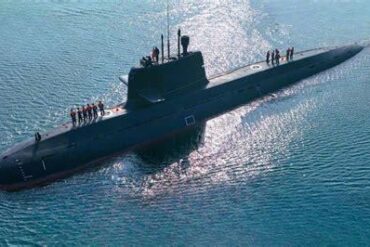
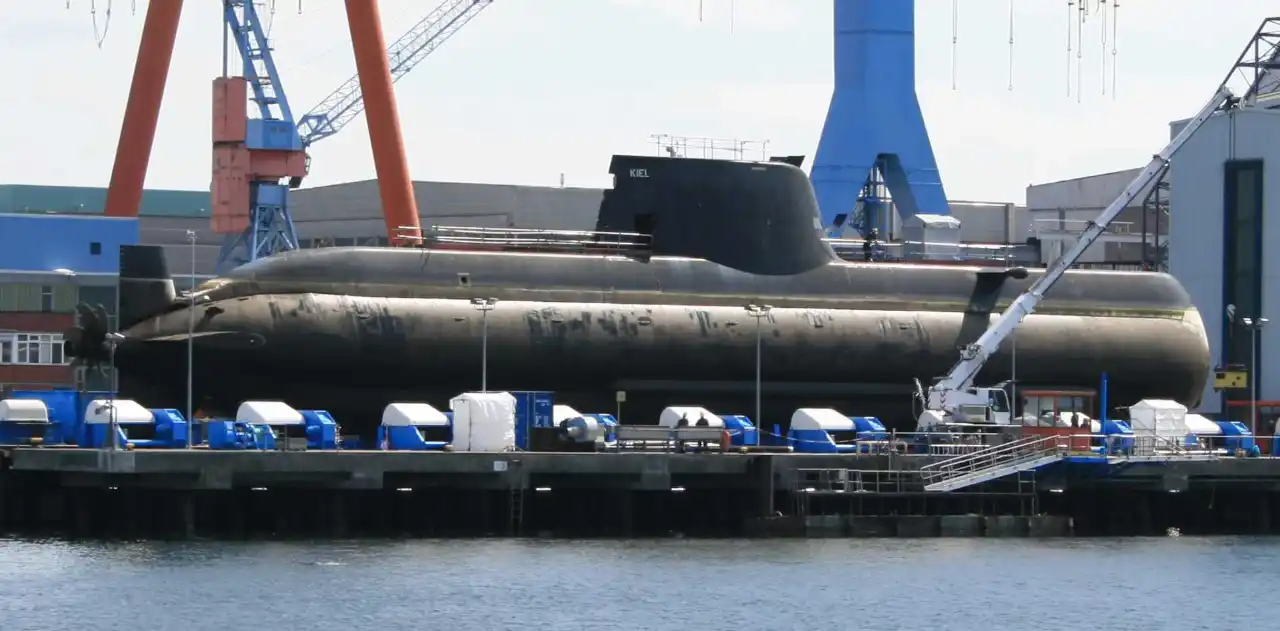
The submarine class most closely associated with the proposed deal is the Type 214, a diesel-electric submarine augmented with fuel-cell-based AIP technology. This cutting-edge propulsion system allows extended submerged operations, reducing the need to surface frequently—a strategic advantage in stealth and endurance during patrols. The platform is already operational with navies in Greece, Turkey, South Korea, and Portugal, proving its reliability and versatility.
Technical highlights of the Type 214 include:
- Displacement: Approximately 1,700–2,000 tonnes surfaced
- Length: 65–70 meters (adaptable for Indian specifications)
- AIP System: Fuel-cell based, allowing underwater endurance for weeks
- Armament: 533 mm torpedo tubes for heavyweight torpedoes and anti-ship missiles
- Combat Role: Optimized for anti-submarine, anti-surface, ISR, and sea denial missions
- Diving Depth: Up to 400 meters
The Indian Navy’s future variant is likely to see a displacement increase to nearly 3,000 tonnes, integrating national requirements for endurance, payload, and indigenous combat systems.
India’s Conventional Submarine Fleet: A Capability Gap Demands Urgency
India’s current conventional submarine fleet is aging rapidly. Out of 16 operational boats, a significant portion has surpassed the 30-year service mark. Although six French-origin Kalvari-class (Scorpène) submarines have entered service since 2017, they are insufficient to close the growing capability gap.
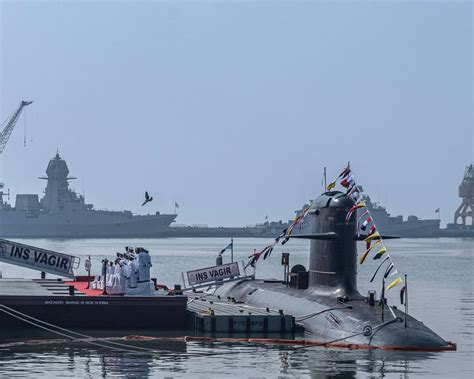
The Project-75(I) initiative was conceived to counter this gap by adding six AIP-equipped submarines, bridging the time until more indigenous nuclear-powered submarines, such as those in the Arihant-class, reach full operational maturity. The agreement with Germany is poised to fulfill this requirement with both speed and strategic value.
Moreover, should the German deal proceed as envisioned, a follow-on acquisition of three additional Scorpène-class submarines may be shelved, reflecting India’s pivot toward deeper technology partnerships and reduced overreliance on a single foreign supplier.
Technology Transfer: A Breakthrough in Indian Defense Manufacturing
What distinguishes this deal from previous submarine acquisitions is the full transfer of technology (ToT), including production know-how, propulsion systems, combat integration, and possibly future upgrade pathways. This marks a radical departure from past procurement norms, where India often received limited access to proprietary systems.
TKMS has previously exported the Type 214 to multiple clients, but the proposed ToT to India could set a new benchmark for German defense industrial outreach, driven in part by the changing security calculus in Europe post-Ukraine invasion. Germany’s evolving policy now emphasizes global defense partnerships and industrial diplomacy, with India emerging as a pivotal player in this reshaped framework.
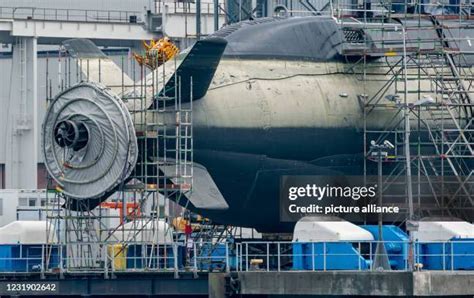
The partnership with MDL, a seasoned player in indigenous submarine production, offers a potent blend of German precision and Indian scale, and may serve as a prototype for future Indo-European defense collaboration models.
Project-75(I): A Long-Awaited Leap Forward
Initially conceptualized in the late 2000s, Project-75(I) has seen repeated delays due to shifting technical specifications, partner withdrawals, and bureaucratic slowdowns. The agreement with Germany would end nearly two decades of stagnation, giving new momentum to India’s naval modernization goals.
Project-75(I) also dovetails with broader efforts to establish India as a submarine design and production hub, offering co-production opportunities not just for domestic needs, but potentially for future export to friendly nations.
The Political and Economic Implications: Merz’s India Visit and Beyond
The submarine deal is intricately tied to Chancellor Friedrich Merz’s first state visit to India, where he is scheduled to meet Prime Minister Narendra Modi in Gujarat and later travel to Bengaluru, India’s technology capital. Defense is only one pillar of a comprehensive bilateral agenda that includes pharmaceuticals, industrial co-development, and a push toward finalizing an EU–India free trade agreement.
Merz is leading a high-powered delegation of German business leaders, underlining the commercial stakes of this visit. A pending business mission to China also looms on Berlin’s diplomatic calendar, giving added weight to the symbolism of concluding a breakthrough Indo-German defense deal first.
Shifting Geopolitics: The Indo-Pacific and China’s Expanding Footprint
India’s interest in acquiring high-end conventional submarines also reflects strategic anxieties stemming from China’s growing naval presence in the Indian Ocean Region (IOR). Chinese submarines, including nuclear-powered platforms, have increased port visits and surveillance operations across the IOR, raising alarms in New Delhi.
The Type 214 submarines are therefore seen as critical force multipliers, enabling India to conduct longer-duration stealth patrols, monitor key maritime chokepoints, and deter adversarial activity across its vast maritime domain.
Simultaneously, the German deal is an implicit signal to reduce dependence on Russian military hardware, which still comprises a significant chunk of India’s defense inventory. As India diversifies its sourcing, it seeks partners capable of delivering advanced systems with localized industrial benefits—a matrix the German proposal appears to fulfill.
German Defense Industry Post-Ukraine: A New Export Doctrine
Germany’s defense posture has transformed dramatically since the war in Ukraine. Long known for its cautious arms export policies, Berlin has embraced a more assertive defense industrial strategy, including increased spending, global partnerships, and openness to technology-sharing agreements.
The Thyssenkrupp-India deal, if concluded, would exemplify this new era, combining high-value exports with strategic alignment. By transferring advanced submarine technologies to India, Germany is not only boosting its industrial base but also forging security ties with an Indo-Pacific power increasingly central to Western strategic thinking.
Conclusion: A Defining Moment in Indo-German Defense Relations
As negotiations accelerate and anticipation builds ahead of Chancellor Merz’s visit, the submarine deal stands as a potential watershed in Indo-German relations. More than just a procurement decision, it encapsulates the convergence of strategic imperatives: modernizing India’s undersea warfare capabilities, deepening bilateral industrial cooperation, counterbalancing Chinese naval assertiveness, and reshaping global defense partnerships in a post-pandemic, post-Ukraine world.
If finalized, the agreement will usher in a new era of maritime self-reliance for India and signal Germany’s emergence as a pivotal defense technology partner in Asia, reinforcing a geopolitical realignment already well underway across the Indo-Pacific.