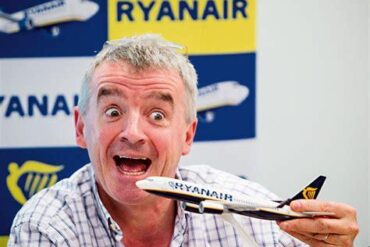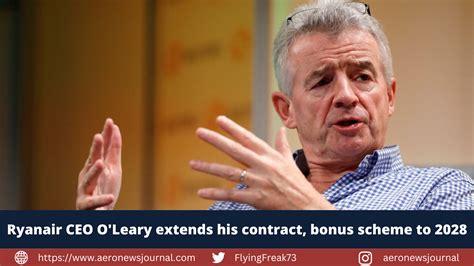
Ryanair has secured leadership continuity well into the next decade after confirming that chief executive Michael O’Leary will remain in charge until at least April 2032 under a new long-term agreement potentially worth more than €150 million in performance-linked share options. The extension ensures that one of Europe’s most recognizable airline leaders will continue guiding the company he transformed from a struggling Irish carrier into the continent’s largest airline by passenger numbers. By the time the contract expires, O’Leary will have spent almost 40 years at the helm, having first assumed leadership in 1994.
The decision arrives during one of the strongest periods in Ryanair’s history. The group recently reported a full-year post-tax profit of €2.26 billion, representing growth of roughly 40% compared with the previous year, while carrying approximately 208 million passengers across its vast network. Strong earnings, expanding market share, and continuing demand for low-cost travel convinced the board and major shareholders to back a new deal designed to tie executive compensation directly to long-term shareholder value rather than short-term performance.
For Ryanair, the extension represents more than retaining a chief executive. It provides strategic continuity at a time when the European aviation market is facing higher operating costs, fleet delivery delays, and increasing consolidation pressures among carriers. Maintaining stable leadership has become an important competitive advantage as airlines adapt to changing demand patterns and rising industry costs.
O’Leary’s Leadership Helped Transform Ryanair Into Europe’s Largest Airline
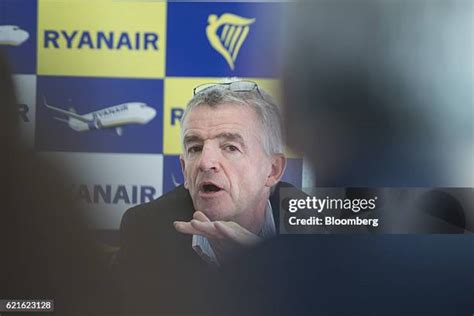
When Michael O’Leary took control in 1994, Ryanair was a relatively small airline competing against established legacy carriers. Over the following three decades, he implemented an uncompromising low-cost model that reshaped short-haul aviation across Europe. Under his leadership, annual passenger numbers surged from fewer than 20 million during the late 1990s to more than 200 million today.
The Ryanair Group now operates nearly 650 aircraft, connecting more than 220 airports across 36 countries and conducting approximately 3,800 flights every day. Supported by a workforce of roughly 30,000 employees, the airline has built a reputation for maintaining some of the lowest operating costs in the industry while consistently generating strong profits.
High aircraft utilization, aggressive cost management, fuel hedging strategies, and a growing stream of ancillary revenues have enabled Ryanair to sustain load factors averaging around 94%, with peak summer months often reaching between 95% and 96%. These operational efficiencies have helped the carrier preserve margins that many European rivals struggle to match.
€150 Million Incentive Package Depends on Ambitious Performance Targets
The new compensation structure includes share options covering approximately 10 million shares, with an exercise price around €26.70. However, those rewards are only accessible if Ryanair achieves demanding financial objectives before 2032.
Management established two key thresholds. The first requires the company to reach annual post-tax profits of €4 billion. The second requires Ryanair shares to remain above €42 for 28 consecutive trading days. According to the airline, these goals are deliberately ambitious and designed to generate substantial value for shareholders.
This arrangement follows an earlier incentive package that could deliver approximately €100 million to O’Leary when it expires in 2028. If both programs meet their performance conditions, the combined value of successive compensation agreements could exceed €250 million, although actual returns remain dependent on company results and market performance.
Ryanair argues that linking compensation to profitability and stock performance encourages sustainable growth rather than focusing on short-term earnings targets. The company generated more than €15.5 billion in annual revenues, while ancillary services contributed nearly €5 billion, further strengthening its financial position.
Debt-Free Position Strengthens Expansion Plans
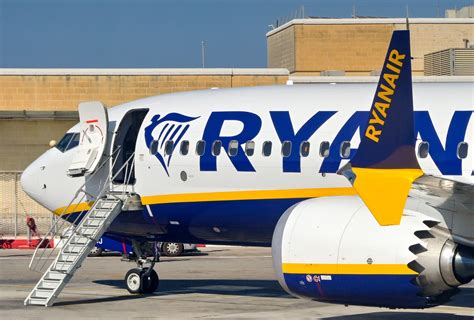
One of the most significant developments supporting Ryanair’s growth ambitions is the company’s increasingly powerful balance sheet. The airline recently confirmed that all 620 Boeing 737 aircraft currently in operation are owned outright, effectively making the group debt-free.
That financial flexibility gives Ryanair considerable advantages over competitors burdened by financing obligations and rising borrowing costs. Strong cash generation allows the airline to continue investing in fleet renewal while preserving one of the lowest cost structures in European aviation.
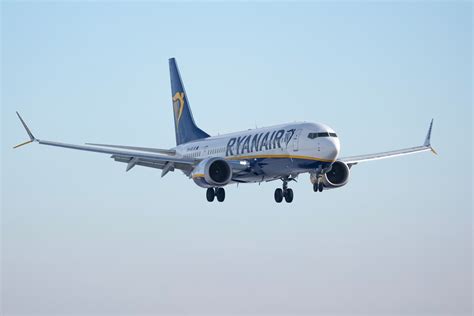
The delivery of its first 210 Boeing 737 MAX 8-200 Gamechanger aircraft is nearing completion. Meanwhile, a landmark order for 150 Boeing 737 MAX 10 jets, alongside options for an additional 150 aircraft, forms the backbone of Ryanair’s long-term expansion strategy.
Although manufacturing delays have temporarily constrained capacity growth, management expects annual traffic growth to resume steadily as deliveries normalize. The additional aircraft will provide the flexibility necessary to open new routes and strengthen existing bases throughout Europe.
Ryanair Targets 300 Million Annual Passengers
The company has repeatedly stated its ambition to reach 300 million passengers annually by around 2034. Achieving that milestone would further solidify Ryanair’s position as Europe’s dominant short-haul airline.
Growth plans include expanding operations in lower-cost European markets while selectively pursuing opportunities in North Africa. With many rivals facing increasing costs and capacity limitations, Ryanair sees opportunities to widen its competitive lead over carriers such as easyJet and Wizz Air.
Executives believe rising fuel costs, labor pressures, and capacity shortages may accelerate consolidation across Europe. Smaller or weaker airlines could struggle to maintain profitability, potentially allowing Ryanair to capture additional market share.
Leadership Stability Could Shape European Aviation Through the Next Decade
Michael O’Leary’s extension ensures that one of the most influential executives in modern aviation will remain at the center of European airline competition through 2032. His management style has often attracted controversy, yet his ability to deliver growth, profitability, and market expansion has consistently earned support from investors.
As the industry enters a period marked by higher costs, fleet shortages, and evolving travel demand, Ryanair’s combination of financial strength, disciplined cost control, and long-term leadership continuity positions the company to remain a dominant force. If management succeeds in reaching its ambitious targets, the airline may enter the mid-2030s carrying more passengers than ever before, with the same chief executive who engineered its rise nearly four decades earlier still leaving a lasting imprint on European aviation.