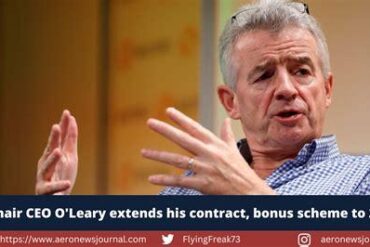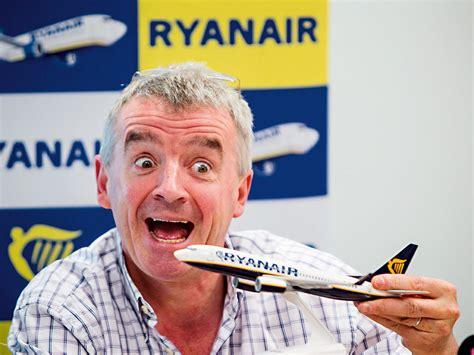
Ryanair’s combative CEO Michael O’Leary finds himself at the center of contrasting headlines this week—a time marked by soaring financial prospects and intensifying public backlash. As the leader of Europe’s largest low-cost airline navigates a potential historic payday, Ryanair simultaneously contends with operational challenges, regional pullouts, and renewed criticism of its controversial policies.
After helming Ryanair since 1994, O’Leary is now poised to secure one of the most lucrative executive bonuses in European corporate history, a payout that could exceed €111 million. This staggering reward is part of a long-term incentive plan introduced in 2019, which ties executive compensation to share price performance and leadership longevity. The first benchmark has already been achieved: Ryanair’s share price remained above €21 for 28 consecutive trading days.
The second condition—that O’Leary remains CEO until 2028—appears likely, given his enduring tenure and aggressive expansion strategies. If fulfilled, the scheme permits him to acquire 10 million shares at €11.12 apiece, unlocking a potential windfall well over the nine-figure mark. This would add to the nearly €930 million in Ryanair stock he already owns, alongside a €1.2 million base salary.
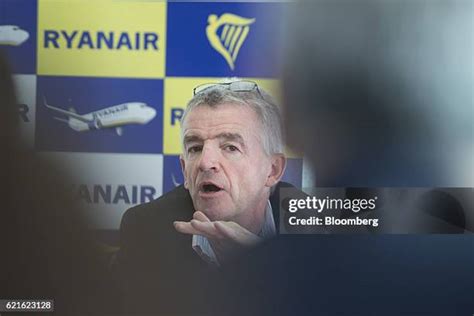
Critics have not been silent. The High Pay Centre, a UK-based think tank, lambasted the scale of O’Leary’s package, branding it a stark example of wage inequality. “When most flight crews earn between €1,200 and €1,500 per month, it is deeply troubling to see such a disproportionate allocation of wealth at the top,” said a spokesperson.
O’Leary, known for his blunt commentary, defended the payout by drawing parallels with the sports world: “In an era where footballers and their managers are earning €20 to €25 million annually, I think we’re delivering exceptional value to investors.” His framing is calculated, suggesting that aggressive executive compensation aligns Ryanair with performance-driven industries where rewards follow results.
Ryanair’s Departure from Maastricht: A Strategic Retreat or Tactical Bluff?
Even as the bonus drama unfolds, Ryanair faces turbulence in the Netherlands. The airline has announced it will cease operations at Maastricht-Aachen Airport starting October 26, 2025. Citing untenable financial conditions, Ryanair’s Chief Commercial Officer Jason McGuinness said the move was due to “excessive” cost increases and a steep 275% rise in Dutch aviation taxes since 2021.
Ryanair currently operates routes from Maastricht to destinations such as Alicante, Barcelona, Bari, Porto, and Zadar. Once it exits, only Corendon Airlines will maintain services from the regional Dutch airport. “Maastricht has become one of the most expensive airports in Europe,” McGuinness asserted during a statement reported by The Brussels Times.
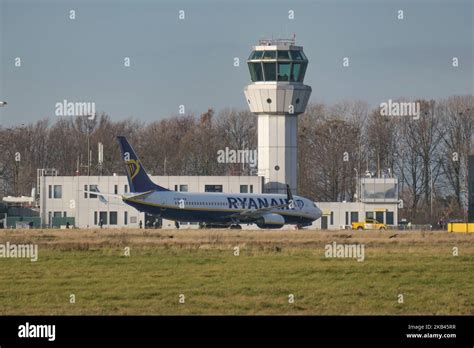
Yet, airport officials have a different narrative. According to them, Ryanair demanded fee structures far below what is charged at other Dutch airports. Despite prolonged negotiations, they claim, no equitable agreement could be reached. The episode highlights the push-pull dynamic between Ryanair’s aggressive cost-control ethos and the infrastructure providers trying to stay solvent under rising government-imposed levies.
This withdrawal is not an isolated event but part of Ryanair’s broader strategy to pressure governments and airports through selective market exits. While the company often uses such threats as bargaining chips, this confirmed pullout sends a message to other European regions that resistance to Ryanair’s pricing terms may come at a cost.
The Persistent Passenger Controversy: Separating Friends at 35,000 Feet
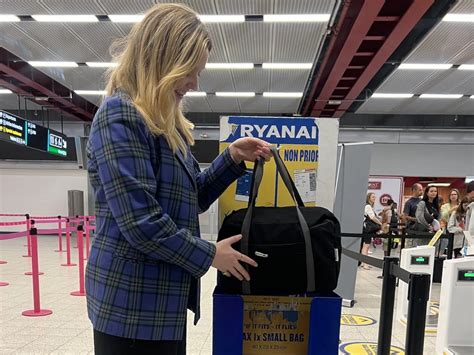
Simultaneously, Ryanair continues to absorb consumer ire over its seating policy, which appears designed to incentivize fee-based seat selection. Although not mandatory, the practice of separating passengers traveling together—especially families and couples—has been widely criticized as coercive.
Under the current system, passengers who decline to pay for reserved seats are often allocated randomly, leading to separated travel companions. While legal and disclosed in the booking process, many customers feel blindsided. O’Leary, ever unapologetic, once quipped that Ryanair flights are “full of passengers who have sworn they’ll never fly with us again.”
Despite its brashness, Ryanair’s approach is undeniably effective. The airline maintains one of the highest load factors in the industry, and its ancillary revenues—fees for seat selection, baggage, priority boarding, and more—make up a significant portion of its profit margins. Still, this strategy risks long-term damage to brand equity, especially as competitors adopt more transparent pricing models.
Turbulence in Berlin: Canceled Flight Sparks Safety Concerns
To further complicate the week, Ryanair made headlines again after an abrupt cancellation of its Berlin to Lisbon flight following an onboard disturbance. The flight, scheduled to depart Berlin at 20:20 local time, was called off after a confrontation involving a group of Portuguese passengers and a flight attendant.
According to The Portugal News, German police boarded the aircraft and removed several individuals for their “disrespectful behavior.” The nature of the incident remains under investigation, but its fallout underscores a perennial issue for low-cost carriers: crowd control and customer experience in high-density cabin environments.
Flight cancellations not only tarnish reputations but can also create logistical nightmares, as displaced passengers scramble for alternatives and airlines struggle to accommodate them on already packed routes. With summer travel surging, such incidents place further strain on Ryanair’s staffing, security, and public image.
The Dissonance of Success: Profits Amid Protest
At first glance, the juxtaposition is jarring: on one hand, record share prices and a CEO on the cusp of nine-figure compensation; on the other, disrupted flights, withdrawals from markets, and mounting public criticism. Yet this tension is emblematic of Ryanair’s identity—a company that thrives in contradictions.
The brand’s success has always relied on ruthless cost-cutting, hyper-efficiency, and a willingness to embrace bad press in exchange for operational leverage. As Ryanair’s planes continue to fill, O’Leary’s methods—however contentious—appear to work. He’s a CEO who doesn’t court approval but commands results.
However, as the European aviation landscape shifts—with growing demands for corporate responsibility, worker equity, and sustainable practices—Ryanair’s adversarial approach may face diminishing returns. There is an emerging generational consumer base that values not only price but ethics, transparency, and experience.
Looking Ahead: What This Week Reveals About Ryanair’s Future
In this pivotal week, Ryanair has become a case study in the volatile intersection of profitability and public perception. The company’s near-term trajectory remains financially robust—bolstered by a surge in post-pandemic travel demand and expanding route networks. Yet the road ahead is not without risk.
The Maastricht withdrawal signals ongoing tension with regional regulators, while seating policies and passenger disruptions continue to erode customer goodwill. And though O’Leary’s bonus might incentivize performance, it also spotlights wage disparity and executive excess at a time when economic inequality dominates public discourse.
Still, Ryanair remains a formidable force—agile, opportunistic, and unyielding. If O’Leary’s leadership endures through 2028, he may indeed collect his historic reward. But it will come not as a coronation, but as a milestone in a tenure defined as much by confrontation as it is by profit.
As Ryanair investors toast rising returns, passengers, policymakers, and partners alike will continue asking the same question: how much turbulence can one airline sustain before the skies grow too stormy to fly?